
News News
Why Use Cricket Bat Covers: Lifespan and Performance Why Use Cricket Bat Covers: Lifespan and Performance
Keeping your bat in top condition can feel like a challenge for every amateur or semi-professional cricket player in the UK. Exposure to moisture, accidental bumps, and constant travel quickly threaten your gear’s durability and playing quality. Bat covers preserve structural integrity by forming a reliable barrier against water, dirt, and impact, helping your bat stay responsive and last longer. This guide highlights practical protection strategies so you get the best performance from every match and extend your bat’s lifespan.
Table of Contents
- What Are Cricket Bat Covers? Core Functions
- Types of Bat Covers and Key Distinctions
- How Bat Covers Enhance Bat Protection
- Maintaining Bat Performance and Value
- Common Mistakes and Proper Use Tips
- Storage and Environmental Considerations
Key Takeaways
| Point | Details |
|---|---|
| Cricket Bat Covers Are Essential | They provide necessary protection against moisture, impact, and dirt, preserving the bat’s performance and longevity. |
| Choosing the Right Cover Matters | Select between stick-on films for everyday use and padded cases for transport, depending on your playing frequency and environment. |
| Regular Maintenance Enhances Performance | Combine cover usage with practices like oiling and appropriate storage to maximise the bat’s lifespan and retain value. |
| Correct Usage Is Crucial | Ensure bats are dry before covering, clean covers regularly, and inspect for wear to maintain effectiveness against damage. |
What Are Cricket Bat Covers? Core Functions
A cricket bat cover is a protective layer, typically made from durable synthetic material or heavy-duty fabric, designed to shield your bat when it’s not in active use. Think of it as a suit of armour for your equipment. These covers slip over the blade and handle, creating a barrier against the elements and accidental damage that can occur during storage, transport, and everyday handling. For cricketers who’ve invested in a quality bat, a cover transforms from a nice-to-have accessory into practical protection that pays for itself many times over.
The core functions of a cricket bat cover revolve around preservation and performance longevity. Moisture protection stands as the primary defence, as willow wood absorbs water readily, which causes the grain to swell unevenly and can lead to warping or cracking. Bat covers preserve structural integrity by preventing moisture ingress during humid conditions, rain exposure, or when you’re transporting your bat in a damp cricket bag. Beyond moisture, these covers protect against physical damage such as dents, scratches, and splintering that occur from knocks against hard surfaces, collision with other equipment, or the inevitable bumps of match day travel. They also shield the bat’s face from dust and dirt accumulation, which can affect both the appearance and the performance characteristics of the wood.
Additionally, cricket bat covers serve a protective function during transportation. Whether you’re carrying your bat to the ground in your kit bag or packing it carefully for travel, the cover absorbs impacts that would otherwise transfer directly to your blade. The edge protection is particularly valuable because damage to the edges compromises both the aesthetic appeal and the playing characteristics of your bat. A well-fitted cover also helps organise your cricket bag, preventing your bat from shifting around and damaging other equipment like helmets or gloves. Many dedicated players keep multiple covers for different scenarios, using a lightweight cover for local matches and a padded version for longer trips or tournament play.
Pro tip: Measure your bat’s length and blade width before purchasing a cover to ensure a snug fit, as loose covers allow movement that can still result in edge damage during transport.
Here is a summary of the main threats to cricket bats and how covers mitigate each risk:
| Threat | Effect on Bat | How Covers Help |
|---|---|---|
| Moisture | Swelling, warping, cracks | Forms a barrier against damp and rain |
| Impact Damage | Dents, splinters, loss of response | Absorbs shocks and prevents scratches |
| Dirt & Dust | Loss of grip, appearance, hygiene | Shields wood and handle from contaminants |
| UV Light | Discolouration, weakens fibres | Reduces sunlight exposure on willow |
Types of Bat Covers and Key Distinctions
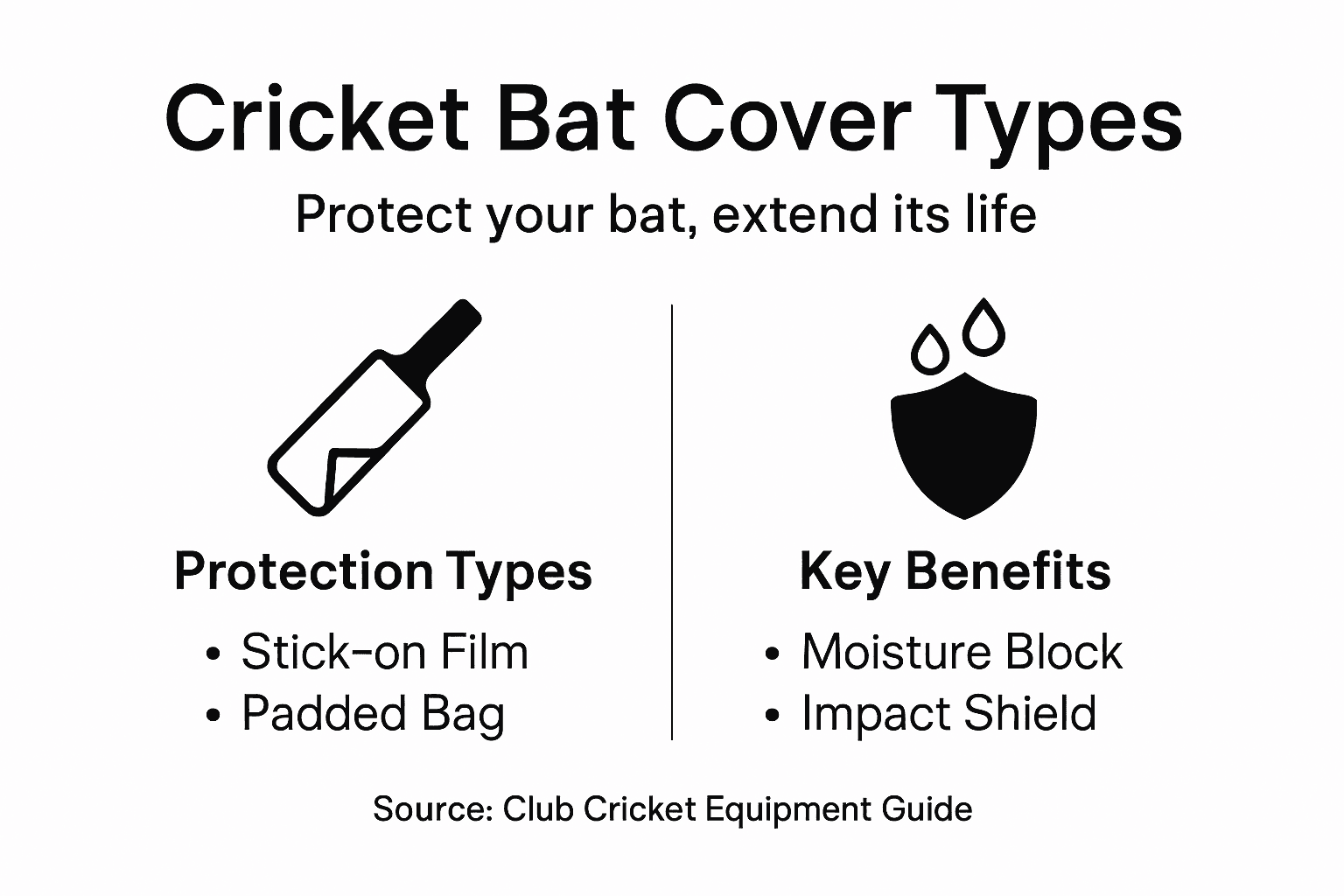
Not all bat covers work the same way, and understanding the different types available will help you choose the right protection for your playing style and storage situation. The market essentially divides into two broad categories, each serving distinctly different purposes. Stick-on protective covers are thin, transparent films that adhere directly to your bat’s face and edges, whilst padded carry cases are bulkier, purpose-built storage solutions designed for transit and longer-term protection. The choice between them often depends on whether you’re looking for everyday surface protection or comprehensive transport safeguarding.
Stick-On Protective Covers
These are the lightweight champions of bat protection. Applied directly to the blade’s striking surface and edges, stick-on covers prevent surface wear and shield against minor scratches that accumulate during regular play and practice. They’re transparent, so you can still see your bat’s natural finish and grain patterns, which appeals to players who take pride in their equipment’s appearance. The adhesive backing means they stay put without requiring zips, straps, or closures, making them convenient for players who frequently take their bats in and out of bags. However, they offer limited protection against moisture ingress and heavy impacts. If you’re playing at your local ground and storing your bat indoors most of the time, a stick-on cover provides adequate defence against the minor wear that builds up over a season.
Padded Carry Cases and Bat Bags
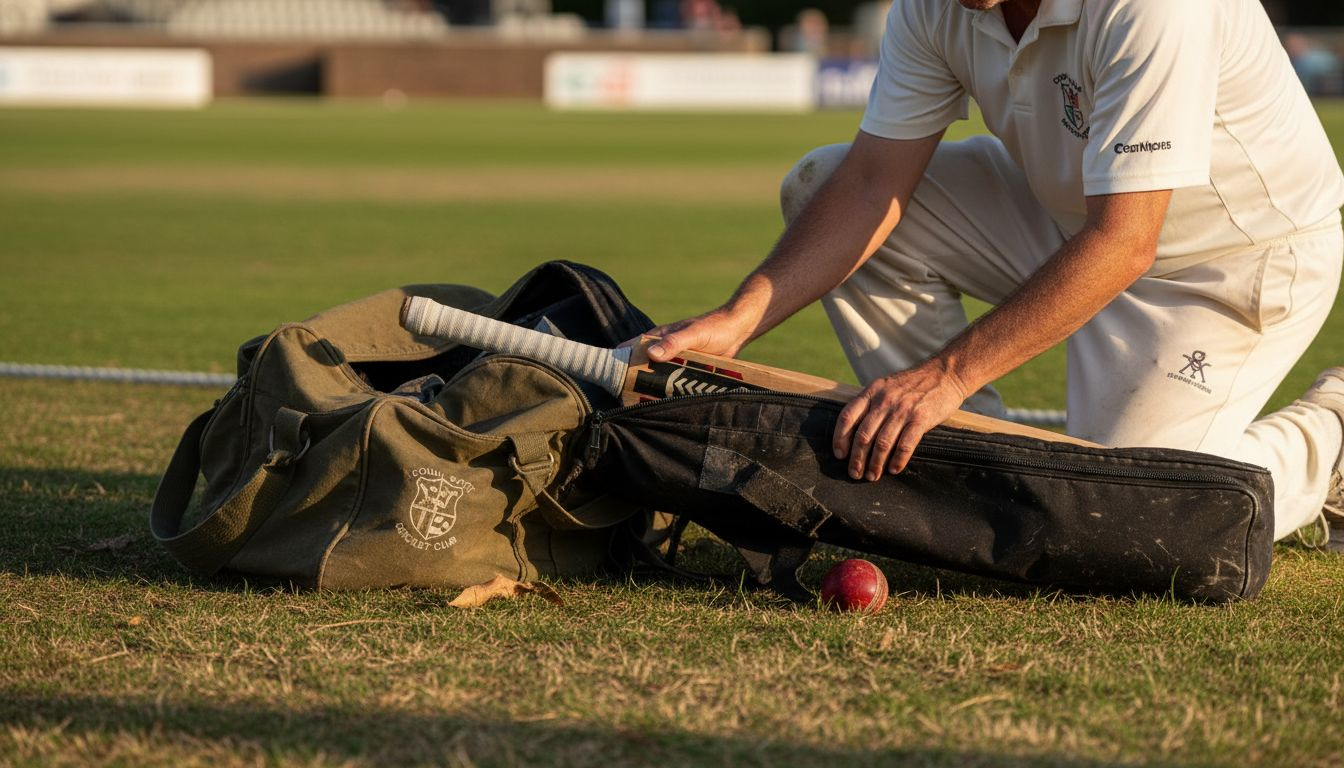
On the opposite end of the spectrum sit padded bat covers and dedicated carry cases. These are the fortress-style protection option, featuring shock-absorbing padding, durable fabric or leather exteriors, and secure closures. Many include multiple compartments for other cricket gear, transforming them into mini cricket bags rather than simple covers. The padding protects your bat from substantial impacts during travel, airport baggage handling, or if your kit bag takes a tumble getting into the car. This is the choice for players who travel regularly to away matches, tournaments, or who store bats in garages or sheds where temperature fluctuations and moisture present real concerns. The trade-off is bulk and weight, which matters less during transport but feels unnecessary if your bat rarely leaves your house.
| Cover Type | Best For | Protection Level | Portability | Cost |
|---|---|---|---|---|
| Stick-on Film | Daily play, home storage | Light | Excellent | Low |
| Padded Case | Tournament travel, away matches | Heavy | Good | Higher |
Your playing schedule and storage environment should dictate your choice. Club cricketers playing weekends at the same ground might find a stick-on cover perfectly adequate, whilst those chasing representative honours or travelling frequently benefit from the comprehensive protection a padded case provides.
Pro tip: Consider using a stick-on cover for everyday protection combined with a padded case for tournament travel, giving you cost-effective daily defence plus heavy-duty transport security when you need it.
How Bat Covers Enhance Bat Protection
Bat covers work by creating a physical barrier between your equipment and the environment, but their value extends far deeper than simple surface-level shielding. When you use a bat cover consistently, you’re actively preserving the structural properties that make your bat perform at its best. The protective layer reduces exposure to moisture, dirt, and UV radiation, all of which gradually degrade the willow wood’s molecular integrity. Over time, this preservation translates into a bat that maintains its original performance characteristics rather than slowly deteriorating into something that feels sluggish and unresponsive.
The impact protection aspect of bat covers deserves particular attention because it directly affects playability. Every dent, crack, or stress fracture compromises the wood’s ability to transfer energy efficiently from your swing to the ball. Protective coverings reduce impact stress absorption, which means the bat retains its dynamic stiffness and rebound efficiency for far longer than an unprotected bat would. Think of it this way: an unprotected bat gradually accumulates microscopic damage from transport, storage, and incidental knocks. Each incident removes a tiny amount of the bat’s responsiveness. A covered bat avoids these incremental losses entirely. Over a season, this compounds into a noticeable difference in how the bat feels and performs. Players who’ve used the same bat for two years with a cover often report it feels nearly identical to when it was new, whilst unprotected bats from the same manufacturer deteriorate significantly within that timeframe.
Moisture management represents the single most critical protection a cover provides. Willow wood naturally wants to absorb moisture from the air, and this creates uneven expansion and contraction within the grain structure. A bat stored in a garage or humid environment without cover will warp, whilst one protected by a cover remains stable and true. The preservation of the bat’s geometry directly affects its moment of inertia and sweet spot characteristics. Beyond structural integrity, covers protect against dirt accumulation that affects grip, appearance, and the wood’s ability to breathe naturally. A clean bat simply performs better. The most overlooked benefit is that covers reduce the frequency of maintenance you’ll need to perform. An unprotected bat requires regular oiling, drying, and careful storage adjustments. A covered bat needs minimal intervention, allowing you to focus on playing rather than maintenance cycles.
Pro tip: Store your bat vertically in its cover in a climate-controlled space rather than horizontally, as this prevents uneven moisture absorption and maintains the bat’s natural straightness throughout its lifespan.
Maintaining Bat Performance and Value
Your cricket bat represents a substantial financial investment, and its long-term value depends almost entirely on how consistently you protect it. Using a bat cover forms the foundation of any sensible maintenance strategy, but it works best when combined with other care practices. Well-maintained bats deliver higher performance metrics, including force transfer efficiency and reduced damage susceptibility. This isn’t just about preserving appearance; it’s about keeping the bat functioning at the level you paid for. A bat that starts life with a crisp, responsive feel will maintain that quality for years if properly protected, whilst one left exposed gradually loses its character and performance edge.
The financial implications are worth understanding. A quality bat costs between £150 and £400 for amateur cricketers, and that investment holds value if the bat remains in good condition. Players who use covers consistently find they can sell their bats for 50-60% of the original purchase price after a few seasons of use. Those who neglect protection typically recoup only 20-30%. That difference isn’t trivial. Beyond resale value, there’s the performance dimension. Properly cared-for bats maintain rebound speed and power transfer, which deterioration without protection can significantly reduce. After two seasons of unprotected use, many bats feel noticeably deadened compared to their peak performance. The sweet spot shrinks slightly, the response time dulls, and the overall feedback through your hands changes in ways that affect your batting confidence and stroke execution.
The synergy between covers and other maintenance practices matters greatly. A bat cover provides passive protection whilst you’re not using the bat, but active maintenance keeps it performing between matches. This means light oiling during the season, proper knocking-in of new bats, and ensuring you store your bat in a relatively stable environment. Your cricket bag itself becomes part of the ecosystem: a quality padded bat cover inside a well-designed cricket bag amplifies protection significantly. Think of it as layered defence. The cover handles the first line of protection against moisture and minor impacts, whilst your bag protects against heavier knocks during transport. Club cricketers who combine cover use with basic maintenance routines (light oiling every month during the season, proper storage away from direct heat or damp) consistently report their bats maintaining performance quality for 3-4 years of regular use. Those using only covers without other maintenance still see substantial benefits compared to unprotected bats, but the combination is where you truly maximise your investment.
Pro tip: Apply a thin coat of linseed oil to your bat every month during the playing season whilst it’s in its cover, as this maintains the wood’s resilience and complements the protective benefits the cover provides.
For maximum bat lifespan, combine these maintenance strategies:
| Maintenance Action | Benefit | Frequency |
|---|---|---|
| Apply linseed oil | Maintains wood resilience | Monthly during season |
| Replace stick-on covers | Ensures effective surface protection | Every two seasons |
| Inspect padded cases | Finds and prevents unnoticed fabric tears | Every three months |
| Store bat vertically | Prevents warping and uneven drying | Always when not in use |
Common Mistakes and Proper Use Tips
Many cricket players invest in bat covers but then undermine their effectiveness through simple usage errors. The most frequent mistake is applying a stick-on cover incorrectly, leaving air bubbles or wrinkles that trap moisture rather than shield against it. Another widespread problem involves leaving a protective cover on a wet bat after rain or a water break, which creates a humid microclimate that actually accelerates deterioration. Improper fit of stick-on covers and failing to replace worn protective films commonly expose bats to the very damage the cover is meant to prevent. Players often assume once a cover is applied, the job is done, but covers themselves require maintenance and periodic replacement. A stick-on film that’s been on for two seasons becomes brittle and loses adhesive effectiveness. A padded carry case with small tears in the fabric stops functioning as intended. These aren’t catastrophic failures, but they represent wasted protection.
Proper usage hinges on five practical habits that most players overlook. First, ensure your bat is completely dry before applying any cover. A damp bat covered immediately after use creates a sealed environment where moisture cannot escape, leading to rot and mould growth. Second, clean and dry covers frequently to prevent mould and deterioration, as the cover itself becomes a potential source of damage if it accumulates dirt or moisture. Third, select covers that allow the bat to breathe rather than creating an airtight seal. Breathable materials prevent moisture build-up that compromises wooden structure and performance. Fourth, inspect your cover regularly for wear. Small tears in padded cases and loose edges on stick-on films signal replacement is approaching. Finally, match your cover type to your usage pattern. Using a lightweight stick-on film for tournament travel won’t provide adequate protection, just as using a heavy padded case for daily club cricket at your home ground is impractical overkill.
Storage and Environmental Considerations
Where you store your covered bat matters almost as much as the cover itself. Avoid storing bats in garages, sheds, or any location subject to significant temperature swings or high humidity. A climate-controlled indoor cupboard or bedroom space is ideal. Never stack bats horizontally in a cover, as this can cause warping even with protection. Store them vertically or at a slight angle. When transporting your bat in a padded case, ensure the case itself stays dry. A wet carry bag defeats its purpose entirely. After away matches, unpack your bat from its cover and allow it to sit uncovered in a dry space for a few hours before re-covering. This prevents moisture from becoming trapped after physical exertion and sweating during play.
Pro tip: Replace stick-on covers every two seasons and inspect padded cases quarterly for tears or damage, replacing them before they deteriorate to the point where protection becomes ineffective.
Protect Your Investment with Quality Bat Covers and Equipment
Your cricket bat is more than just a piece of kit it is a vital partner in your game and performance. The article highlights the hidden threats of moisture damage, impact dents, and dirt accumulation which can severely reduce your bat’s lifespan and playing qualities. Using the right bat cover not only preserves structural integrity and responsiveness but also saves you money by maintaining resale value and minimizing maintenance. With protective options ranging from lightweight stick-on films to heavy-duty padded cases, choosing the best solution depends on your playing schedule and storage environment.

Discover a carefully curated selection of top-tier cricket bats and protective accessories at cricketbats.com designed to keep your equipment game-ready season after season. Browse our premium adidas Cricket Bats – Cricket Bats Com and New Balance Cricket Bats – Cricket Bats Com collections alongside high-quality bat covers and cricket bags. Act now to safeguard your bat’s performance and enjoy free shipping on all orders. Visit Home page – Cricket Bats Com to shop today and ensure your investment lasts longer with the protection it deserves.
Frequently Asked Questions
What are cricket bat covers and their main functions?
Cricket bat covers are protective layers designed to shield your bat from moisture, physical damage, and dirt when not in use. They preserve the bat’s structural integrity and performance longevity by forming a barrier that protects against these elements.
How do bat covers help maintain a cricket bat’s performance?
Bat covers create a physical barrier that prevents moisture and dirt from degrading the wood. This reduces wear and tear from impacts, allowing the bat to maintain its original performance characteristics for a longer time.
What are the different types of cricket bat covers available?
There are two main types of cricket bat covers: stick-on protective films, which provide lightweight surface protection, and padded carry cases, which offer heavy-duty safeguarding during transport. Each type caters to different needs regarding protection levels and portability.
How can I properly maintain my cricket bat cover?
To maintain your cricket bat cover, ensure your bat is dry before applying any covers, clean the covers frequently to prevent mould, check for wear regularly, and store your bat in a stable environment to prevent warping.
Recommended
Keeping your bat in top condition can feel like a challenge for every amateur or semi-professional cricket player in the UK. Exposure to moisture, accidental bumps, and constant travel quickly threaten your gear’s durability and playing quality. Bat covers preserve structural integrity by forming a reliable barrier against water, dirt, and impact, helping your bat stay responsive and last longer. This guide highlights practical protection strategies so you get the best performance from every match and extend your bat’s lifespan.
Table of Contents
- What Are Cricket Bat Covers? Core Functions
- Types of Bat Covers and Key Distinctions
- How Bat Covers Enhance Bat Protection
- Maintaining Bat Performance and Value
- Common Mistakes and Proper Use Tips
- Storage and Environmental Considerations
Key Takeaways
| Point | Details |
|---|---|
| Cricket Bat Covers Are Essential | They provide necessary protection against moisture, impact, and dirt, preserving the bat’s performance and longevity. |
| Choosing the Right Cover Matters | Select between stick-on films for everyday use and padded cases for transport, depending on your playing frequency and environment. |
| Regular Maintenance Enhances Performance | Combine cover usage with practices like oiling and appropriate storage to maximise the bat’s lifespan and retain value. |
| Correct Usage Is Crucial | Ensure bats are dry before covering, clean covers regularly, and inspect for wear to maintain effectiveness against damage. |
What Are Cricket Bat Covers? Core Functions
A cricket bat cover is a protective layer, typically made from durable synthetic material or heavy-duty fabric, designed to shield your bat when it’s not in active use. Think of it as a suit of armour for your equipment. These covers slip over the blade and handle, creating a barrier against the elements and accidental damage that can occur during storage, transport, and everyday handling. For cricketers who’ve invested in a quality bat, a cover transforms from a nice-to-have accessory into practical protection that pays for itself many times over.
The core functions of a cricket bat cover revolve around preservation and performance longevity. Moisture protection stands as the primary defence, as willow wood absorbs water readily, which causes the grain to swell unevenly and can lead to warping or cracking. Bat covers preserve structural integrity by preventing moisture ingress during humid conditions, rain exposure, or when you’re transporting your bat in a damp cricket bag. Beyond moisture, these covers protect against physical damage such as dents, scratches, and splintering that occur from knocks against hard surfaces, collision with other equipment, or the inevitable bumps of match day travel. They also shield the bat’s face from dust and dirt accumulation, which can affect both the appearance and the performance characteristics of the wood.
Additionally, cricket bat covers serve a protective function during transportation. Whether you’re carrying your bat to the ground in your kit bag or packing it carefully for travel, the cover absorbs impacts that would otherwise transfer directly to your blade. The edge protection is particularly valuable because damage to the edges compromises both the aesthetic appeal and the playing characteristics of your bat. A well-fitted cover also helps organise your cricket bag, preventing your bat from shifting around and damaging other equipment like helmets or gloves. Many dedicated players keep multiple covers for different scenarios, using a lightweight cover for local matches and a padded version for longer trips or tournament play.
Pro tip: Measure your bat’s length and blade width before purchasing a cover to ensure a snug fit, as loose covers allow movement that can still result in edge damage during transport.
Here is a summary of the main threats to cricket bats and how covers mitigate each risk:
| Threat | Effect on Bat | How Covers Help |
|---|---|---|
| Moisture | Swelling, warping, cracks | Forms a barrier against damp and rain |
| Impact Damage | Dents, splinters, loss of response | Absorbs shocks and prevents scratches |
| Dirt & Dust | Loss of grip, appearance, hygiene | Shields wood and handle from contaminants |
| UV Light | Discolouration, weakens fibres | Reduces sunlight exposure on willow |
Types of Bat Covers and Key Distinctions
Not all bat covers work the same way, and understanding the different types available will help you choose the right protection for your playing style and storage situation. The market essentially divides into two broad categories, each serving distinctly different purposes. Stick-on protective covers are thin, transparent films that adhere directly to your bat’s face and edges, whilst padded carry cases are bulkier, purpose-built storage solutions designed for transit and longer-term protection. The choice between them often depends on whether you’re looking for everyday surface protection or comprehensive transport safeguarding.
Stick-On Protective Covers
These are the lightweight champions of bat protection. Applied directly to the blade’s striking surface and edges, stick-on covers prevent surface wear and shield against minor scratches that accumulate during regular play and practice. They’re transparent, so you can still see your bat’s natural finish and grain patterns, which appeals to players who take pride in their equipment’s appearance. The adhesive backing means they stay put without requiring zips, straps, or closures, making them convenient for players who frequently take their bats in and out of bags. However, they offer limited protection against moisture ingress and heavy impacts. If you’re playing at your local ground and storing your bat indoors most of the time, a stick-on cover provides adequate defence against the minor wear that builds up over a season.
Padded Carry Cases and Bat Bags
On the opposite end of the spectrum sit padded bat covers and dedicated carry cases. These are the fortress-style protection option, featuring shock-absorbing padding, durable fabric or leather exteriors, and secure closures. Many include multiple compartments for other cricket gear, transforming them into mini cricket bags rather than simple covers. The padding protects your bat from substantial impacts during travel, airport baggage handling, or if your kit bag takes a tumble getting into the car. This is the choice for players who travel regularly to away matches, tournaments, or who store bats in garages or sheds where temperature fluctuations and moisture present real concerns. The trade-off is bulk and weight, which matters less during transport but feels unnecessary if your bat rarely leaves your house.
| Cover Type | Best For | Protection Level | Portability | Cost |
|---|---|---|---|---|
| Stick-on Film | Daily play, home storage | Light | Excellent | Low |
| Padded Case | Tournament travel, away matches | Heavy | Good | Higher |
Your playing schedule and storage environment should dictate your choice. Club cricketers playing weekends at the same ground might find a stick-on cover perfectly adequate, whilst those chasing representative honours or travelling frequently benefit from the comprehensive protection a padded case provides.
Pro tip: Consider using a stick-on cover for everyday protection combined with a padded case for tournament travel, giving you cost-effective daily defence plus heavy-duty transport security when you need it.
How Bat Covers Enhance Bat Protection
Bat covers work by creating a physical barrier between your equipment and the environment, but their value extends far deeper than simple surface-level shielding. When you use a bat cover consistently, you’re actively preserving the structural properties that make your bat perform at its best. The protective layer reduces exposure to moisture, dirt, and UV radiation, all of which gradually degrade the willow wood’s molecular integrity. Over time, this preservation translates into a bat that maintains its original performance characteristics rather than slowly deteriorating into something that feels sluggish and unresponsive.
The impact protection aspect of bat covers deserves particular attention because it directly affects playability. Every dent, crack, or stress fracture compromises the wood’s ability to transfer energy efficiently from your swing to the ball. Protective coverings reduce impact stress absorption, which means the bat retains its dynamic stiffness and rebound efficiency for far longer than an unprotected bat would. Think of it this way: an unprotected bat gradually accumulates microscopic damage from transport, storage, and incidental knocks. Each incident removes a tiny amount of the bat’s responsiveness. A covered bat avoids these incremental losses entirely. Over a season, this compounds into a noticeable difference in how the bat feels and performs. Players who’ve used the same bat for two years with a cover often report it feels nearly identical to when it was new, whilst unprotected bats from the same manufacturer deteriorate significantly within that timeframe.
Moisture management represents the single most critical protection a cover provides. Willow wood naturally wants to absorb moisture from the air, and this creates uneven expansion and contraction within the grain structure. A bat stored in a garage or humid environment without cover will warp, whilst one protected by a cover remains stable and true. The preservation of the bat’s geometry directly affects its moment of inertia and sweet spot characteristics. Beyond structural integrity, covers protect against dirt accumulation that affects grip, appearance, and the wood’s ability to breathe naturally. A clean bat simply performs better. The most overlooked benefit is that covers reduce the frequency of maintenance you’ll need to perform. An unprotected bat requires regular oiling, drying, and careful storage adjustments. A covered bat needs minimal intervention, allowing you to focus on playing rather than maintenance cycles.
Pro tip: Store your bat vertically in its cover in a climate-controlled space rather than horizontally, as this prevents uneven moisture absorption and maintains the bat’s natural straightness throughout its lifespan.
Maintaining Bat Performance and Value
Your cricket bat represents a substantial financial investment, and its long-term value depends almost entirely on how consistently you protect it. Using a bat cover forms the foundation of any sensible maintenance strategy, but it works best when combined with other care practices. Well-maintained bats deliver higher performance metrics, including force transfer efficiency and reduced damage susceptibility. This isn’t just about preserving appearance; it’s about keeping the bat functioning at the level you paid for. A bat that starts life with a crisp, responsive feel will maintain that quality for years if properly protected, whilst one left exposed gradually loses its character and performance edge.
The financial implications are worth understanding. A quality bat costs between £150 and £400 for amateur cricketers, and that investment holds value if the bat remains in good condition. Players who use covers consistently find they can sell their bats for 50-60% of the original purchase price after a few seasons of use. Those who neglect protection typically recoup only 20-30%. That difference isn’t trivial. Beyond resale value, there’s the performance dimension. Properly cared-for bats maintain rebound speed and power transfer, which deterioration without protection can significantly reduce. After two seasons of unprotected use, many bats feel noticeably deadened compared to their peak performance. The sweet spot shrinks slightly, the response time dulls, and the overall feedback through your hands changes in ways that affect your batting confidence and stroke execution.
The synergy between covers and other maintenance practices matters greatly. A bat cover provides passive protection whilst you’re not using the bat, but active maintenance keeps it performing between matches. This means light oiling during the season, proper knocking-in of new bats, and ensuring you store your bat in a relatively stable environment. Your cricket bag itself becomes part of the ecosystem: a quality padded bat cover inside a well-designed cricket bag amplifies protection significantly. Think of it as layered defence. The cover handles the first line of protection against moisture and minor impacts, whilst your bag protects against heavier knocks during transport. Club cricketers who combine cover use with basic maintenance routines (light oiling every month during the season, proper storage away from direct heat or damp) consistently report their bats maintaining performance quality for 3-4 years of regular use. Those using only covers without other maintenance still see substantial benefits compared to unprotected bats, but the combination is where you truly maximise your investment.
Pro tip: Apply a thin coat of linseed oil to your bat every month during the playing season whilst it’s in its cover, as this maintains the wood’s resilience and complements the protective benefits the cover provides.
For maximum bat lifespan, combine these maintenance strategies:
| Maintenance Action | Benefit | Frequency |
|---|---|---|
| Apply linseed oil | Maintains wood resilience | Monthly during season |
| Replace stick-on covers | Ensures effective surface protection | Every two seasons |
| Inspect padded cases | Finds and prevents unnoticed fabric tears | Every three months |
| Store bat vertically | Prevents warping and uneven drying | Always when not in use |
Common Mistakes and Proper Use Tips
Many cricket players invest in bat covers but then undermine their effectiveness through simple usage errors. The most frequent mistake is applying a stick-on cover incorrectly, leaving air bubbles or wrinkles that trap moisture rather than shield against it. Another widespread problem involves leaving a protective cover on a wet bat after rain or a water break, which creates a humid microclimate that actually accelerates deterioration. Improper fit of stick-on covers and failing to replace worn protective films commonly expose bats to the very damage the cover is meant to prevent. Players often assume once a cover is applied, the job is done, but covers themselves require maintenance and periodic replacement. A stick-on film that’s been on for two seasons becomes brittle and loses adhesive effectiveness. A padded carry case with small tears in the fabric stops functioning as intended. These aren’t catastrophic failures, but they represent wasted protection.
Proper usage hinges on five practical habits that most players overlook. First, ensure your bat is completely dry before applying any cover. A damp bat covered immediately after use creates a sealed environment where moisture cannot escape, leading to rot and mould growth. Second, clean and dry covers frequently to prevent mould and deterioration, as the cover itself becomes a potential source of damage if it accumulates dirt or moisture. Third, select covers that allow the bat to breathe rather than creating an airtight seal. Breathable materials prevent moisture build-up that compromises wooden structure and performance. Fourth, inspect your cover regularly for wear. Small tears in padded cases and loose edges on stick-on films signal replacement is approaching. Finally, match your cover type to your usage pattern. Using a lightweight stick-on film for tournament travel won’t provide adequate protection, just as using a heavy padded case for daily club cricket at your home ground is impractical overkill.
Storage and Environmental Considerations
Where you store your covered bat matters almost as much as the cover itself. Avoid storing bats in garages, sheds, or any location subject to significant temperature swings or high humidity. A climate-controlled indoor cupboard or bedroom space is ideal. Never stack bats horizontally in a cover, as this can cause warping even with protection. Store them vertically or at a slight angle. When transporting your bat in a padded case, ensure the case itself stays dry. A wet carry bag defeats its purpose entirely. After away matches, unpack your bat from its cover and allow it to sit uncovered in a dry space for a few hours before re-covering. This prevents moisture from becoming trapped after physical exertion and sweating during play.
Pro tip: Replace stick-on covers every two seasons and inspect padded cases quarterly for tears or damage, replacing them before they deteriorate to the point where protection becomes ineffective.
Protect Your Investment with Quality Bat Covers and Equipment
Your cricket bat is more than just a piece of kit it is a vital partner in your game and performance. The article highlights the hidden threats of moisture damage, impact dents, and dirt accumulation which can severely reduce your bat’s lifespan and playing qualities. Using the right bat cover not only preserves structural integrity and responsiveness but also saves you money by maintaining resale value and minimizing maintenance. With protective options ranging from lightweight stick-on films to heavy-duty padded cases, choosing the best solution depends on your playing schedule and storage environment.
Discover a carefully curated selection of top-tier cricket bats and protective accessories at cricketbats.com designed to keep your equipment game-ready season after season. Browse our premium adidas Cricket Bats – Cricket Bats Com and New Balance Cricket Bats – Cricket Bats Com collections alongside high-quality bat covers and cricket bags. Act now to safeguard your bat’s performance and enjoy free shipping on all orders. Visit Home page – Cricket Bats Com to shop today and ensure your investment lasts longer with the protection it deserves.
Frequently Asked Questions
What are cricket bat covers and their main functions?
Cricket bat covers are protective layers designed to shield your bat from moisture, physical damage, and dirt when not in use. They preserve the bat’s structural integrity and performance longevity by forming a barrier that protects against these elements.
How do bat covers help maintain a cricket bat’s performance?
Bat covers create a physical barrier that prevents moisture and dirt from degrading the wood. This reduces wear and tear from impacts, allowing the bat to maintain its original performance characteristics for a longer time.
What are the different types of cricket bat covers available?
There are two main types of cricket bat covers: stick-on protective films, which provide lightweight surface protection, and padded carry cases, which offer heavy-duty safeguarding during transport. Each type caters to different needs regarding protection levels and portability.
How can I properly maintain my cricket bat cover?
To maintain your cricket bat cover, ensure your bat is dry before applying any covers, clean the covers frequently to prevent mould, check for wear regularly, and store your bat in a stable environment to prevent warping.