
News News
Full Profile Cricket Bat: Power, Balance, Game Impact Full Profile Cricket Bat: Power, Balance, Game Impact
Selecting the wrong cricket bat profile can leave you frustrated at the crease, struggling for power and consistency. Many players focus on appearance or a familiar brand, overlooking the impact of blade shape and weight on performance. Choosing a full profile cricket bat offers a larger sweet spot, improved shot stability, and greater forgiveness on mistimed hits, helping amateur and semi-professional cricketers unlock more controlled aggression. Discover how this profile transforms your batting while avoiding common selection mistakes that affect power and control.
Table of Contents
- Defining A Full Profile Cricket Bat
- Types Of Cricket Bat Profiles Compared
- Key Features And Performance Benefits
- Ideal Players And Match Situations
- Common Pitfalls When Choosing Your Bat
Key Takeaways
| Point | Details |
|---|---|
| Full Profile Design | Full profile cricket bats feature increased edge depth, creating a larger sweet spot for enhanced power and forgiveness on off-centre hits. |
| Performance Suitability | Ideal for aggressive batters and players facing pace bowling, full profiles facilitate quick scoring and confidence during play. |
| Selection Considerations | Choose a bat based on weight, comfort, and softwood quality; avoid selecting solely based on appearance or brand reputation. |
| Maintenance Importance | Proper care, including knocking-in and suitable storage, is essential to preserve bat quality and performance over time. |
Defining a Full Profile Cricket Bat
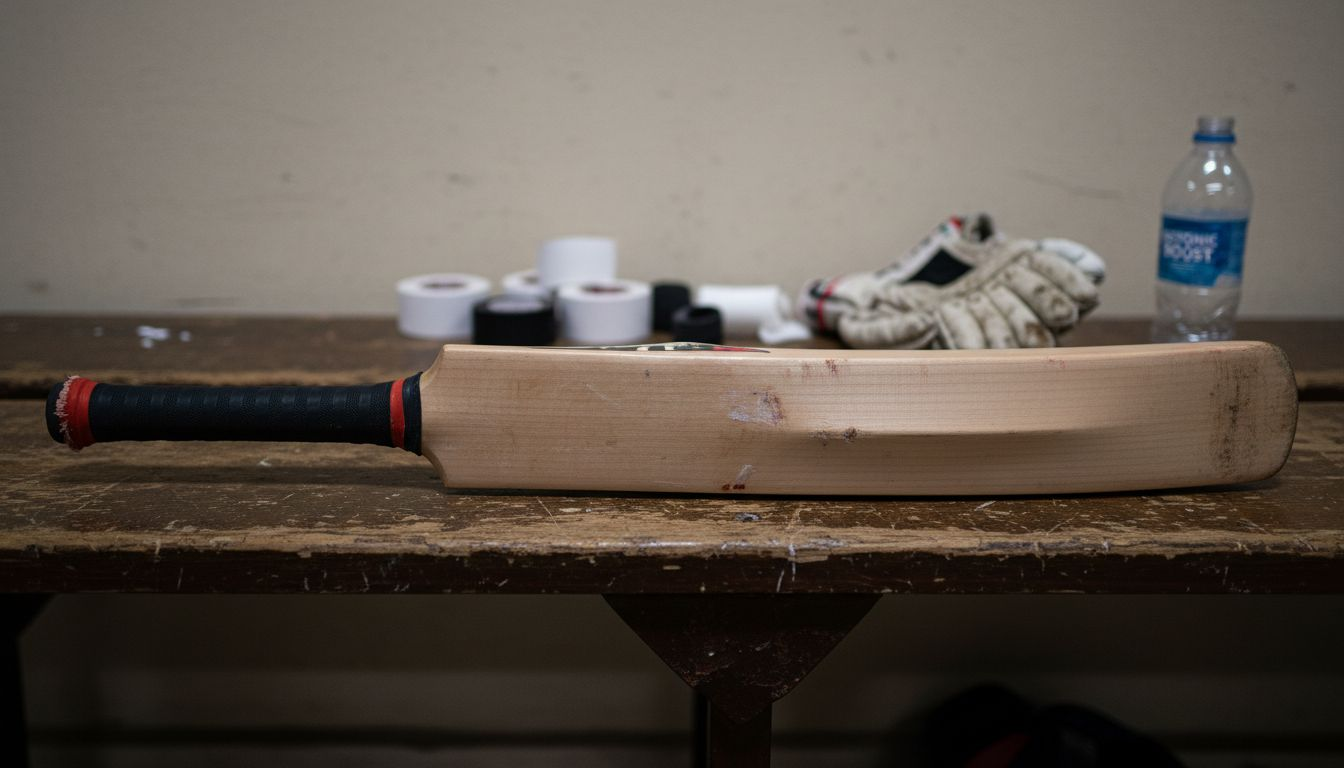
A full profile cricket bat is one where the edges run nearly the entire length of the blade, from toe to toe, creating a more pronounced shoulder and deeper edge throughout. This design contrasts with the traditional profile, which tapers more gradually towards the shoulders. The full profile prioritises a larger sweet spot and more mass concentration in the middle and lower portions of the blade, which translates directly to greater power generation when you connect with the ball. Understanding the bat edge structure helps clarify why this profile has become increasingly popular among batters seeking consistent performance across different shots.
The distinguishing characteristic of a full profile lies in its profile rating, typically ranging from 2.5 to 3.0 inches in depth. This fuller shape means the bat maintains substantial thickness higher up the blade, rather than thinning out as it approaches the edges. The result is a bat that feels more forgiving on off-centre hits, provides a larger hitting area, and generates greater ball speed with less effort. The key features that define top-performing bats include this edge depth, which creates a distinct advantage for batters at intermediate and semi-professional levels who want maximum power without sacrificing control.
What makes the full profile particularly effective is the balance it strikes between power and playability. The thicker edges provide stability through the shot, meaning your hands experience less impact vibration on mistimed deliveries. This matters significantly when you’re facing quick bowling or variable bounce. The profile also suits an aggressive batting approach where you’re looking to dominate the ball rather than simply defend, making it the preferred choice for batters who favour attacking stroke play. The added weight concentrated in the blade’s heart means the bat behaves almost like an extension of your arms when executed properly.
Pro tip: When selecting a full profile bat, check that the toe is reinforced and protected, as the added mass in the blade can increase stress on the handle if you frequently play shots off the back foot.
Types of Cricket Bat Profiles Compared
Cricket bat profiles fall into several distinct categories, each designed to serve different batting styles and match situations. The main profiles you’ll encounter are traditional, middle, and full profiles. The traditional profile features a gradual taper from the shoulder towards the edge, creating a thinner overall blade with less mass concentration. This design rewards technique and timing because the sweet spot is smaller, demanding more precision from the batter. The middle profile sits between traditional and full, offering a compromise that appeals to batters wanting moderate power without sacrificing too much feel. The full profile, as discussed earlier, maximises edge depth and sweet spot size for aggressive batting approaches. Understanding how cricket bat performance varies across these profiles helps you identify which suits your playing style and skill level.
When comparing profiles directly, the differences become clear in how they perform under pressure. Traditional profiles demand higher bat speed and better timing because the concentrated mass sits deeper in the blade. You need to hit the ball precisely to generate maximum power, making them ideal for experienced batters with consistent technique. Middle profiles provide a stepping stone, offering forgiveness whilst maintaining some of the traditional feel. Full profiles, conversely, deliver instant gratification because even slightly mistimed shots travel further due to the larger sweet spot and additional mass distribution. The weight profile also affects how the bat feels in your hands, with fuller profiles often feeling slightly heavier at the toe but more stable through the shot.
Your choice between profiles depends on several factors beyond just power. Consider your current skill level, the type of bowling you face regularly, and your natural batting approach. Younger or developing players often benefit from middle or full profiles because the larger sweet spot builds confidence whilst they develop consistent technique. Batters facing aggressive pace bowling might prefer full profiles for the added stability and forgiveness. Conversely, if you have solid technique and play regularly against quality spin bowling, a traditional profile allows better shot placement and control. The table below summarises the key distinctions:
| Profile Type | Sweet Spot Size | Power Potential | Skill Requirements | Best For |
|---|---|---|---|---|
| Traditional | Small | Moderate to High | Advanced | Experienced batters, technical play |
| Middle | Medium | Moderate | Intermediate | All-round batting, developing players |
| Full | Large | High | Beginner to Intermediate | Aggressive approach, maximum forgiveness |
Here is a summary of how full profile cricket bats differ from other profiles in terms of player benefit and handling:
| Bat Profile Type | Mass Distribution | Forgiveness Level | Typical Batting Style |
|---|---|---|---|
| Traditional | Concentrated mid | Low | Precision, technique |
| Middle | Balanced | Moderate | Versatile, adaptable |
| Full | Lower and wider | High | Aggressive, powerful |
Pro tip: Test bats from different profile categories before purchasing, focusing on how each feels during your natural batting strokes rather than just listening to ball impact sound.
Key Features and Performance Benefits
Full profile bats deliver a specific set of performance advantages that directly impact your game. The most obvious feature is the increased edge depth, typically ranging from 2.5 to 3.0 inches, which concentrates more mass in the blade’s middle section. This creates a larger sweet spot that extends further down the bat, meaning you can connect effectively even when the ball meets your bat slightly off-centre. The bat’s pronounced shoulders also contribute to this effect, transitioning more gradually from handle to blade rather than tapering sharply. Another crucial feature is the thicker toe section, which prevents the bat from feeling dead or unresponsive on drives down the ground. These structural elements combine to produce bats that generate greater ball speed with less effort, making them particularly valuable when you need quick runs or want to dominate shorter pitched deliveries.
The performance benefits flow directly from these design characteristics. A larger sweet spot means improved consistency because you don’t need perfect timing on every shot. You get rewards for effort even when your contact isn’t textbook perfect, which builds confidence during extended innings. The essential features distinguishing top-performing cricket bats include this forgiveness factor. Additionally, full profile bats provide enhanced stability through the shot, particularly against short-pitched bowling where pace can push lighter bats back. The concentrated mass in the blade creates momentum that carries through even when facing hostile deliveries. You’ll also notice reduced vibration through the hands on mistimed shots, which matters when you’re batting for long periods or facing bowlers with genuine pace.
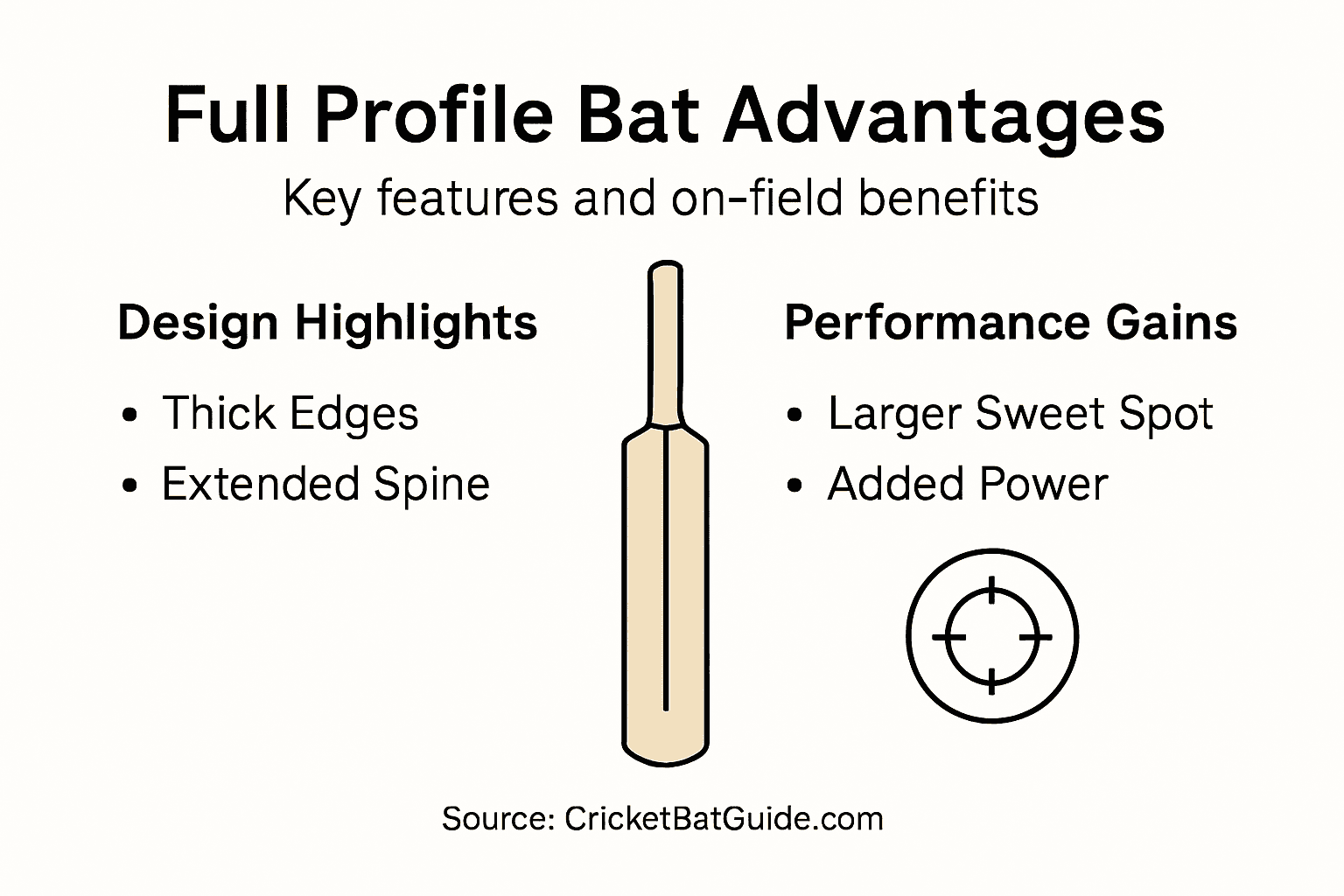
The power generation advantage deserves particular attention. Because the mass is positioned optimally in the hitting zone, you transfer energy more efficiently from your swing to the ball. This means increased run-scoring potential on both attacking and defensive shots. Against spin bowling, the stability provided by full profile bats allows you to play with greater conviction, stepping forward or back without the bat wobbling or twisting on contact. The trade-off worth considering is that full profiles can feel marginally less responsive for delicate touch shots like late cuts or fine glides, but for most batters aged 16 to 35 seeking performance improvement, this is negligible compared to the power and consistency gains.
What Makes Full Profiles Stand Out
- Larger sweet spot across the blade
- Reduced vibration on off-centre hits
- Enhanced ball speed generation
- Greater stability against pace bowling
- Improved confidence on mistimed shots
Pro tip: Check that your full profile bat’s handle can support the added blade mass by testing it feels balanced at the halfway point when held horizontally, as an unbalanced bat will tire your wrists during longer innings.
Ideal Players and Match Situations
Full profile bats suit specific types of batters and particular match scenarios, though they’ve become increasingly popular across skill levels. If you’re an aggressive middle-order batter who naturally looks to dominate bowling, a full profile is your natural choice. The enlarged sweet spot and power-generation capabilities align perfectly with an attacking mindset where you’re looking to score quickly and put bowlers under pressure. You don’t need to be technically flawless to succeed with these bats because the forgiveness built into the design compensates for slight timing errors. Similarly, if you’re a developing player aged 16 to 22 still building consistency, full profiles accelerate your improvement by rewarding effort even on imperfect shots. This builds confidence and encourages you to play attacking cricket rather than retreating into a defensive shell. Understanding how different bat characteristics impact your game helps you appreciate why full profiles perform so well for these player categories.
Match situations also determine whether a full profile serves you best. When you’re chasing a challenging target and need quick runs, the extra ball speed and consistency from a full profile become invaluable. You can score boundaries with controlled strokes rather than needing to slog or play risky shots. Against pace bowling attacks, particularly when facing short-pitched deliveries, the stability and reduced vibration of full profile bats give you genuine advantages. Your hands stay firm through the shot, and you can play the ball on your terms rather than being pushed back by sheer pace. Opening the batting in Twenty20 cricket is another scenario where full profiles excel because the format demands aggressive intent from ball one, and these bats deliver the consistency and power needed for quick starts. Conversely, if you’re batting in difficult conditions with variable bounce, or facing high-quality spin bowling where placement matters more than power, you might find a middle profile offers better control.
Your scoring role matters significantly. If you’re a lower-order batter expected to hit out in the final overs, a full profile makes logical sense because you need maximum power with minimum technique. If you’re an opener playing in Test matches where you might bat for three hours building an innings, a full profile still works well but doesn’t provide as much advantage compared to middle-order scenarios. Top-order batters playing county cricket or domestic first-class cricket often gravitate towards full profiles because the forgiveness helps them bat long while still capitalising on loose deliveries. The one scenario where full profiles become less ideal is when you’re playing against genuinely world-class spin bowling where manipulating the bat and accessing unconventional areas becomes crucial. In those situations, traditional profiles reward superior technique.
Full Profile Bats Perform Best When
- Playing Twenty20 or aggressive formats
- Facing pace bowling attacks
- Chasing targets with limited overs
- Building confidence in developing technique
- Opening the batting with intent
- Playing middle-order aggressive roles
Pro tip: If you’re uncertain whether a full profile suits your game, spend a net session batting with one against a range of bowling types, paying particular attention to how comfortable you feel playing defensive shots and whether the bat feels too heavy during longer spells.
Common Pitfalls When Choosing Your Bat
Most batters make at least one significant mistake when selecting a full profile bat, and these errors often lead to underperformance or frustration. The most common pitfall is prioritising appearance over functionality. You see a stunning bat with attractive graphics or a brand name you recognise, and you assume it will perform brilliantly. Reality works differently. A bat that looks fantastic might have an inappropriate weight distribution for your strength, incorrect blade thickness for your technique, or a handle that doesn’t suit your grip preferences. The visual appeal means nothing when you’re struggling to generate power or experiencing hand fatigue after a short batting session. Similarly, many batters overlook the importance of correct bat weight and size relative to their physical capabilities. Selecting a bat that’s too heavy taxes your shoulders and reduces bat speed, whilst one that’s too light feels unresponsive and fails to generate the power you expect from a full profile design. Considering willow type and wood quality becomes crucial because English willow performs differently from Kashmir willow, affecting both performance and durability.
Another critical mistake involves neglecting the knocking-in process. Many batters unbox a new full profile bat and immediately take it to the nets or match, expecting it to perform at full capacity. New bats require proper knocking in, which hardens the fibre and prepares the blade for full-force striking. Skip this step, and you risk serious damage including blade splitting or severe denting. You’ve invested substantial money in a quality bat only to damage it through impatience. Handle and grip quality represents another frequently overlooked consideration. You might select a premium bat with exceptional blade characteristics, but if the handle feels uncomfortable in your hands or the grip doesn’t provide sufficient purchase, your control suffers dramatically. Discomfort during lengthy innings affects concentration and increases injury risk. The grip directly influences your ability to execute precision shots, particularly important for full profile bats where the added blade mass demands stable hand positioning.
Poor maintenance habits damage otherwise excellent bats. Storing your bat in damp conditions promotes moisture absorption, weakening the wood fibres. Failing to apply protective oils allows the blade to dry out and become brittle. Using improper cleaning methods scratches the surface and exposes the wood to environmental damage. Additionally, many players fall victim to counterfeit or substandard bats offered at suspiciously low prices. Cheap imitations lack the willow quality, manufacturing precision, and structural integrity of genuine bats from reputable manufacturers. You might save money initially but end up replacing the bat within a season after it fails to perform or suffers irreparable damage.
The following table outlines key factors to consider when choosing a full profile cricket bat:
| Selection Factor | Why It Matters | Potential Impact on Play |
|---|---|---|
| Bat weight | Influences bat speed and fatigue | Affects stroke control and power |
| Handle comfort | Determines grip stability | Impacts shot precision |
| Willow quality | Affects durability and rebound | Alters ball response and lifespan |
| Knocking-in process | Prepares bat for match use | Reduces risk of blade damage |
Mistakes to Avoid
- Buying based on brand reputation without testing
- Selecting incorrect weight relative to your strength
- Neglecting the knocking-in process entirely
- Ignoring handle comfort and grip quality
- Skipping maintenance and proper storage
- Purchasing from unreliable sellers or counterfeits
Pro tip: Before committing to purchase, borrow or hire a full profile bat matching your intended weight for at least two net sessions, using this time to evaluate comfort, balance, and responsiveness under match conditions rather than making assumptions based on specifications alone.
Elevate Your Game with the Perfect Full Profile Cricket Bat
Finding the right full profile cricket bat can transform your performance by giving you the power and balance described in this guide. If you are striving for greater sweet spot forgiveness, enhanced stability against pace, and confident stroke play then exploring our range of Cricket Bats designed for all skill levels is the ideal next step. These bats feature carefully crafted edge depths and balance tailored to match the needs of aggressive and developing players alike.

Don’t settle for anything less than a bat that supports your batting style and improves your consistency. Visit cricketbats.com now to browse premium options including the latest from top brands such as New Balance in our dedicated New Balance Cricket Bats collection. Take action today to secure a full profile bat that feels balanced, powerful, and ready to elevate your game.
Frequently Asked Questions
What is a full profile cricket bat?
A full profile cricket bat features edges that run nearly the entire length of the blade, offering a larger sweet spot and greater mass concentration in the middle and lower sections, which enhances power generation upon ball contact.
Who should use a full profile cricket bat?
Full profile bats are suitable for aggressive middle-order batters and developing players aged 16 to 22, as they provide larger sweet spots and greater forgiveness on off-centre hits, enabling quicker scoring and improved confidence while playing.
How does the full profile differ from traditional and middle profiles?
The full profile maximises edge depth and sweet spot size, making it ideal for power hitting, while traditional profiles have a smaller sweet spot and demand higher batting precision. Middle profiles offer a balance between the two, providing moderate power and feel.
Why is the knocking-in process important for a full profile bat?
Knocking-in is crucial as it hardens the bat’s fibres, preparing it for optimal performance and reducing the risk of damage like blade splitting or denting that may occur if the bat is used without proper preparation.
Recommended
Selecting the wrong cricket bat profile can leave you frustrated at the crease, struggling for power and consistency. Many players focus on appearance or a familiar brand, overlooking the impact of blade shape and weight on performance. Choosing a full profile cricket bat offers a larger sweet spot, improved shot stability, and greater forgiveness on mistimed hits, helping amateur and semi-professional cricketers unlock more controlled aggression. Discover how this profile transforms your batting while avoiding common selection mistakes that affect power and control.
Table of Contents
- Defining A Full Profile Cricket Bat
- Types Of Cricket Bat Profiles Compared
- Key Features And Performance Benefits
- Ideal Players And Match Situations
- Common Pitfalls When Choosing Your Bat
Key Takeaways
| Point | Details |
|---|---|
| Full Profile Design | Full profile cricket bats feature increased edge depth, creating a larger sweet spot for enhanced power and forgiveness on off-centre hits. |
| Performance Suitability | Ideal for aggressive batters and players facing pace bowling, full profiles facilitate quick scoring and confidence during play. |
| Selection Considerations | Choose a bat based on weight, comfort, and softwood quality; avoid selecting solely based on appearance or brand reputation. |
| Maintenance Importance | Proper care, including knocking-in and suitable storage, is essential to preserve bat quality and performance over time. |
Defining a Full Profile Cricket Bat
A full profile cricket bat is one where the edges run nearly the entire length of the blade, from toe to toe, creating a more pronounced shoulder and deeper edge throughout. This design contrasts with the traditional profile, which tapers more gradually towards the shoulders. The full profile prioritises a larger sweet spot and more mass concentration in the middle and lower portions of the blade, which translates directly to greater power generation when you connect with the ball. Understanding the bat edge structure helps clarify why this profile has become increasingly popular among batters seeking consistent performance across different shots.
The distinguishing characteristic of a full profile lies in its profile rating, typically ranging from 2.5 to 3.0 inches in depth. This fuller shape means the bat maintains substantial thickness higher up the blade, rather than thinning out as it approaches the edges. The result is a bat that feels more forgiving on off-centre hits, provides a larger hitting area, and generates greater ball speed with less effort. The key features that define top-performing bats include this edge depth, which creates a distinct advantage for batters at intermediate and semi-professional levels who want maximum power without sacrificing control.
What makes the full profile particularly effective is the balance it strikes between power and playability. The thicker edges provide stability through the shot, meaning your hands experience less impact vibration on mistimed deliveries. This matters significantly when you’re facing quick bowling or variable bounce. The profile also suits an aggressive batting approach where you’re looking to dominate the ball rather than simply defend, making it the preferred choice for batters who favour attacking stroke play. The added weight concentrated in the blade’s heart means the bat behaves almost like an extension of your arms when executed properly.
Pro tip: When selecting a full profile bat, check that the toe is reinforced and protected, as the added mass in the blade can increase stress on the handle if you frequently play shots off the back foot.
Types of Cricket Bat Profiles Compared
Cricket bat profiles fall into several distinct categories, each designed to serve different batting styles and match situations. The main profiles you’ll encounter are traditional, middle, and full profiles. The traditional profile features a gradual taper from the shoulder towards the edge, creating a thinner overall blade with less mass concentration. This design rewards technique and timing because the sweet spot is smaller, demanding more precision from the batter. The middle profile sits between traditional and full, offering a compromise that appeals to batters wanting moderate power without sacrificing too much feel. The full profile, as discussed earlier, maximises edge depth and sweet spot size for aggressive batting approaches. Understanding how cricket bat performance varies across these profiles helps you identify which suits your playing style and skill level.
When comparing profiles directly, the differences become clear in how they perform under pressure. Traditional profiles demand higher bat speed and better timing because the concentrated mass sits deeper in the blade. You need to hit the ball precisely to generate maximum power, making them ideal for experienced batters with consistent technique. Middle profiles provide a stepping stone, offering forgiveness whilst maintaining some of the traditional feel. Full profiles, conversely, deliver instant gratification because even slightly mistimed shots travel further due to the larger sweet spot and additional mass distribution. The weight profile also affects how the bat feels in your hands, with fuller profiles often feeling slightly heavier at the toe but more stable through the shot.
Your choice between profiles depends on several factors beyond just power. Consider your current skill level, the type of bowling you face regularly, and your natural batting approach. Younger or developing players often benefit from middle or full profiles because the larger sweet spot builds confidence whilst they develop consistent technique. Batters facing aggressive pace bowling might prefer full profiles for the added stability and forgiveness. Conversely, if you have solid technique and play regularly against quality spin bowling, a traditional profile allows better shot placement and control. The table below summarises the key distinctions:
| Profile Type | Sweet Spot Size | Power Potential | Skill Requirements | Best For |
|---|---|---|---|---|
| Traditional | Small | Moderate to High | Advanced | Experienced batters, technical play |
| Middle | Medium | Moderate | Intermediate | All-round batting, developing players |
| Full | Large | High | Beginner to Intermediate | Aggressive approach, maximum forgiveness |
Here is a summary of how full profile cricket bats differ from other profiles in terms of player benefit and handling:
| Bat Profile Type | Mass Distribution | Forgiveness Level | Typical Batting Style |
|---|---|---|---|
| Traditional | Concentrated mid | Low | Precision, technique |
| Middle | Balanced | Moderate | Versatile, adaptable |
| Full | Lower and wider | High | Aggressive, powerful |
Pro tip: Test bats from different profile categories before purchasing, focusing on how each feels during your natural batting strokes rather than just listening to ball impact sound.
Key Features and Performance Benefits
Full profile bats deliver a specific set of performance advantages that directly impact your game. The most obvious feature is the increased edge depth, typically ranging from 2.5 to 3.0 inches, which concentrates more mass in the blade’s middle section. This creates a larger sweet spot that extends further down the bat, meaning you can connect effectively even when the ball meets your bat slightly off-centre. The bat’s pronounced shoulders also contribute to this effect, transitioning more gradually from handle to blade rather than tapering sharply. Another crucial feature is the thicker toe section, which prevents the bat from feeling dead or unresponsive on drives down the ground. These structural elements combine to produce bats that generate greater ball speed with less effort, making them particularly valuable when you need quick runs or want to dominate shorter pitched deliveries.
The performance benefits flow directly from these design characteristics. A larger sweet spot means improved consistency because you don’t need perfect timing on every shot. You get rewards for effort even when your contact isn’t textbook perfect, which builds confidence during extended innings. The essential features distinguishing top-performing cricket bats include this forgiveness factor. Additionally, full profile bats provide enhanced stability through the shot, particularly against short-pitched bowling where pace can push lighter bats back. The concentrated mass in the blade creates momentum that carries through even when facing hostile deliveries. You’ll also notice reduced vibration through the hands on mistimed shots, which matters when you’re batting for long periods or facing bowlers with genuine pace.
The power generation advantage deserves particular attention. Because the mass is positioned optimally in the hitting zone, you transfer energy more efficiently from your swing to the ball. This means increased run-scoring potential on both attacking and defensive shots. Against spin bowling, the stability provided by full profile bats allows you to play with greater conviction, stepping forward or back without the bat wobbling or twisting on contact. The trade-off worth considering is that full profiles can feel marginally less responsive for delicate touch shots like late cuts or fine glides, but for most batters aged 16 to 35 seeking performance improvement, this is negligible compared to the power and consistency gains.
What Makes Full Profiles Stand Out
- Larger sweet spot across the blade
- Reduced vibration on off-centre hits
- Enhanced ball speed generation
- Greater stability against pace bowling
- Improved confidence on mistimed shots
Pro tip: Check that your full profile bat’s handle can support the added blade mass by testing it feels balanced at the halfway point when held horizontally, as an unbalanced bat will tire your wrists during longer innings.
Ideal Players and Match Situations
Full profile bats suit specific types of batters and particular match scenarios, though they’ve become increasingly popular across skill levels. If you’re an aggressive middle-order batter who naturally looks to dominate bowling, a full profile is your natural choice. The enlarged sweet spot and power-generation capabilities align perfectly with an attacking mindset where you’re looking to score quickly and put bowlers under pressure. You don’t need to be technically flawless to succeed with these bats because the forgiveness built into the design compensates for slight timing errors. Similarly, if you’re a developing player aged 16 to 22 still building consistency, full profiles accelerate your improvement by rewarding effort even on imperfect shots. This builds confidence and encourages you to play attacking cricket rather than retreating into a defensive shell. Understanding how different bat characteristics impact your game helps you appreciate why full profiles perform so well for these player categories.
Match situations also determine whether a full profile serves you best. When you’re chasing a challenging target and need quick runs, the extra ball speed and consistency from a full profile become invaluable. You can score boundaries with controlled strokes rather than needing to slog or play risky shots. Against pace bowling attacks, particularly when facing short-pitched deliveries, the stability and reduced vibration of full profile bats give you genuine advantages. Your hands stay firm through the shot, and you can play the ball on your terms rather than being pushed back by sheer pace. Opening the batting in Twenty20 cricket is another scenario where full profiles excel because the format demands aggressive intent from ball one, and these bats deliver the consistency and power needed for quick starts. Conversely, if you’re batting in difficult conditions with variable bounce, or facing high-quality spin bowling where placement matters more than power, you might find a middle profile offers better control.
Your scoring role matters significantly. If you’re a lower-order batter expected to hit out in the final overs, a full profile makes logical sense because you need maximum power with minimum technique. If you’re an opener playing in Test matches where you might bat for three hours building an innings, a full profile still works well but doesn’t provide as much advantage compared to middle-order scenarios. Top-order batters playing county cricket or domestic first-class cricket often gravitate towards full profiles because the forgiveness helps them bat long while still capitalising on loose deliveries. The one scenario where full profiles become less ideal is when you’re playing against genuinely world-class spin bowling where manipulating the bat and accessing unconventional areas becomes crucial. In those situations, traditional profiles reward superior technique.
Full Profile Bats Perform Best When
- Playing Twenty20 or aggressive formats
- Facing pace bowling attacks
- Chasing targets with limited overs
- Building confidence in developing technique
- Opening the batting with intent
- Playing middle-order aggressive roles
Pro tip: If you’re uncertain whether a full profile suits your game, spend a net session batting with one against a range of bowling types, paying particular attention to how comfortable you feel playing defensive shots and whether the bat feels too heavy during longer spells.
Common Pitfalls When Choosing Your Bat
Most batters make at least one significant mistake when selecting a full profile bat, and these errors often lead to underperformance or frustration. The most common pitfall is prioritising appearance over functionality. You see a stunning bat with attractive graphics or a brand name you recognise, and you assume it will perform brilliantly. Reality works differently. A bat that looks fantastic might have an inappropriate weight distribution for your strength, incorrect blade thickness for your technique, or a handle that doesn’t suit your grip preferences. The visual appeal means nothing when you’re struggling to generate power or experiencing hand fatigue after a short batting session. Similarly, many batters overlook the importance of correct bat weight and size relative to their physical capabilities. Selecting a bat that’s too heavy taxes your shoulders and reduces bat speed, whilst one that’s too light feels unresponsive and fails to generate the power you expect from a full profile design. Considering willow type and wood quality becomes crucial because English willow performs differently from Kashmir willow, affecting both performance and durability.
Another critical mistake involves neglecting the knocking-in process. Many batters unbox a new full profile bat and immediately take it to the nets or match, expecting it to perform at full capacity. New bats require proper knocking in, which hardens the fibre and prepares the blade for full-force striking. Skip this step, and you risk serious damage including blade splitting or severe denting. You’ve invested substantial money in a quality bat only to damage it through impatience. Handle and grip quality represents another frequently overlooked consideration. You might select a premium bat with exceptional blade characteristics, but if the handle feels uncomfortable in your hands or the grip doesn’t provide sufficient purchase, your control suffers dramatically. Discomfort during lengthy innings affects concentration and increases injury risk. The grip directly influences your ability to execute precision shots, particularly important for full profile bats where the added blade mass demands stable hand positioning.
Poor maintenance habits damage otherwise excellent bats. Storing your bat in damp conditions promotes moisture absorption, weakening the wood fibres. Failing to apply protective oils allows the blade to dry out and become brittle. Using improper cleaning methods scratches the surface and exposes the wood to environmental damage. Additionally, many players fall victim to counterfeit or substandard bats offered at suspiciously low prices. Cheap imitations lack the willow quality, manufacturing precision, and structural integrity of genuine bats from reputable manufacturers. You might save money initially but end up replacing the bat within a season after it fails to perform or suffers irreparable damage.
The following table outlines key factors to consider when choosing a full profile cricket bat:
| Selection Factor | Why It Matters | Potential Impact on Play |
|---|---|---|
| Bat weight | Influences bat speed and fatigue | Affects stroke control and power |
| Handle comfort | Determines grip stability | Impacts shot precision |
| Willow quality | Affects durability and rebound | Alters ball response and lifespan |
| Knocking-in process | Prepares bat for match use | Reduces risk of blade damage |
Mistakes to Avoid
- Buying based on brand reputation without testing
- Selecting incorrect weight relative to your strength
- Neglecting the knocking-in process entirely
- Ignoring handle comfort and grip quality
- Skipping maintenance and proper storage
- Purchasing from unreliable sellers or counterfeits
Pro tip: Before committing to purchase, borrow or hire a full profile bat matching your intended weight for at least two net sessions, using this time to evaluate comfort, balance, and responsiveness under match conditions rather than making assumptions based on specifications alone.
Elevate Your Game with the Perfect Full Profile Cricket Bat
Finding the right full profile cricket bat can transform your performance by giving you the power and balance described in this guide. If you are striving for greater sweet spot forgiveness, enhanced stability against pace, and confident stroke play then exploring our range of Cricket Bats designed for all skill levels is the ideal next step. These bats feature carefully crafted edge depths and balance tailored to match the needs of aggressive and developing players alike.
Don’t settle for anything less than a bat that supports your batting style and improves your consistency. Visit cricketbats.com now to browse premium options including the latest from top brands such as New Balance in our dedicated New Balance Cricket Bats collection. Take action today to secure a full profile bat that feels balanced, powerful, and ready to elevate your game.
Frequently Asked Questions
What is a full profile cricket bat?
A full profile cricket bat features edges that run nearly the entire length of the blade, offering a larger sweet spot and greater mass concentration in the middle and lower sections, which enhances power generation upon ball contact.
Who should use a full profile cricket bat?
Full profile bats are suitable for aggressive middle-order batters and developing players aged 16 to 22, as they provide larger sweet spots and greater forgiveness on off-centre hits, enabling quicker scoring and improved confidence while playing.
How does the full profile differ from traditional and middle profiles?
The full profile maximises edge depth and sweet spot size, making it ideal for power hitting, while traditional profiles have a smaller sweet spot and demand higher batting precision. Middle profiles offer a balance between the two, providing moderate power and feel.
Why is the knocking-in process important for a full profile bat?
Knocking-in is crucial as it hardens the bat’s fibres, preparing it for optimal performance and reducing the risk of damage like blade splitting or denting that may occur if the bat is used without proper preparation.