
News News
Cricket kit selection guide for aspiring players 2026 Cricket kit selection guide for aspiring players 2026
Selecting your first cricket kit can feel overwhelming when faced with countless options and technical specifications. New players often struggle to identify which equipment truly matters for safety and skill development versus unnecessary extras. This guide cuts through the confusion by explaining essential cricket kit components and providing practical advice to help you choose appropriate gear that supports your growth as a cricketer. You will learn exactly what to prioritise, how to select properly fitting equipment, and maintenance practices that extend your investment.
Table of Contents
- Understanding The Essentials Of Cricket Kit
- Choosing The Right Cricket Bat For Beginners
- Selecting Protective Gear To Ensure Safety On The Field
- Additional Kit Components And Maintenance Tips
- Find Your Complete Cricket Kit And Accessories Here
- Frequently Asked Questions
Key takeaways
| Point | Details |
|---|---|
| Base selection on playing level and safety | Choose equipment appropriate for your current skill stage and prioritise protective gear to prevent injuries. |
| Essential items form your core kit | Every beginner needs a bat, helmet, gloves, leg pads, abdominal guard, and suitable footwear as fundamental equipment. |
| Proper fit ensures comfort and protection | Well-fitting gear enhances performance, prevents discomfort, and provides maximum safety during play. |
| Regular maintenance extends equipment life | Cleaning and storing kit correctly preserves quality and ensures consistent performance throughout seasons. |
| Review equipment as skills develop | Reassess your kit periodically to ensure it continues meeting your evolving requirements and playing standard. |
Understanding the essentials of cricket kit
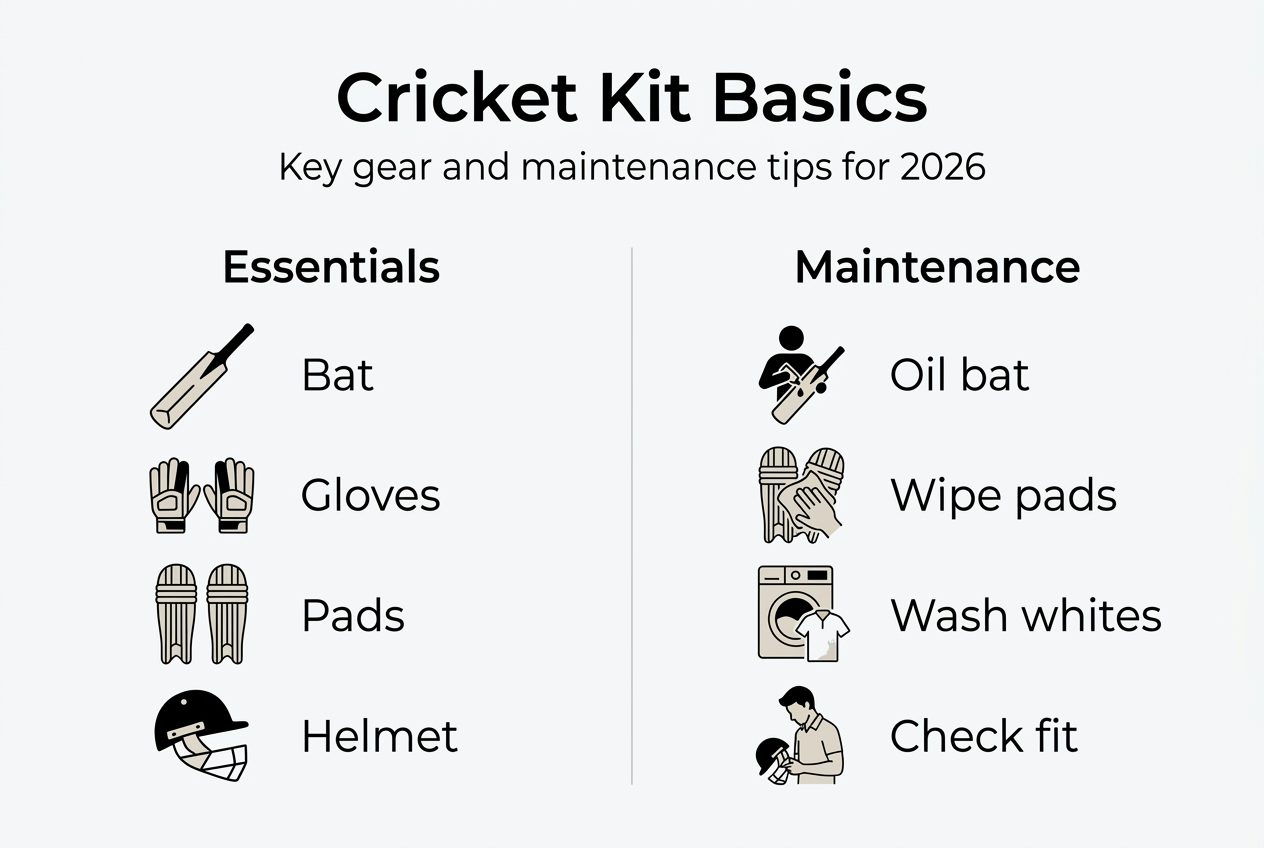
Every beginner must understand which equipment pieces form the foundation of a proper cricket kit before making purchasing decisions. The fundamental cricket kit typically includes a bat, helmet, gloves, pads, and appropriate footwear for protection and play. Each item serves a specific purpose in keeping you safe whilst enabling skill development.
Protective equipment prevents serious injuries during batting and fielding. Helmets shield your head from fast deliveries, particularly crucial when facing pace bowlers. Batting gloves protect your hands from impact whilst maintaining grip, and leg pads defend against painful blows to shins and knees. An abdominal guard, though often overlooked, provides essential protection for sensitive areas.
Your cricket bat represents the most personal equipment choice you will make. The right bat weight, length, and balance directly influence your ability to develop proper batting technique. Beginners should focus on comfort and control rather than expensive professional-grade models.
Footwear deserves careful consideration as proper cricket shoes provide grip, ankle support, and protection during extended play. Additional items complete your kit:
- Cricket kit bag for organised storage and transport
- Training clothing appropriate for weather conditions
- Spare grips and maintenance supplies
- Water bottle and towel for hydration and comfort
Safety remains the absolute priority when assembling your first kit. Never compromise on protective gear quality, as inadequate equipment can lead to injuries that sideline your cricket development. Reference the complete cricket equipment checklist 2026 to ensure you have not missed essential items.
Choosing the right cricket bat for beginners
Selecting your first cricket bat requires understanding how size, weight, and construction affect your ability to play controlled shots. Choosing a bat with the correct weight, length, and material is critical for developing proper technique and preventing injury for new players. The wrong bat can ingrain poor habits and limit your progress.
Bat sizing depends primarily on your height and age rather than personal preference. Junior players need shorter, lighter bats that match their physical development, whilst adults should select full-size bats they can control comfortably. A bat that feels too heavy will cause technical flaws as you struggle to complete shots properly.
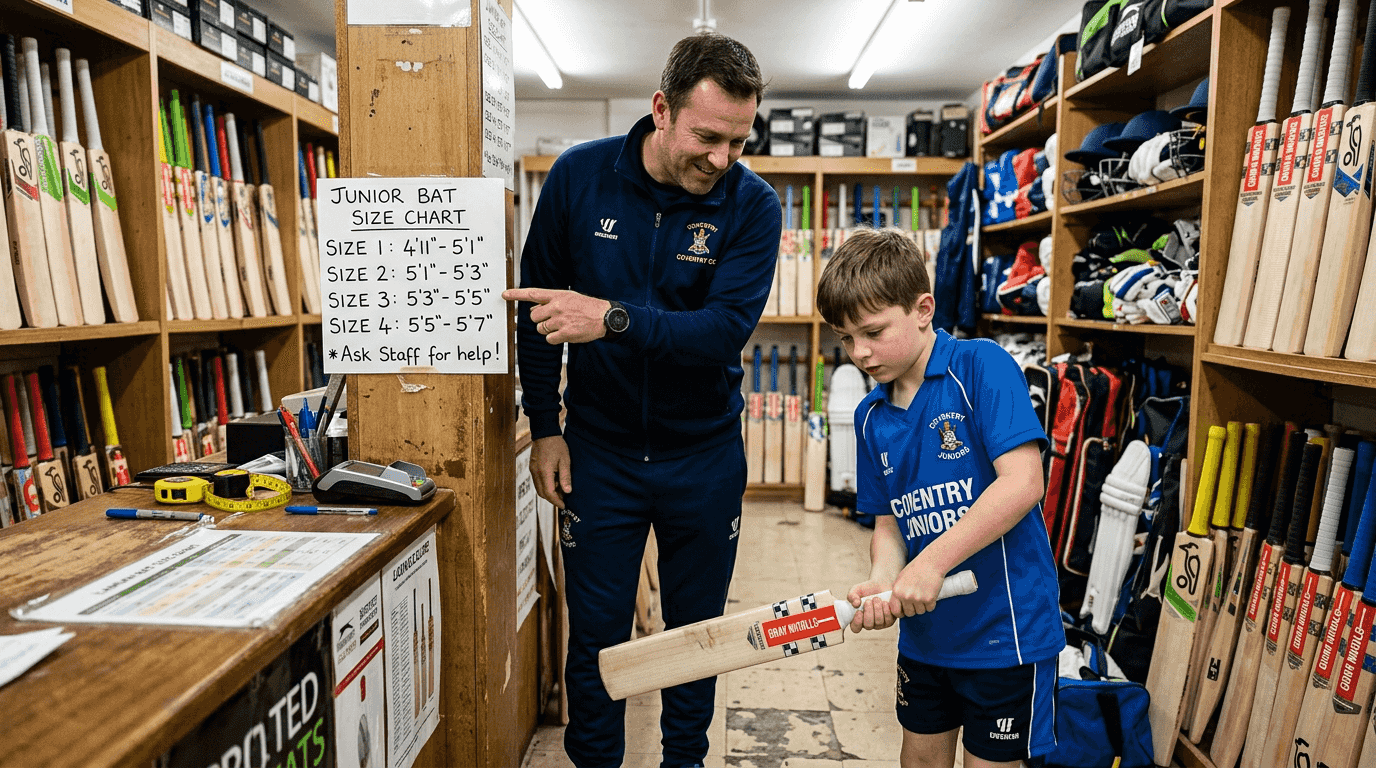
Willow quality significantly impacts bat performance and durability. English willow offers superior performance with better response and power but comes at higher cost. Kashmir willow provides an affordable alternative for beginners, offering adequate performance whilst you develop fundamental skills. You can upgrade to premium willow once your technique improves.
Test multiple bats before purchasing to find the right balance and grip comfort:
- Hold the bat in your normal stance and check if the weight feels manageable
- Execute a few shadow shots to assess swing speed and control
- Ensure the grip diameter suits your hand size without causing strain
- Verify the bat balances well when picking it up
Pro tip: Visit a specialist retailer where you can physically handle different bats rather than purchasing sight unseen online. The bat that feels right immediately will serve you better than one chosen purely on specifications or appearance.
Bat maintenance directly affects how long your investment lasts and how consistently it performs. Proper oiling, knocking in, and storage prevent cracking and maintain the sweet spot. Review the detailed cricket bat maintenance checklist to understand essential care routines. Learning to choose cricket bats for beginners involves both initial selection and ongoing maintenance commitment.
Selecting protective gear to ensure safety on the field
Protective equipment forms the safety foundation that allows you to play confidently without fear of injury. Each protective item requires careful sizing and quality assessment to provide adequate defence against cricket balls travelling at considerable speeds. Never economise on safety gear as inadequate protection can result in serious harm.
Helmets must meet current safety certifications and fit snugly without restricting vision or causing discomfort. Look for adjustable sizing mechanisms, face grilles with appropriate spacing, and adequate ventilation. The helmet should stay firmly positioned during movement without sliding or requiring constant adjustment. Modern helmets include neck guards for additional protection against short-pitched deliveries.
Batting gloves require precise sizing to protect your hands whilst maintaining feel and grip on the bat. Gloves too large will bunch up and reduce control, whilst tight gloves restrict blood flow and cause discomfort. Quality gloves feature reinforced finger protection, flexible thumb sections, and moisture-wicking liners. Test gloves by gripping a bat to ensure they allow natural hand positioning.
Leg pads protect from ankle to above the knee and should be lightweight yet sturdy. Properly fitting protective gear significantly reduces injury risk and boosts confidence for young and amateur cricketers. Adjustable straps allow customisation, but the core pad size must match your leg length. Three-piece construction offers better flexibility than traditional single-piece designs.
Abdominal guards, though uncomfortable initially, prevent potentially serious injuries. Select the appropriate size based on your waist measurement and ensure the cup fits comfortably inside supportive undergarments designed for this purpose.
| Equipment | Youth size range | Adult size range | Key measurement |
|---|---|---|---|
| Helmet | Small to Medium | Medium to Large | Head circumference |
| Batting gloves | 5 to 7 | 8 to 11 | Hand width |
| Leg pads | Boys to Youth | Men’s/Adult | Knee to ankle length |
| Abdominal guard | Junior | Senior | Waist measurement |
Pro tip: Always try protective gear whilst wearing your full kit to check compatibility and freedom of movement. What fits well individually may cause interference when worn together during actual play. Understanding how to select junior cricket kit applies equally to adult beginners prioritising safety.
Additional kit components and maintenance tips
Supplementary equipment and proper maintenance routines complete your preparation for consistent cricket participation. Beyond essential playing gear, several additional items enhance convenience and extend the life of your primary equipment. Thoughtful care prevents premature wear and maintains optimal performance.
A dedicated cricket kit bag organises your equipment and protects it during transport. Choose a bag with separate compartments for boots, protective gear, and your bat to prevent damage. Padded bat sleeves offer additional protection, whilst ventilated sections allow damp items to dry.
Useful extras that improve your cricket experience include:
- Spare bat grips for replacement when worn
- White cricket clothing appropriate for match play
- Training clothing in club colours
- Multiple pairs of cricket socks
- Sun protection including hat and sunscreen
- Personal first aid supplies
Equipment maintenance preserves your investment and ensures consistent performance. Regular maintenance extends the lifespan of cricket equipment and ensures optimal performance throughout the season. Develop cleaning and storage routines immediately rather than waiting until problems develop.
Bat maintenance follows specific steps that prevent damage:
- Oil the bat face lightly before first use and periodically thereafter
- Knock in new bats gradually using a mallet over several sessions
- Inspect for cracks or damage after each use
- Clean dirt and moisture from the bat surface with a dry cloth
- Store in a cool, dry location away from direct heat or sunlight
- Apply fibreglass tape to edges for additional protection
- Never store with weight pressing on the blade
Protective gear requires regular cleaning to remove sweat, dirt, and odour. Wipe helmets and pads with damp cloths after use and allow thorough drying before storage. Gloves benefit from airing out between sessions and occasional hand washing in cold water. Replace protective equipment showing signs of deterioration, cracking, or compressed padding.
Cricket clothing maintenance keeps you comfortable and presentable. Wash whites separately using appropriate detergents that prevent yellowing. Athletic wear care tips provide detailed guidance on preserving technical fabrics. Store clean, dry kit in your bag ready for the next session. Consult the comprehensive cricket bat maintenance guide for detailed preservation techniques.
Find your complete cricket kit and accessories here
Now that you understand what makes quality cricket equipment and how to maintain it properly, finding the right gear becomes straightforward. Cricket Bats Com offers carefully selected equipment suitable for beginners through to advancing players, with trusted brands that balance quality and value.

Explore comprehensive cricket bats for sale alongside protective gear from manufacturers like Gray-Nicolls who specialise in player safety. The Gray-Nicolls Atomic cricket helmet provides certified protection with modern design, whilst practical accessories like the Gray-Nicolls ball bag keep your equipment organised. Benefit from expert product descriptions, transparent pricing, and convenient delivery that gets you on the field faster. Whether assembling your first complete kit or upgrading individual items, you will find equipment that supports your cricket development at every stage.
Frequently asked questions
What are the best practice tips for maintaining cricket kit?
Clean your equipment after every use by wiping down bats, helmets, and pads with a dry cloth to remove moisture and dirt. Oil your bat periodically according to manufacturer guidelines and inspect protective gear for cracks or damage before each session. Store all equipment in a cool, dry place away from direct sunlight or heat sources. Follow the cricket bat maintenance checklist for comprehensive care routines.
How often should beginners replace their cricket equipment?
Replace protective gear immediately if you notice cracks, compressed padding, or structural damage that compromises safety. Bats typically last several seasons with proper maintenance, though performance may decline as the wood compresses. Gloves and pads should be replaced when protective elements deteriorate or sizing no longer fits properly. Reassess your entire kit annually to ensure it meets your current playing standard.
Can I use the same cricket bat for practice and matches?
Yes, beginners can use one quality bat for both practice and matches, though some players prefer keeping a premium bat exclusively for games. Ensure you knock in and prepare any new bat properly before using it in matches. Regular maintenance allows a single bat to serve both purposes effectively. As you advance, you may choose to maintain separate practice and match bats.
What size cricket bat should an adult beginner choose?
Most adult beginners need a full-size bat, but weight matters more than length. Select a bat you can comfortably control through a complete shot without straining. Lighter full-size bats suit smaller adults or those building strength, whilst stronger players can handle standard weight models. Always test swing a bat before purchasing to assess if the weight and balance suit your current fitness level.
How do I know if protective gear fits correctly?
Properly fitting helmets sit snugly without sliding during head movement and allow clear vision through the grille. Gloves should cover your wrists without bunching when gripping a bat. Leg pads must protect from ankle to above the knee with straps securing them firmly without restricting movement. Try all protective gear together whilst moving through batting motions to identify any interference or discomfort before finalising your purchase.
Recommended
- Cricket equipment checklist 2026: essential gear for UK players – Cricket Bats Com
- Looking for Custom Cricket Kit for 2020 – Cricket Bats Com
- How to select junior cricket kit for safety and performance – Cricket Bats Com
- Expert Cricket Bat Brands Comparison for 2026 – Cricket Bats Com
- Kids Graphic Tee Tips 2026: 45% Prefer Humorous Styles – 3 Wizard Clothing
Selecting your first cricket kit can feel overwhelming when faced with countless options and technical specifications. New players often struggle to identify which equipment truly matters for safety and skill development versus unnecessary extras. This guide cuts through the confusion by explaining essential cricket kit components and providing practical advice to help you choose appropriate gear that supports your growth as a cricketer. You will learn exactly what to prioritise, how to select properly fitting equipment, and maintenance practices that extend your investment.
Table of Contents
- Understanding The Essentials Of Cricket Kit
- Choosing The Right Cricket Bat For Beginners
- Selecting Protective Gear To Ensure Safety On The Field
- Additional Kit Components And Maintenance Tips
- Find Your Complete Cricket Kit And Accessories Here
- Frequently Asked Questions
Key takeaways
| Point | Details |
|---|---|
| Base selection on playing level and safety | Choose equipment appropriate for your current skill stage and prioritise protective gear to prevent injuries. |
| Essential items form your core kit | Every beginner needs a bat, helmet, gloves, leg pads, abdominal guard, and suitable footwear as fundamental equipment. |
| Proper fit ensures comfort and protection | Well-fitting gear enhances performance, prevents discomfort, and provides maximum safety during play. |
| Regular maintenance extends equipment life | Cleaning and storing kit correctly preserves quality and ensures consistent performance throughout seasons. |
| Review equipment as skills develop | Reassess your kit periodically to ensure it continues meeting your evolving requirements and playing standard. |
Understanding the essentials of cricket kit
Every beginner must understand which equipment pieces form the foundation of a proper cricket kit before making purchasing decisions. The fundamental cricket kit typically includes a bat, helmet, gloves, pads, and appropriate footwear for protection and play. Each item serves a specific purpose in keeping you safe whilst enabling skill development.
Protective equipment prevents serious injuries during batting and fielding. Helmets shield your head from fast deliveries, particularly crucial when facing pace bowlers. Batting gloves protect your hands from impact whilst maintaining grip, and leg pads defend against painful blows to shins and knees. An abdominal guard, though often overlooked, provides essential protection for sensitive areas.
Your cricket bat represents the most personal equipment choice you will make. The right bat weight, length, and balance directly influence your ability to develop proper batting technique. Beginners should focus on comfort and control rather than expensive professional-grade models.
Footwear deserves careful consideration as proper cricket shoes provide grip, ankle support, and protection during extended play. Additional items complete your kit:
- Cricket kit bag for organised storage and transport
- Training clothing appropriate for weather conditions
- Spare grips and maintenance supplies
- Water bottle and towel for hydration and comfort
Safety remains the absolute priority when assembling your first kit. Never compromise on protective gear quality, as inadequate equipment can lead to injuries that sideline your cricket development. Reference the complete cricket equipment checklist 2026 to ensure you have not missed essential items.
Choosing the right cricket bat for beginners
Selecting your first cricket bat requires understanding how size, weight, and construction affect your ability to play controlled shots. Choosing a bat with the correct weight, length, and material is critical for developing proper technique and preventing injury for new players. The wrong bat can ingrain poor habits and limit your progress.
Bat sizing depends primarily on your height and age rather than personal preference. Junior players need shorter, lighter bats that match their physical development, whilst adults should select full-size bats they can control comfortably. A bat that feels too heavy will cause technical flaws as you struggle to complete shots properly.
Willow quality significantly impacts bat performance and durability. English willow offers superior performance with better response and power but comes at higher cost. Kashmir willow provides an affordable alternative for beginners, offering adequate performance whilst you develop fundamental skills. You can upgrade to premium willow once your technique improves.
Test multiple bats before purchasing to find the right balance and grip comfort:
- Hold the bat in your normal stance and check if the weight feels manageable
- Execute a few shadow shots to assess swing speed and control
- Ensure the grip diameter suits your hand size without causing strain
- Verify the bat balances well when picking it up
Pro tip: Visit a specialist retailer where you can physically handle different bats rather than purchasing sight unseen online. The bat that feels right immediately will serve you better than one chosen purely on specifications or appearance.
Bat maintenance directly affects how long your investment lasts and how consistently it performs. Proper oiling, knocking in, and storage prevent cracking and maintain the sweet spot. Review the detailed cricket bat maintenance checklist to understand essential care routines. Learning to choose cricket bats for beginners involves both initial selection and ongoing maintenance commitment.
Selecting protective gear to ensure safety on the field
Protective equipment forms the safety foundation that allows you to play confidently without fear of injury. Each protective item requires careful sizing and quality assessment to provide adequate defence against cricket balls travelling at considerable speeds. Never economise on safety gear as inadequate protection can result in serious harm.
Helmets must meet current safety certifications and fit snugly without restricting vision or causing discomfort. Look for adjustable sizing mechanisms, face grilles with appropriate spacing, and adequate ventilation. The helmet should stay firmly positioned during movement without sliding or requiring constant adjustment. Modern helmets include neck guards for additional protection against short-pitched deliveries.
Batting gloves require precise sizing to protect your hands whilst maintaining feel and grip on the bat. Gloves too large will bunch up and reduce control, whilst tight gloves restrict blood flow and cause discomfort. Quality gloves feature reinforced finger protection, flexible thumb sections, and moisture-wicking liners. Test gloves by gripping a bat to ensure they allow natural hand positioning.
Leg pads protect from ankle to above the knee and should be lightweight yet sturdy. Properly fitting protective gear significantly reduces injury risk and boosts confidence for young and amateur cricketers. Adjustable straps allow customisation, but the core pad size must match your leg length. Three-piece construction offers better flexibility than traditional single-piece designs.
Abdominal guards, though uncomfortable initially, prevent potentially serious injuries. Select the appropriate size based on your waist measurement and ensure the cup fits comfortably inside supportive undergarments designed for this purpose.
| Equipment | Youth size range | Adult size range | Key measurement |
|---|---|---|---|
| Helmet | Small to Medium | Medium to Large | Head circumference |
| Batting gloves | 5 to 7 | 8 to 11 | Hand width |
| Leg pads | Boys to Youth | Men’s/Adult | Knee to ankle length |
| Abdominal guard | Junior | Senior | Waist measurement |
Pro tip: Always try protective gear whilst wearing your full kit to check compatibility and freedom of movement. What fits well individually may cause interference when worn together during actual play. Understanding how to select junior cricket kit applies equally to adult beginners prioritising safety.
Additional kit components and maintenance tips
Supplementary equipment and proper maintenance routines complete your preparation for consistent cricket participation. Beyond essential playing gear, several additional items enhance convenience and extend the life of your primary equipment. Thoughtful care prevents premature wear and maintains optimal performance.
A dedicated cricket kit bag organises your equipment and protects it during transport. Choose a bag with separate compartments for boots, protective gear, and your bat to prevent damage. Padded bat sleeves offer additional protection, whilst ventilated sections allow damp items to dry.
Useful extras that improve your cricket experience include:
- Spare bat grips for replacement when worn
- White cricket clothing appropriate for match play
- Training clothing in club colours
- Multiple pairs of cricket socks
- Sun protection including hat and sunscreen
- Personal first aid supplies
Equipment maintenance preserves your investment and ensures consistent performance. Regular maintenance extends the lifespan of cricket equipment and ensures optimal performance throughout the season. Develop cleaning and storage routines immediately rather than waiting until problems develop.
Bat maintenance follows specific steps that prevent damage:
- Oil the bat face lightly before first use and periodically thereafter
- Knock in new bats gradually using a mallet over several sessions
- Inspect for cracks or damage after each use
- Clean dirt and moisture from the bat surface with a dry cloth
- Store in a cool, dry location away from direct heat or sunlight
- Apply fibreglass tape to edges for additional protection
- Never store with weight pressing on the blade
Protective gear requires regular cleaning to remove sweat, dirt, and odour. Wipe helmets and pads with damp cloths after use and allow thorough drying before storage. Gloves benefit from airing out between sessions and occasional hand washing in cold water. Replace protective equipment showing signs of deterioration, cracking, or compressed padding.
Cricket clothing maintenance keeps you comfortable and presentable. Wash whites separately using appropriate detergents that prevent yellowing. Athletic wear care tips provide detailed guidance on preserving technical fabrics. Store clean, dry kit in your bag ready for the next session. Consult the comprehensive cricket bat maintenance guide for detailed preservation techniques.
Find your complete cricket kit and accessories here
Now that you understand what makes quality cricket equipment and how to maintain it properly, finding the right gear becomes straightforward. Cricket Bats Com offers carefully selected equipment suitable for beginners through to advancing players, with trusted brands that balance quality and value.
Explore comprehensive cricket bats for sale alongside protective gear from manufacturers like Gray-Nicolls who specialise in player safety. The Gray-Nicolls Atomic cricket helmet provides certified protection with modern design, whilst practical accessories like the Gray-Nicolls ball bag keep your equipment organised. Benefit from expert product descriptions, transparent pricing, and convenient delivery that gets you on the field faster. Whether assembling your first complete kit or upgrading individual items, you will find equipment that supports your cricket development at every stage.
Frequently asked questions
What are the best practice tips for maintaining cricket kit?
Clean your equipment after every use by wiping down bats, helmets, and pads with a dry cloth to remove moisture and dirt. Oil your bat periodically according to manufacturer guidelines and inspect protective gear for cracks or damage before each session. Store all equipment in a cool, dry place away from direct sunlight or heat sources. Follow the cricket bat maintenance checklist for comprehensive care routines.
How often should beginners replace their cricket equipment?
Replace protective gear immediately if you notice cracks, compressed padding, or structural damage that compromises safety. Bats typically last several seasons with proper maintenance, though performance may decline as the wood compresses. Gloves and pads should be replaced when protective elements deteriorate or sizing no longer fits properly. Reassess your entire kit annually to ensure it meets your current playing standard.
Can I use the same cricket bat for practice and matches?
Yes, beginners can use one quality bat for both practice and matches, though some players prefer keeping a premium bat exclusively for games. Ensure you knock in and prepare any new bat properly before using it in matches. Regular maintenance allows a single bat to serve both purposes effectively. As you advance, you may choose to maintain separate practice and match bats.
What size cricket bat should an adult beginner choose?
Most adult beginners need a full-size bat, but weight matters more than length. Select a bat you can comfortably control through a complete shot without straining. Lighter full-size bats suit smaller adults or those building strength, whilst stronger players can handle standard weight models. Always test swing a bat before purchasing to assess if the weight and balance suit your current fitness level.
How do I know if protective gear fits correctly?
Properly fitting helmets sit snugly without sliding during head movement and allow clear vision through the grille. Gloves should cover your wrists without bunching when gripping a bat. Leg pads must protect from ankle to above the knee with straps securing them firmly without restricting movement. Try all protective gear together whilst moving through batting motions to identify any interference or discomfort before finalising your purchase.
Recommended
- Cricket equipment checklist 2026: essential gear for UK players – Cricket Bats Com
- Looking for Custom Cricket Kit for 2020 – Cricket Bats Com
- How to select junior cricket kit for safety and performance – Cricket Bats Com
- Expert Cricket Bat Brands Comparison for 2026 – Cricket Bats Com
- Kids Graphic Tee Tips 2026: 45% Prefer Humorous Styles – 3 Wizard Clothing