
News News
Why Select Lightweight Bats: Performance and Comfort Why Select Lightweight Bats: Performance and Comfort
Every young cricketer in Australia and the United Kingdom knows the frustration of tired arms and lost power late in an innings. The quest for the perfect bat often starts with the search for something lighter, aiming to combine speed and comfort without sacrificing control. Choosing a lightweight cricket bat means better timing, less fatigue, and more enjoyable practice sessions. This guide explains what makes a lightweight bat different and shows how the right bat can help you play at your best from first ball to last.
Table of Contents
- What Defines A Lightweight Cricket Bat
- Types And Materials Of Lightweight Bats
- Performance Benefits For Young Players
- Fatigue Reduction And Injury Prevention
- How To Choose The Right Lightweight Bat
Key Takeaways
| Point | Details |
|---|---|
| Lightweight Bat Benefits | Lightweight cricket bats enhance manoeuvrability and reduce physical strain, making them ideal for younger and less developed players. |
| Material Significance | English willow offers the best performance in lightweight bats, while Kashmir willow is a cost-effective option for beginners. |
| Fatigue and Injury Management | These bats significantly decrease muscle loading and support proper biomechanics, reducing the risk of training-related injuries. |
| Selection Considerations | Players should consider their height, batting style, and skill level when selecting a lightweight bat for optimal performance. |
What Defines a Lightweight Cricket Bat
A lightweight cricket bat is a precision-engineered sporting implement designed to optimise player performance through strategic weight reduction. These specialised bats typically weigh between 2lb 8oz and 2lb 9oz, offering unique advantages for players seeking enhanced manoeuvrability and reduced physical strain.
The defining characteristics of a lightweight cricket bat include several critical elements:
- Weight Distribution: Carefully balanced weight across the bat’s profile
- Material Selection: Premium willow varieties with low density
- Manufacturing Precision: Advanced techniques reducing unnecessary mass
- Performance Optimization: Enhanced swing speed and control
Understanding bat weight requires recognising its profound biomechanical implications. Lightweight bats facilitate faster swing speeds, enabling younger and less physically developed players to generate comparable power with reduced muscular effort. Professional bat manufacturers meticulously engineer these implements to balance physical properties with performance potential.
Physical characteristics that distinguish lightweight bats include:
- Reduced overall mass
- Thinner edges
- Strategically hollowed core regions
- Minimalist handle construction
A lightweight bat transforms technical limitations into competitive advantages by reducing player fatigue and enabling more dynamic batting techniques.
Pro tip: Always test multiple lightweight bat models to find the one that matches your unique physical capabilities and playing style.
Types and Materials of Lightweight Bats
Cricket bat manufacturers have developed sophisticated approaches to creating lightweight bat materials that balance performance, durability, and weight reduction. Modern lightweight bats predominantly utilise two primary willow varieties: English willow and Kashmir willow, each offering unique characteristics that impact bat performance.
The primary materials used in lightweight cricket bat construction include:
- English Willow: Premium grade, lowest weight, exceptional performance
- Kashmir Willow: More affordable, slightly heavier alternative
- Composite Materials: Advanced synthetic constructions
- Hybrid Constructions: Combining multiple material technologies
Each material type presents distinct advantages for players. English willow represents the pinnacle of bat manufacturing, offering exceptional lightweight properties and superior performance characteristics. Professional players typically prefer these bats due to their refined grain structure and minimal weight. Kashmir willow provides a more economical option, particularly suitable for junior players and those developing their skills.
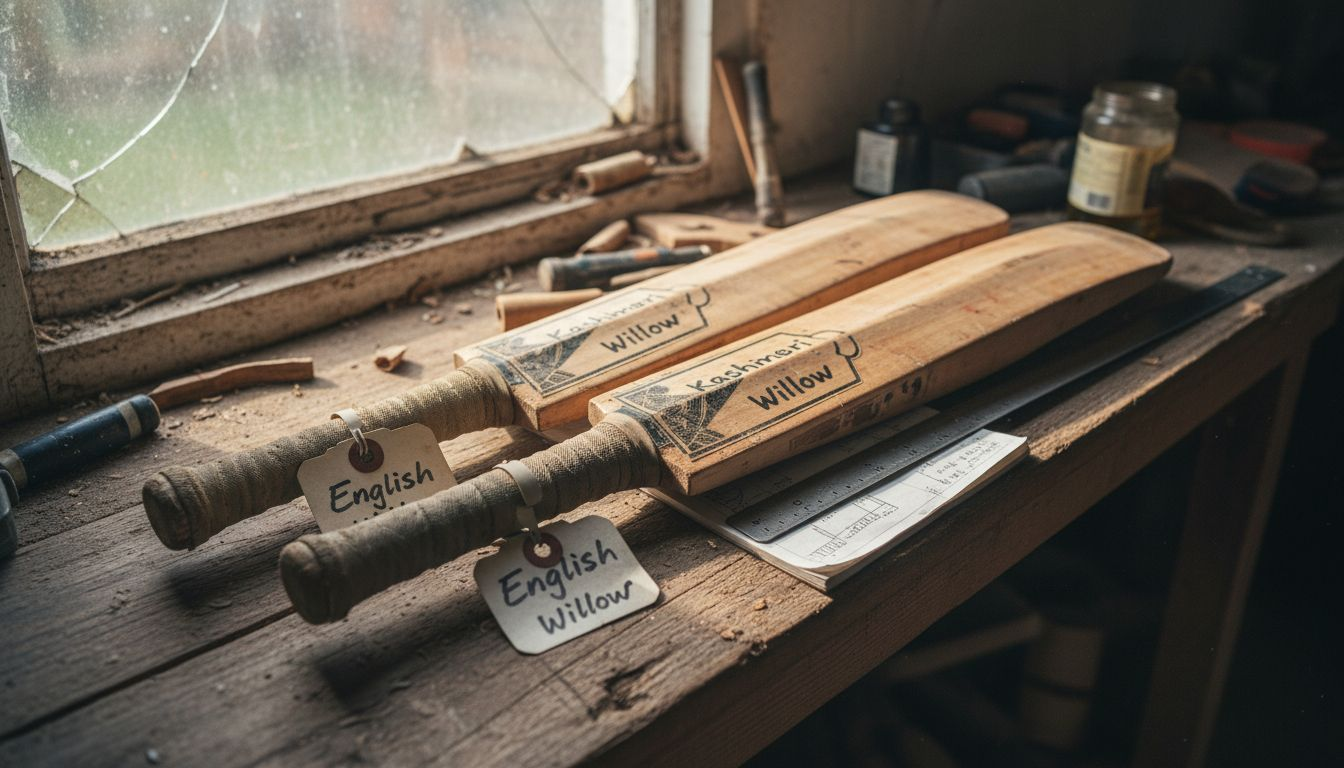
Here is a quick comparison of the primary materials used in lightweight cricket bat construction:
| Material Type | Weight Characteristic | Durability | Typical User |
|---|---|---|---|
| English Willow | Lightest | High | Professionals |
| Kashmir Willow | Slightly heavier | Moderate | Juniors/Amateurs |
| Composite | Customisable | Very high | All-round players |
| Hybrid | Balanced | High | Versatile cricketers |
Advanced manufacturing techniques have revolutionised bat design, enabling precise material selection that dramatically reduces unnecessary mass. Modern lightweight bats incorporate strategic design elements:
- Carefully hollowed handle cores
- Precision-engineered edge profiling
- Minimalist structural reinforcements
- Advanced weight distribution technologies
Lightweight bat materials represent a critical intersection between engineering precision and sporting performance, transforming traditional equipment design.
Pro tip: When selecting a lightweight bat, prioritise personal comfort and feel over technical specifications, as individual playing style significantly influences optimal bat selection.
Performance Benefits for Young Players
Lightweight cricket bats offer significant advantages for young players, with research demonstrating improved skill development that extends beyond simple equipment selection. These specialised bats are engineered to support the unique physical and technical challenges faced by emerging cricketers during their critical learning stages.
Key performance benefits for young players include:
- Reduced Physical Strain: Minimises muscle fatigue during extended practice sessions
- Enhanced Swing Mechanics: Enables faster and more controlled bat movement
- Improved Technique: Allows better focus on fundamental skills
- Confidence Building: Provides manageable equipment for skill progression
The biomechanical advantages of lightweight bats are particularly pronounced for younger players. Scientific research confirms that these bats help develop crucial motor skills without compromising safety or performance potential. Young cricketers can concentrate on refining their technique, knowing their equipment supports rather than hinders their development.
Specific technical advantages for youth players encompass:
- Easier bat control and manoeuvrability
- Reduced risk of incorrect batting postures
- Faster skill acquisition
- Lower potential for training-related injuries
Lightweight bats transform equipment from a potential limitation to a developmental tool, supporting young players’ progression.
Pro tip: Select a lightweight bat that feels comfortable and allows natural movement, rather than focusing solely on weight specifications.
Fatigue Reduction and Injury Prevention
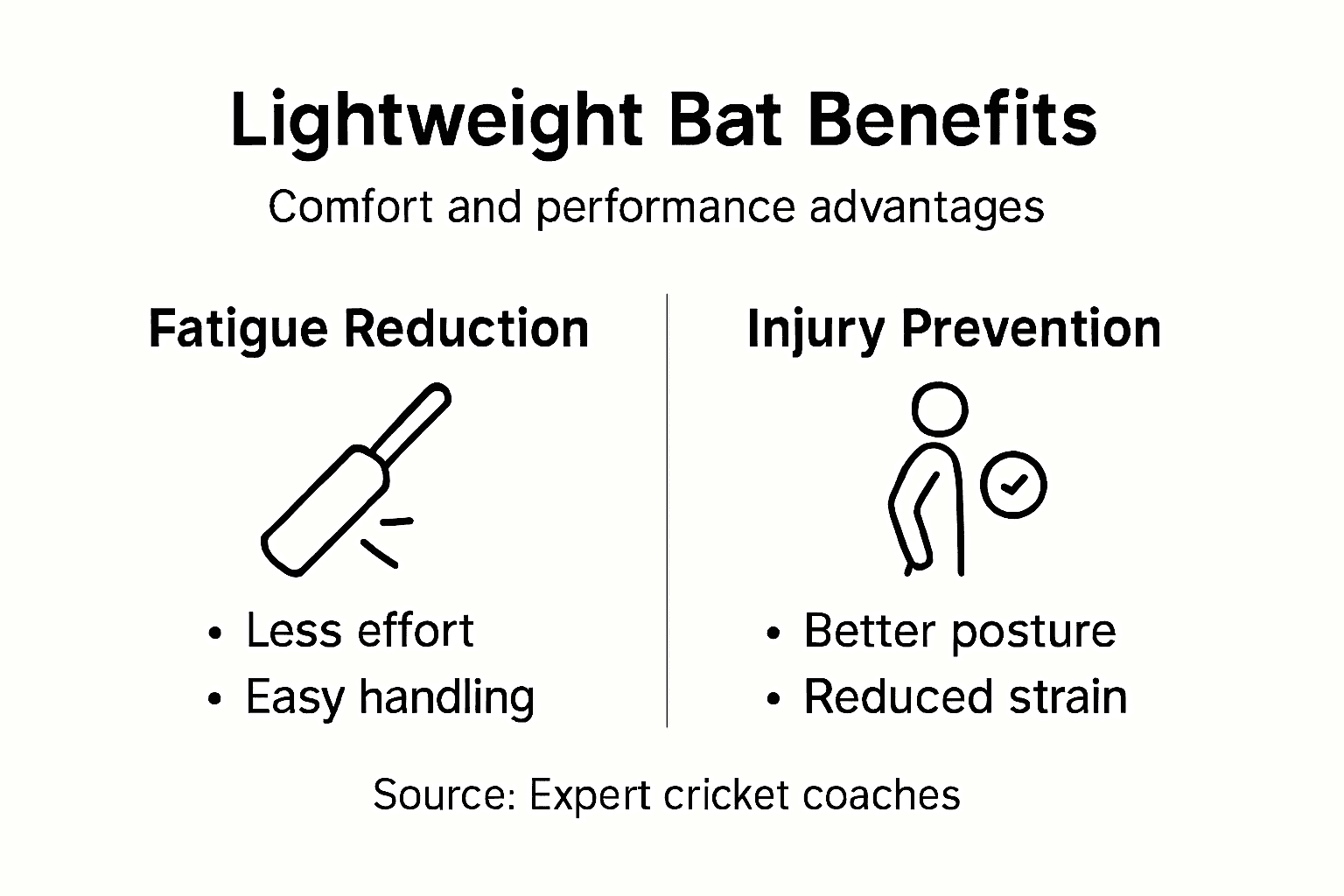
Lightweight cricket bats play a crucial role in reducing physical strain on players’ muscles and joints during extended practice and match scenarios. By minimising unnecessary muscular exertion, these specialised bats help cricketers maintain optimal performance and significantly reduce the risk of training-related injuries.
Key mechanisms of fatigue and injury prevention include:
- Reduced Muscle Loading: Decreases overall muscular stress
- Improved Biomechanical Alignment: Supports natural movement patterns
- Enhanced Neuromuscular Control: Minimises compensatory movement strategies
- Consistent Technical Execution: Allows sustained skill performance
Researchers have demonstrated that neurocognitive performance remains more stable when athletes utilise appropriately weighted equipment. Lightweight bats enable players to maintain better motor control, reducing the likelihood of technique degradation that often occurs during prolonged physical activity.
Specific injury prevention strategies associated with lightweight bats include:
- Maintaining proper batting posture
- Reducing rotational stress on shoulders and arms
- Preventing overcompensation mechanisms
- Supporting consistent technical execution
Intelligent equipment selection transforms injury prevention from reactive management to proactive performance strategy.
Pro tip: Regularly assess your bat’s weight relative to your physical development, understanding that optimal equipment changes as your strength and technique evolve.
How to Choose the Right Lightweight Bat
Selecting the perfect lightweight cricket bat requires careful consideration of multiple factors, with bat sizing fundamentals serving as the critical foundation for optimal performance. Players must evaluate their physical characteristics, skill level, and specific playing requirements to identify the most suitable lightweight bat.
Key considerations for bat selection include:
- Player Height: Determines appropriate bat length
- Batting Style: Influences bat weight and profile
- Skill Level: Impacts bat complexity and performance features
- League Regulations: Defines permissible equipment specifications
Bat weight selection involves understanding the intricate relationship between physical capability and technical execution. Equipment evaluation strategies suggest thoroughly assessing individual swing mechanics, ensuring the bat complements rather than constrains a player’s natural movement patterns.
Practical bat selection steps include:
The following table outlines how bat selection changes with player profile:
| Player Profile | Recommended Bat Weight | Key Selection Focus |
|---|---|---|
| Young players | 2lb 4oz – 2lb 7oz | Ease of manoeuvrability |
| Adult beginners | 2lb 7oz – 2lb 9oz | Comfort and control |
| Advance performers | 2lb 8oz – 2lb 10oz | Power and precision |
- Measure your precise height and reach
- Understand your batting technique
- Test multiple bat weights
- Verify league equipment regulations
- Consider budget and long-term development
The ideal lightweight bat becomes an extension of the player’s physical capabilities, seamlessly integrating technical precision with personal comfort.
Pro tip: Always physically handle and test multiple bats before making a final selection, recognising that personal feel trumps technical specifications.
Discover the Perfect Lightweight Cricket Bat for Ultimate Performance and Comfort
Struggling to find a cricket bat that balances power with ease of use? Lightweight bats are essential for enhancing swing speed, reducing fatigue, and preventing injuries as highlighted in the article on why selecting the right lightweight bat matters. At cricketbats.com, we understand the importance of choosing equipment that fits your unique playing style and physical needs. Whether you are a young player just starting out or an advanced cricketer seeking precision, our curated selection supports your journey to better performance and greater comfort.

Explore our range starting with Junior Cricket Bats for young players needing manageable, well-balanced options or browse the Adidas Cricket Bats collection to find lightweight models engineered for advanced manoeuvrability. Don’t let fatigue or discomfort hold you back. Visit cricketbats.com now to find your ideal lightweight cricket bat and step confidently into every match with equipment that delivers lasting performance.
Frequently Asked Questions
What are the benefits of using a lightweight cricket bat?
Lightweight cricket bats offer enhanced manoeuvrability, faster swing speeds, and reduced physical strain, making them ideal for players, especially younger ones, who need to develop their skills effectively.
How does the material of a lightweight bat affect its performance?
The material directly impacts the bat’s weight, durability, and overall performance. English willow is preferred for its lightweight properties and performance, while Kashmir willow is a more affordable option, slightly heavier but still suitable for beginners.
Can using a lightweight bat help prevent injuries?
Yes, lightweight bats help reduce physical strain on muscles and joints, maintain proper batting posture, and support consistent technique, all of which can significantly decrease the risk of training-related injuries.
How should I choose the right lightweight bat for my playing style?
Selecting the right bat involves considering your height, batting style, skill level, and comfort with the bat weight. Testing multiple bats is essential to find one that complements your natural movement and technique.
Recommended
- Cricket Bat Weight Guides: Boost Comfort and Play – Cricket Bats Com
- Cricket Bat Performance Factors: Maximising Your Game – Cricket Bats Com
- Why Avoid Cheap Bats: Impact on Performance and Safety – Cricket Bats Com
- Full Profile Cricket Bat: Power, Balance, Game Impact – Cricket Bats Com
- Classic short paralletes - Gripnatic
- View Sport - Photochromic Cycling Glasses with Mirror
- Guide To Creating Multiple-Option SLOBs And BLOBs – Hoop Mentality
Every young cricketer in Australia and the United Kingdom knows the frustration of tired arms and lost power late in an innings. The quest for the perfect bat often starts with the search for something lighter, aiming to combine speed and comfort without sacrificing control. Choosing a lightweight cricket bat means better timing, less fatigue, and more enjoyable practice sessions. This guide explains what makes a lightweight bat different and shows how the right bat can help you play at your best from first ball to last.
Table of Contents
- What Defines A Lightweight Cricket Bat
- Types And Materials Of Lightweight Bats
- Performance Benefits For Young Players
- Fatigue Reduction And Injury Prevention
- How To Choose The Right Lightweight Bat
Key Takeaways
| Point | Details |
|---|---|
| Lightweight Bat Benefits | Lightweight cricket bats enhance manoeuvrability and reduce physical strain, making them ideal for younger and less developed players. |
| Material Significance | English willow offers the best performance in lightweight bats, while Kashmir willow is a cost-effective option for beginners. |
| Fatigue and Injury Management | These bats significantly decrease muscle loading and support proper biomechanics, reducing the risk of training-related injuries. |
| Selection Considerations | Players should consider their height, batting style, and skill level when selecting a lightweight bat for optimal performance. |
What Defines a Lightweight Cricket Bat
A lightweight cricket bat is a precision-engineered sporting implement designed to optimise player performance through strategic weight reduction. These specialised bats typically weigh between 2lb 8oz and 2lb 9oz, offering unique advantages for players seeking enhanced manoeuvrability and reduced physical strain.
The defining characteristics of a lightweight cricket bat include several critical elements:
- Weight Distribution: Carefully balanced weight across the bat’s profile
- Material Selection: Premium willow varieties with low density
- Manufacturing Precision: Advanced techniques reducing unnecessary mass
- Performance Optimization: Enhanced swing speed and control
Understanding bat weight requires recognising its profound biomechanical implications. Lightweight bats facilitate faster swing speeds, enabling younger and less physically developed players to generate comparable power with reduced muscular effort. Professional bat manufacturers meticulously engineer these implements to balance physical properties with performance potential.
Physical characteristics that distinguish lightweight bats include:
- Reduced overall mass
- Thinner edges
- Strategically hollowed core regions
- Minimalist handle construction
A lightweight bat transforms technical limitations into competitive advantages by reducing player fatigue and enabling more dynamic batting techniques.
Pro tip: Always test multiple lightweight bat models to find the one that matches your unique physical capabilities and playing style.
Types and Materials of Lightweight Bats
Cricket bat manufacturers have developed sophisticated approaches to creating lightweight bat materials that balance performance, durability, and weight reduction. Modern lightweight bats predominantly utilise two primary willow varieties: English willow and Kashmir willow, each offering unique characteristics that impact bat performance.
The primary materials used in lightweight cricket bat construction include:
- English Willow: Premium grade, lowest weight, exceptional performance
- Kashmir Willow: More affordable, slightly heavier alternative
- Composite Materials: Advanced synthetic constructions
- Hybrid Constructions: Combining multiple material technologies
Each material type presents distinct advantages for players. English willow represents the pinnacle of bat manufacturing, offering exceptional lightweight properties and superior performance characteristics. Professional players typically prefer these bats due to their refined grain structure and minimal weight. Kashmir willow provides a more economical option, particularly suitable for junior players and those developing their skills.
Here is a quick comparison of the primary materials used in lightweight cricket bat construction:
| Material Type | Weight Characteristic | Durability | Typical User |
|---|---|---|---|
| English Willow | Lightest | High | Professionals |
| Kashmir Willow | Slightly heavier | Moderate | Juniors/Amateurs |
| Composite | Customisable | Very high | All-round players |
| Hybrid | Balanced | High | Versatile cricketers |
Advanced manufacturing techniques have revolutionised bat design, enabling precise material selection that dramatically reduces unnecessary mass. Modern lightweight bats incorporate strategic design elements:
- Carefully hollowed handle cores
- Precision-engineered edge profiling
- Minimalist structural reinforcements
- Advanced weight distribution technologies
Lightweight bat materials represent a critical intersection between engineering precision and sporting performance, transforming traditional equipment design.
Pro tip: When selecting a lightweight bat, prioritise personal comfort and feel over technical specifications, as individual playing style significantly influences optimal bat selection.
Performance Benefits for Young Players
Lightweight cricket bats offer significant advantages for young players, with research demonstrating improved skill development that extends beyond simple equipment selection. These specialised bats are engineered to support the unique physical and technical challenges faced by emerging cricketers during their critical learning stages.
Key performance benefits for young players include:
- Reduced Physical Strain: Minimises muscle fatigue during extended practice sessions
- Enhanced Swing Mechanics: Enables faster and more controlled bat movement
- Improved Technique: Allows better focus on fundamental skills
- Confidence Building: Provides manageable equipment for skill progression
The biomechanical advantages of lightweight bats are particularly pronounced for younger players. Scientific research confirms that these bats help develop crucial motor skills without compromising safety or performance potential. Young cricketers can concentrate on refining their technique, knowing their equipment supports rather than hinders their development.
Specific technical advantages for youth players encompass:
- Easier bat control and manoeuvrability
- Reduced risk of incorrect batting postures
- Faster skill acquisition
- Lower potential for training-related injuries
Lightweight bats transform equipment from a potential limitation to a developmental tool, supporting young players’ progression.
Pro tip: Select a lightweight bat that feels comfortable and allows natural movement, rather than focusing solely on weight specifications.
Fatigue Reduction and Injury Prevention
Lightweight cricket bats play a crucial role in reducing physical strain on players’ muscles and joints during extended practice and match scenarios. By minimising unnecessary muscular exertion, these specialised bats help cricketers maintain optimal performance and significantly reduce the risk of training-related injuries.
Key mechanisms of fatigue and injury prevention include:
- Reduced Muscle Loading: Decreases overall muscular stress
- Improved Biomechanical Alignment: Supports natural movement patterns
- Enhanced Neuromuscular Control: Minimises compensatory movement strategies
- Consistent Technical Execution: Allows sustained skill performance
Researchers have demonstrated that neurocognitive performance remains more stable when athletes utilise appropriately weighted equipment. Lightweight bats enable players to maintain better motor control, reducing the likelihood of technique degradation that often occurs during prolonged physical activity.
Specific injury prevention strategies associated with lightweight bats include:
- Maintaining proper batting posture
- Reducing rotational stress on shoulders and arms
- Preventing overcompensation mechanisms
- Supporting consistent technical execution
Intelligent equipment selection transforms injury prevention from reactive management to proactive performance strategy.
Pro tip: Regularly assess your bat’s weight relative to your physical development, understanding that optimal equipment changes as your strength and technique evolve.
How to Choose the Right Lightweight Bat
Selecting the perfect lightweight cricket bat requires careful consideration of multiple factors, with bat sizing fundamentals serving as the critical foundation for optimal performance. Players must evaluate their physical characteristics, skill level, and specific playing requirements to identify the most suitable lightweight bat.
Key considerations for bat selection include:
- Player Height: Determines appropriate bat length
- Batting Style: Influences bat weight and profile
- Skill Level: Impacts bat complexity and performance features
- League Regulations: Defines permissible equipment specifications
Bat weight selection involves understanding the intricate relationship between physical capability and technical execution. Equipment evaluation strategies suggest thoroughly assessing individual swing mechanics, ensuring the bat complements rather than constrains a player’s natural movement patterns.
Practical bat selection steps include:
The following table outlines how bat selection changes with player profile:
| Player Profile | Recommended Bat Weight | Key Selection Focus |
|---|---|---|
| Young players | 2lb 4oz – 2lb 7oz | Ease of manoeuvrability |
| Adult beginners | 2lb 7oz – 2lb 9oz | Comfort and control |
| Advance performers | 2lb 8oz – 2lb 10oz | Power and precision |
- Measure your precise height and reach
- Understand your batting technique
- Test multiple bat weights
- Verify league equipment regulations
- Consider budget and long-term development
The ideal lightweight bat becomes an extension of the player’s physical capabilities, seamlessly integrating technical precision with personal comfort.
Pro tip: Always physically handle and test multiple bats before making a final selection, recognising that personal feel trumps technical specifications.
Discover the Perfect Lightweight Cricket Bat for Ultimate Performance and Comfort
Struggling to find a cricket bat that balances power with ease of use? Lightweight bats are essential for enhancing swing speed, reducing fatigue, and preventing injuries as highlighted in the article on why selecting the right lightweight bat matters. At cricketbats.com, we understand the importance of choosing equipment that fits your unique playing style and physical needs. Whether you are a young player just starting out or an advanced cricketer seeking precision, our curated selection supports your journey to better performance and greater comfort.
Explore our range starting with Junior Cricket Bats for young players needing manageable, well-balanced options or browse the Adidas Cricket Bats collection to find lightweight models engineered for advanced manoeuvrability. Don’t let fatigue or discomfort hold you back. Visit cricketbats.com now to find your ideal lightweight cricket bat and step confidently into every match with equipment that delivers lasting performance.
Frequently Asked Questions
What are the benefits of using a lightweight cricket bat?
Lightweight cricket bats offer enhanced manoeuvrability, faster swing speeds, and reduced physical strain, making them ideal for players, especially younger ones, who need to develop their skills effectively.
How does the material of a lightweight bat affect its performance?
The material directly impacts the bat’s weight, durability, and overall performance. English willow is preferred for its lightweight properties and performance, while Kashmir willow is a more affordable option, slightly heavier but still suitable for beginners.
Can using a lightweight bat help prevent injuries?
Yes, lightweight bats help reduce physical strain on muscles and joints, maintain proper batting posture, and support consistent technique, all of which can significantly decrease the risk of training-related injuries.
How should I choose the right lightweight bat for my playing style?
Selecting the right bat involves considering your height, batting style, skill level, and comfort with the bat weight. Testing multiple bats is essential to find one that complements your natural movement and technique.
Recommended
- Cricket Bat Weight Guides: Boost Comfort and Play – Cricket Bats Com
- Cricket Bat Performance Factors: Maximising Your Game – Cricket Bats Com
- Why Avoid Cheap Bats: Impact on Performance and Safety – Cricket Bats Com
- Full Profile Cricket Bat: Power, Balance, Game Impact – Cricket Bats Com
- Classic short paralletes - Gripnatic
- View Sport - Photochromic Cycling Glasses with Mirror
- Guide To Creating Multiple-Option SLOBs And BLOBs – Hoop Mentality