
News News
Why Oil Cricket Bats – Boosting Longevity and Performance Why Oil Cricket Bats – Boosting Longevity and Performance
Most British cricket fans overlook the fact that a simple mistake in bat maintenance can shorten a bat’s lifespan by years. For players passionate about their game, keeping a cricket bat performing at its best means more than just regular use. Understanding how oiling creates a vital shield against moisture and structural damage is the difference between a bat that thrives season after season and one that fails at a crucial moment. Learn why British cricketers never skip this crucial step.
Table of Contents
- What Oiling A Cricket Bat Means
- Essential Benefits Of Bat Oiling
- Types Of Oil And Application Methods
- When And How Often To Oil
- Risks, Myths, And Common Errors
Key Takeaways
| Point | Details |
|---|---|
| Importance of Oiling | Oiling a cricket bat prevents moisture absorption and extends its lifespan by stabilising the wood’s cellular structure. |
| Application Technique | Use raw linseed oil applied in thin layers, ensuring even coverage while avoiding oversaturation. |
| Oiling Frequency | Oil at the start of the season or when signs of dryness appear, monitoring the bat’s condition for best results. |
| Common Mistakes | Avoid over-oiling and using inappropriate oils to maintain structural integrity and performance characteristics. |
What Oiling a Cricket Bat Means
Oiling a cricket bat represents a critical maintenance process designed to protect and enhance wooden bat performance. This technique involves carefully applying specialised linseed oil to the surface and edges of a cricket bat, creating a protective barrier that prevents moisture absorption and potential structural damage. Proper oiling helps stabilise the wood’s cellular structure, reducing the likelihood of cracking and extending the bat’s overall lifespan.
The fundamental purpose of bat oiling is moisture management. Wooden cricket bats are naturally porous, making them vulnerable to environmental humidity fluctuations. Without appropriate treatment, these wooden instruments can develop microscopic fissures, compromise their structural integrity, and significantly diminish their playing characteristics. Cricket Bat Maintenance Tips highlight how strategic oiling creates a protective seal that minimises wood expansion and contraction.
Professional cricketers and equipment managers understand that bat oiling is not a random process but a precise technique. The oil must be applied sparingly and evenly, focusing on the bat’s face, edges, and back while avoiding oversaturation. Typically, raw linseed oil is preferred, as it penetrates wood fibres without creating an overly thick surface coating. Players should apply thin layers, allowing each application to absorb completely before adding subsequent coats.
Pro Tip - Precision Application: When oiling your cricket bat, use a soft, lint-free cloth and apply oil in gentle, long strokes following the wood grain, ensuring complete and uniform coverage without pooling or excessive saturation.
Essential Benefits of Bat Oiling
Bat oiling is a fundamental maintenance technique that dramatically enhances the performance and longevity of cricket bats. Regular moisture preservation prevents wood degradation, ensuring that the bat maintains its structural integrity and playing characteristics over extended periods of use. By creating a protective barrier, oiling significantly reduces the risk of wood cracking, splitting, and structural weakness.
The primary benefits of bat oiling extend beyond mere surface protection. Wooden cricket bats are remarkably sensitive to environmental conditions, with moisture content playing a crucial role in their performance. Willow wood preservation techniques help cricketers maintain the bat’s natural flexibility and resilience. This process prevents the wood from becoming brittle, which can significantly compromise the bat’s ability to absorb impact and transfer energy during gameplay.
Additionally, strategic oiling contributes to the bat’s overall performance characteristics. By maintaining consistent wood density and preventing uneven moisture absorption, players can ensure more predictable ball striking and improved power transmission. Professional cricketers understand that a well-oiled bat responds more consistently, providing better control and reducing the likelihood of unexpected structural failures during critical moments of play.
Pro Tip - Precision Maintenance: Always store your cricket bat in a cool, dry environment after oiling, allowing the oil to fully absorb and stabilise the wood’s cellular structure, which maximises the protective benefits and extends the bat’s performance lifespan.
Types of Oil and Application Methods
Choosing the right oil and applying it correctly are critical steps in maintaining a cricket bat’s performance and longevity. Raw linseed oil emerges as the gold standard for cricket bat maintenance, prized for its ability to penetrate wood fibres without creating an overly thick surface coating. Some manufacturers recommend specially formulated cricket bat oils that combine linseed with additional protective compounds, designed to offer enhanced wood preservation.
Application methods require precision and careful technique. Cricketers should use a soft, lint-free cloth to apply oil in gentle, long strokes following the wood grain. The Essentials of Making a Cricket Bat With Artistry highlights the importance of maintaining an even, thin layer of oil. Players must avoid oversaturating the bat, which can lead to potential damage. Typical application involves:
- Applying a minimal amount of oil
- Spreading evenly across the bat’s face and edges
- Allowing complete absorption between coats
- Limiting total oil application to 1-2 light coats per season
Different types of oils offer varied benefits for cricket bat maintenance. Pure raw linseed oil remains the most traditional choice, while some modern alternatives include boiled linseed oil and specialist cricket bat conditioning oils. Each variant provides unique protective qualities, with raw linseed oil offering the most natural wood preservation. Professional players often prefer minimally processed oils that maintain the wood’s inherent characteristics without introducing unnecessary synthetic compounds.
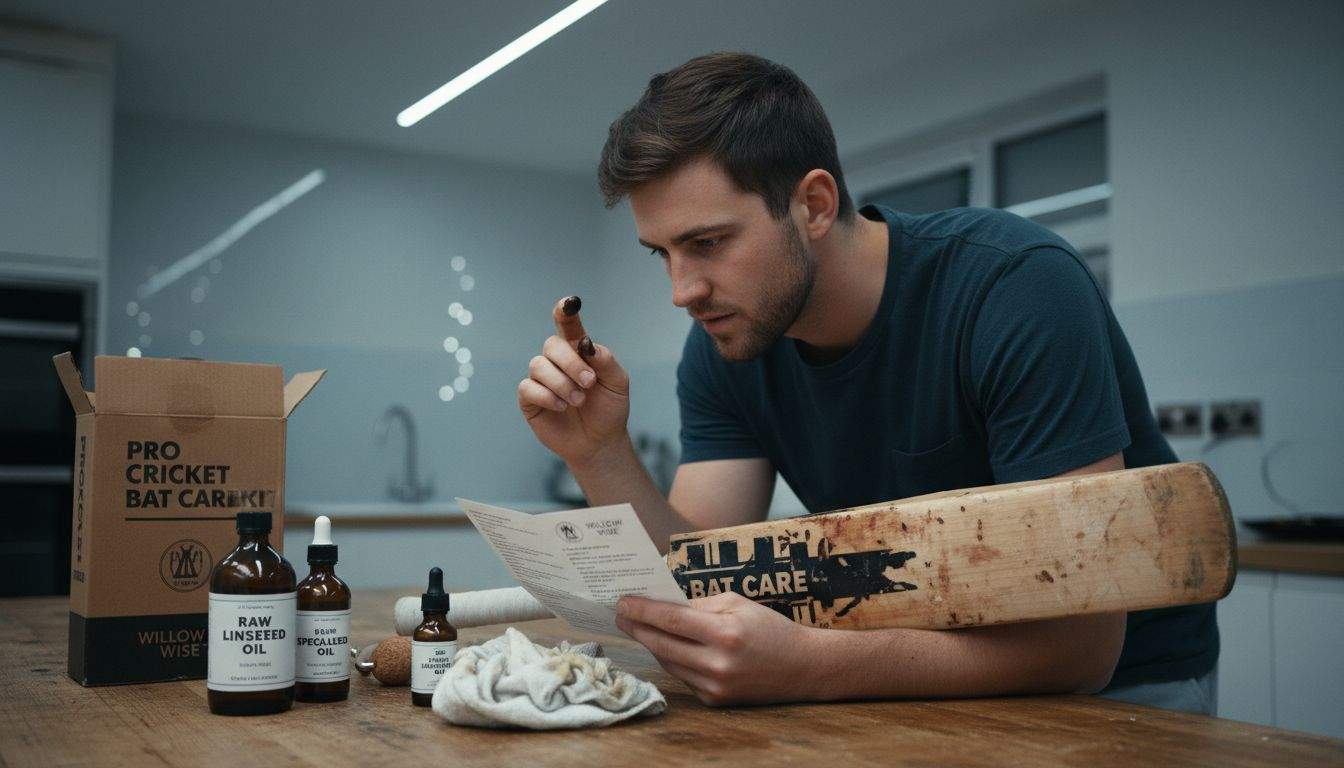
Here is a comparison of popular cricket bat oil types and their effects:
| Oil Type | Penetration | Protective Quality | Suitability for Bats |
|---|---|---|---|
| Raw linseed oil | Deep into fibres | High natural protection | Most recommended, traditional |
| Boiled linseed oil | Moderate | Faster drying, less deep | Acceptable but less ideal |
| Synthetic oils | Surface level | Variable, may be harsh | Often discouraged |
| Special bat oils | Balanced | Enhanced preservation | Suited for modern bats |
Pro Tip - Oil Selection: Select a high-quality, pure raw linseed oil specifically designed for cricket bats, and always perform a small patch test on an inconspicuous area to ensure compatibility with your bat’s specific wood grain and finish.
When and How Often to Oil
Determining the optimal timing for cricket bat oiling requires understanding the nuanced relationship between wood condition and environmental factors. Best practices for bat maintenance suggest oiling at the beginning of each cricket season or when visible signs of wood dryness emerge. This proactive approach helps prevent structural degradation and maintains the bat’s performance characteristics.
The frequency of oiling is not a one-size-fits-all proposition. Cricket bat care guidelines emphasise responding to the bat’s specific moisture needs rather than adhering to a rigid schedule. New bats typically require 1-2 light coats during initial preparation, with each application separated by complete drying time. Experienced players should monitor their bat’s appearance and feel, looking for subtle indicators of dryness such as:
- Slight colour changes in the wood
- Reduced surface smoothness
- Microscopic surface cracking
- Increased wood brittleness
Professional cricketers recommend a nuanced approach to bat maintenance. For players using their bat regularly, a light oiling every few months can help maintain optimal wood condition. However, over-oiling can be equally detrimental, potentially saturating the wood and compromising its natural resilience. Climate and storage conditions play significant roles in determining precise oiling intervals, with humid environments potentially requiring less frequent treatment compared to dry, arid locations.
Pro Tip - Moisture Monitoring: Develop a routine of gently running your hand along the bat’s surface to assess its moisture levels, treating it as a tactile health check that guides your oiling schedule.
Risks, Myths, and Common Errors
Maintaining a cricket bat requires understanding potential pitfalls that can compromise its performance and longevity. Common cricket bat maintenance mistakes reveal several critical errors players frequently encounter. These range from technical application issues to fundamental misunderstandings about wood preservation that can inadvertently damage the bat’s structural integrity.
Several persistent myths surround cricket bat maintenance that can lead players astray. Many erroneously believe that more oil equates to better protection, when in reality, excessive oiling can oversaturate the wood and reduce its natural responsiveness. Key misconceptions include:
- Thinking any oil will suffice for bat maintenance
- Believing more frequent oiling prevents wood damage
- Assuming all bats require identical maintenance
- Ignoring individual wood grain characteristics
- Neglecting proper cleaning before oil application
The risks associated with improper bat maintenance extend beyond simple cosmetic concerns. Inappropriate oiling techniques can compromise the bat’s fundamental structural properties, reducing its ability to absorb shock and transfer energy during gameplay. Professional cricketers understand that each bat represents a unique instrument with specific care requirements. Overzealous or inconsistent maintenance can lead to premature wood degradation, uneven moisture distribution, and potentially catastrophic structural failures during critical moments of play.
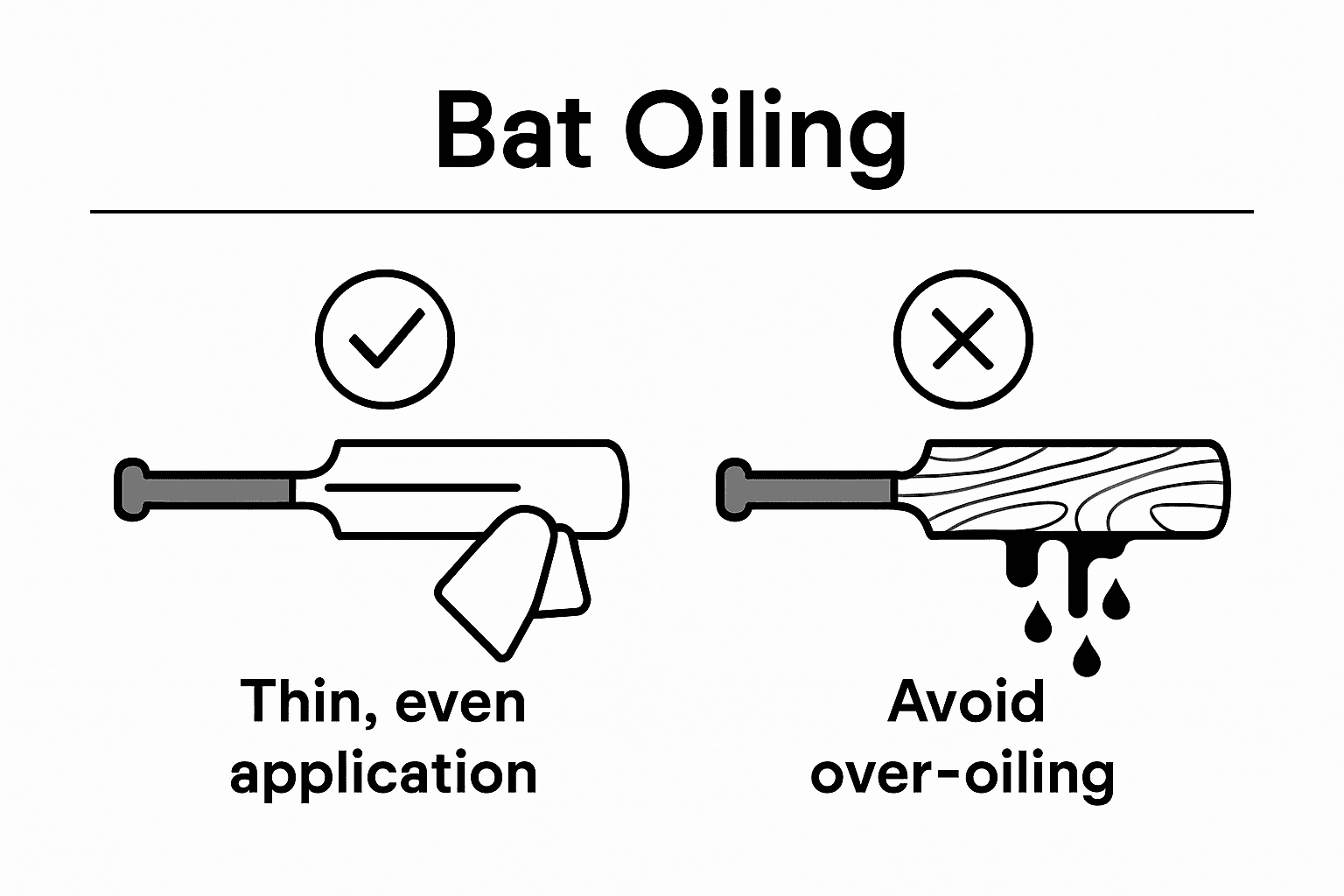
This table summarises common cricket bat oiling mistakes and their long-term impact:
| Mistake | Immediate Effect | Long-term Consequence |
|---|---|---|
| Over-oiling | Sticky or soft surface | Reduced power, wood deterioration |
| Using wrong oil | Poor absorption or residue | Weakening or surface damage |
| Inadequate cleaning | Oil does not penetrate | Trapped dirt, reduced protection |
| Skipping drying time | Uneven oiling | Patches of brittle or weak wood |
Pro Tip - Cautious Approach: Always treat your cricket bat as a precision instrument, performing careful, minimal interventions and consulting manufacturer guidelines before implementing any maintenance technique.
Protect Your Investment with Expertly Crafted Cricket Bats and Proper Care
Oiling your cricket bat is essential for boosting its longevity and ensuring top performance by preserving the wood’s natural flexibility and strength. At cricketbats.com, we understand the challenges players face with bat maintenance such as preventing cracking, maintaining moisture balance, and achieving consistent performance. That is why we offer a premium selection of cricket bats designed to withstand rigorous play when combined with the right care techniques like precision oiling described in the article.

Explore our range featuring trusted brands like adidas Cricket Bats – Cricket Bats Com and Kookaburra Cricket Bats – Cricket Bats Com. Each bat is crafted with quality willow that responds well to proper oiling, ensuring your bat remains powerful and durable throughout the season. Visit our Home page – Cricket Bats Com today to find your ideal bat along with expert advice on care and maintenance. Take action now and keep your cricket bat performing at its peak by pairing the right equipment with essential oiling practices from cricketbats.com.
Frequently Asked Questions
What is the purpose of oiling a cricket bat?
Oiling a cricket bat protects the wood from moisture, prevents cracking, and extends its lifespan by stabilising the wood’s cellular structure.
How often should I oil my cricket bat?
It is recommended to oil your cricket bat at the beginning of each season or when you notice signs of dryness. A light oiling every few months may also help maintain optimal wood condition.
What type of oil should I use for cricket bat maintenance?
Raw linseed oil is the preferred choice for cricket bat maintenance as it penetrates deeply into the wood without creating a thick surface coating. Some players use specially formulated cricket bat oils for enhanced protection.
What are common mistakes to avoid when oiling a cricket bat?
Common mistakes include over-oiling, using the wrong type of oil, inadequate cleaning before oiling, and not allowing enough drying time between applications, all of which can compromise the bat’s performance and longevity.
Recommended
- Cricket Bat Maintenance Tips: Boosting Bat Longevity – Cricket Bats Com
- The Essentials of Making a Cricket Bat With Artistry – Cricket Bats Com
- What Is a Custom Cricket Bat and Its Value – Cricket Bats Com
- How to Make a Cricket Bat – Cricket Bats Com
- Cookware Longevity: Everything You Need to Know – Brass & Steel
Most British cricket fans overlook the fact that a simple mistake in bat maintenance can shorten a bat’s lifespan by years. For players passionate about their game, keeping a cricket bat performing at its best means more than just regular use. Understanding how oiling creates a vital shield against moisture and structural damage is the difference between a bat that thrives season after season and one that fails at a crucial moment. Learn why British cricketers never skip this crucial step.
Table of Contents
- What Oiling A Cricket Bat Means
- Essential Benefits Of Bat Oiling
- Types Of Oil And Application Methods
- When And How Often To Oil
- Risks, Myths, And Common Errors
Key Takeaways
| Point | Details |
|---|---|
| Importance of Oiling | Oiling a cricket bat prevents moisture absorption and extends its lifespan by stabilising the wood’s cellular structure. |
| Application Technique | Use raw linseed oil applied in thin layers, ensuring even coverage while avoiding oversaturation. |
| Oiling Frequency | Oil at the start of the season or when signs of dryness appear, monitoring the bat’s condition for best results. |
| Common Mistakes | Avoid over-oiling and using inappropriate oils to maintain structural integrity and performance characteristics. |
What Oiling a Cricket Bat Means
Oiling a cricket bat represents a critical maintenance process designed to protect and enhance wooden bat performance. This technique involves carefully applying specialised linseed oil to the surface and edges of a cricket bat, creating a protective barrier that prevents moisture absorption and potential structural damage. Proper oiling helps stabilise the wood’s cellular structure, reducing the likelihood of cracking and extending the bat’s overall lifespan.
The fundamental purpose of bat oiling is moisture management. Wooden cricket bats are naturally porous, making them vulnerable to environmental humidity fluctuations. Without appropriate treatment, these wooden instruments can develop microscopic fissures, compromise their structural integrity, and significantly diminish their playing characteristics. Cricket Bat Maintenance Tips highlight how strategic oiling creates a protective seal that minimises wood expansion and contraction.
Professional cricketers and equipment managers understand that bat oiling is not a random process but a precise technique. The oil must be applied sparingly and evenly, focusing on the bat’s face, edges, and back while avoiding oversaturation. Typically, raw linseed oil is preferred, as it penetrates wood fibres without creating an overly thick surface coating. Players should apply thin layers, allowing each application to absorb completely before adding subsequent coats.
Pro Tip - Precision Application: When oiling your cricket bat, use a soft, lint-free cloth and apply oil in gentle, long strokes following the wood grain, ensuring complete and uniform coverage without pooling or excessive saturation.
Essential Benefits of Bat Oiling
Bat oiling is a fundamental maintenance technique that dramatically enhances the performance and longevity of cricket bats. Regular moisture preservation prevents wood degradation, ensuring that the bat maintains its structural integrity and playing characteristics over extended periods of use. By creating a protective barrier, oiling significantly reduces the risk of wood cracking, splitting, and structural weakness.
The primary benefits of bat oiling extend beyond mere surface protection. Wooden cricket bats are remarkably sensitive to environmental conditions, with moisture content playing a crucial role in their performance. Willow wood preservation techniques help cricketers maintain the bat’s natural flexibility and resilience. This process prevents the wood from becoming brittle, which can significantly compromise the bat’s ability to absorb impact and transfer energy during gameplay.
Additionally, strategic oiling contributes to the bat’s overall performance characteristics. By maintaining consistent wood density and preventing uneven moisture absorption, players can ensure more predictable ball striking and improved power transmission. Professional cricketers understand that a well-oiled bat responds more consistently, providing better control and reducing the likelihood of unexpected structural failures during critical moments of play.
Pro Tip - Precision Maintenance: Always store your cricket bat in a cool, dry environment after oiling, allowing the oil to fully absorb and stabilise the wood’s cellular structure, which maximises the protective benefits and extends the bat’s performance lifespan.
Types of Oil and Application Methods
Choosing the right oil and applying it correctly are critical steps in maintaining a cricket bat’s performance and longevity. Raw linseed oil emerges as the gold standard for cricket bat maintenance, prized for its ability to penetrate wood fibres without creating an overly thick surface coating. Some manufacturers recommend specially formulated cricket bat oils that combine linseed with additional protective compounds, designed to offer enhanced wood preservation.
Application methods require precision and careful technique. Cricketers should use a soft, lint-free cloth to apply oil in gentle, long strokes following the wood grain. The Essentials of Making a Cricket Bat With Artistry highlights the importance of maintaining an even, thin layer of oil. Players must avoid oversaturating the bat, which can lead to potential damage. Typical application involves:
- Applying a minimal amount of oil
- Spreading evenly across the bat’s face and edges
- Allowing complete absorption between coats
- Limiting total oil application to 1-2 light coats per season
Different types of oils offer varied benefits for cricket bat maintenance. Pure raw linseed oil remains the most traditional choice, while some modern alternatives include boiled linseed oil and specialist cricket bat conditioning oils. Each variant provides unique protective qualities, with raw linseed oil offering the most natural wood preservation. Professional players often prefer minimally processed oils that maintain the wood’s inherent characteristics without introducing unnecessary synthetic compounds.
Here is a comparison of popular cricket bat oil types and their effects:
| Oil Type | Penetration | Protective Quality | Suitability for Bats |
|---|---|---|---|
| Raw linseed oil | Deep into fibres | High natural protection | Most recommended, traditional |
| Boiled linseed oil | Moderate | Faster drying, less deep | Acceptable but less ideal |
| Synthetic oils | Surface level | Variable, may be harsh | Often discouraged |
| Special bat oils | Balanced | Enhanced preservation | Suited for modern bats |
Pro Tip - Oil Selection: Select a high-quality, pure raw linseed oil specifically designed for cricket bats, and always perform a small patch test on an inconspicuous area to ensure compatibility with your bat’s specific wood grain and finish.
When and How Often to Oil
Determining the optimal timing for cricket bat oiling requires understanding the nuanced relationship between wood condition and environmental factors. Best practices for bat maintenance suggest oiling at the beginning of each cricket season or when visible signs of wood dryness emerge. This proactive approach helps prevent structural degradation and maintains the bat’s performance characteristics.
The frequency of oiling is not a one-size-fits-all proposition. Cricket bat care guidelines emphasise responding to the bat’s specific moisture needs rather than adhering to a rigid schedule. New bats typically require 1-2 light coats during initial preparation, with each application separated by complete drying time. Experienced players should monitor their bat’s appearance and feel, looking for subtle indicators of dryness such as:
- Slight colour changes in the wood
- Reduced surface smoothness
- Microscopic surface cracking
- Increased wood brittleness
Professional cricketers recommend a nuanced approach to bat maintenance. For players using their bat regularly, a light oiling every few months can help maintain optimal wood condition. However, over-oiling can be equally detrimental, potentially saturating the wood and compromising its natural resilience. Climate and storage conditions play significant roles in determining precise oiling intervals, with humid environments potentially requiring less frequent treatment compared to dry, arid locations.
Pro Tip - Moisture Monitoring: Develop a routine of gently running your hand along the bat’s surface to assess its moisture levels, treating it as a tactile health check that guides your oiling schedule.
Risks, Myths, and Common Errors
Maintaining a cricket bat requires understanding potential pitfalls that can compromise its performance and longevity. Common cricket bat maintenance mistakes reveal several critical errors players frequently encounter. These range from technical application issues to fundamental misunderstandings about wood preservation that can inadvertently damage the bat’s structural integrity.
Several persistent myths surround cricket bat maintenance that can lead players astray. Many erroneously believe that more oil equates to better protection, when in reality, excessive oiling can oversaturate the wood and reduce its natural responsiveness. Key misconceptions include:
- Thinking any oil will suffice for bat maintenance
- Believing more frequent oiling prevents wood damage
- Assuming all bats require identical maintenance
- Ignoring individual wood grain characteristics
- Neglecting proper cleaning before oil application
The risks associated with improper bat maintenance extend beyond simple cosmetic concerns. Inappropriate oiling techniques can compromise the bat’s fundamental structural properties, reducing its ability to absorb shock and transfer energy during gameplay. Professional cricketers understand that each bat represents a unique instrument with specific care requirements. Overzealous or inconsistent maintenance can lead to premature wood degradation, uneven moisture distribution, and potentially catastrophic structural failures during critical moments of play.
This table summarises common cricket bat oiling mistakes and their long-term impact:
| Mistake | Immediate Effect | Long-term Consequence |
|---|---|---|
| Over-oiling | Sticky or soft surface | Reduced power, wood deterioration |
| Using wrong oil | Poor absorption or residue | Weakening or surface damage |
| Inadequate cleaning | Oil does not penetrate | Trapped dirt, reduced protection |
| Skipping drying time | Uneven oiling | Patches of brittle or weak wood |
Pro Tip - Cautious Approach: Always treat your cricket bat as a precision instrument, performing careful, minimal interventions and consulting manufacturer guidelines before implementing any maintenance technique.
Protect Your Investment with Expertly Crafted Cricket Bats and Proper Care
Oiling your cricket bat is essential for boosting its longevity and ensuring top performance by preserving the wood’s natural flexibility and strength. At cricketbats.com, we understand the challenges players face with bat maintenance such as preventing cracking, maintaining moisture balance, and achieving consistent performance. That is why we offer a premium selection of cricket bats designed to withstand rigorous play when combined with the right care techniques like precision oiling described in the article.
Explore our range featuring trusted brands like adidas Cricket Bats – Cricket Bats Com and Kookaburra Cricket Bats – Cricket Bats Com. Each bat is crafted with quality willow that responds well to proper oiling, ensuring your bat remains powerful and durable throughout the season. Visit our Home page – Cricket Bats Com today to find your ideal bat along with expert advice on care and maintenance. Take action now and keep your cricket bat performing at its peak by pairing the right equipment with essential oiling practices from cricketbats.com.
Frequently Asked Questions
What is the purpose of oiling a cricket bat?
Oiling a cricket bat protects the wood from moisture, prevents cracking, and extends its lifespan by stabilising the wood’s cellular structure.
How often should I oil my cricket bat?
It is recommended to oil your cricket bat at the beginning of each season or when you notice signs of dryness. A light oiling every few months may also help maintain optimal wood condition.
What type of oil should I use for cricket bat maintenance?
Raw linseed oil is the preferred choice for cricket bat maintenance as it penetrates deeply into the wood without creating a thick surface coating. Some players use specially formulated cricket bat oils for enhanced protection.
What are common mistakes to avoid when oiling a cricket bat?
Common mistakes include over-oiling, using the wrong type of oil, inadequate cleaning before oiling, and not allowing enough drying time between applications, all of which can compromise the bat’s performance and longevity.
Recommended
- Cricket Bat Maintenance Tips: Boosting Bat Longevity – Cricket Bats Com
- The Essentials of Making a Cricket Bat With Artistry – Cricket Bats Com
- What Is a Custom Cricket Bat and Its Value – Cricket Bats Com
- How to Make a Cricket Bat – Cricket Bats Com
- Cookware Longevity: Everything You Need to Know – Brass & Steel