
News News
Cricket Shoes: 35% Injury Cut & Peak Performance Guide Cricket Shoes: 35% Injury Cut & Peak Performance Guide
Many players assume any athletic shoe works for cricket, but this common belief puts them at serious risk. Injury rates are 40% higher among players using non-cricket shoes, highlighting why specialized footwear matters. Cricket shoes are engineered specifically for the sport’s unique demands across batting, bowling, and fielding. This guide explores how the right cricket shoes enhance performance, prevent injuries, and deliver durability suited to UK and Australian playing conditions.
Table of Contents
- Introduction To Cricket Shoes And Their Importance
- Key Functional Roles Of Cricket Shoes In Performance
- Material And Construction Factors Influencing Durability
- Differences In Cricket Shoe Design For Uk Vs Australian Conditions
- Role-Based Cricket Shoe Design Considerations
- Common Misconceptions About Cricket Shoes
- Practical Guidance For Selecting And Maintaining Cricket Shoes
- Conclusion: Optimizing Cricket Performance Through The Right Shoes
- Explore Top Cricket Gear To Elevate Your Game
Key Takeaways
| Point | Details |
|---|---|
| Cricket shoes reduce injuries through specialized design | Role-specific features provide targeted support for batsmen, bowlers, and fielders, cutting injury risk by 35%. |
| Material quality drives durability across climates | Proper construction and maintenance extend shoe life by 30% in varied UK and Australian conditions. |
| Regional differences demand distinct shoe features | UK shoes prioritize waterproofing for wet pitches while Australian designs emphasize ventilation for dry heat. |
| Biomechanical support enhances player performance | Traction, stability, and cushioning features directly improve agility, power delivery, and movement efficiency. |
| Maintenance practices maximize equipment value | Regular cleaning, cleat inspection, and proper storage preserve performance and extend usable lifespan. |
Introduction to Cricket Shoes and Their Importance
Cricket shoes stand apart from generic athletic footwear through specialized engineering that addresses the sport’s specific biomechanical demands. Standard running shoes or trainers lack the lateral stability, rotational traction, and impact absorption essential for cricket movements. The consequences extend beyond mere discomfort.
These shoes deliver measurable performance enhancements across three critical areas. First, they provide superior traction through strategically placed cleats or dimpled soles designed for grass pitches. Second, they offer targeted stability features that support the rapid directional changes inherent to batting, bowling, and fielding. Third, they incorporate protective elements that reduce stress on joints and soft tissues during explosive movements.
Injury prevention represents perhaps the most compelling reason for investing in proper cricket footwear. Players who skip specialized shoes face elevated risks of ankle sprains, plantar fasciitis, and knee problems. The financial and physical costs of these injuries far exceed any initial savings from using inadequate footwear.
UK and Australian cricket environments present distinct challenges that quality cricket shoes address through adapted designs:
- Wet UK pitches demand enhanced waterproofing and deeper cleats for grip
- Dry Australian conditions require superior ventilation and moisture management
- Variable pitch hardness across both regions necessitates flexible yet durable sole construction
- Extended playing sessions in both climates benefit from advanced cushioning technologies
Key Functional Roles of Cricket Shoes in Performance
The biomechanical advantages of cricket shoes translate directly into measurable performance improvements on the field. Understanding these functional roles helps players appreciate why generic athletic footwear falls short for cricket’s unique movement patterns.
Traction forms the foundation of every cricket movement. Cleats or specialized sole patterns grip grass surfaces during acceleration, deceleration, and pivoting. Bowlers rely on this grip during their delivery stride, batsmen need it for quick singles, and fielders depend on it for explosive starts. Without proper traction, players compensate through altered biomechanics that reduce power output and increase injury risk.
Medial arch support and strategic cushioning deliver remarkable injury prevention benefits. Cricket shoes with medial arch support reduce injury rates like plantar fasciitis by approximately 35%, making them essential for player longevity. This support maintains proper foot alignment during the thousands of steps and impacts that occur during matches and training.
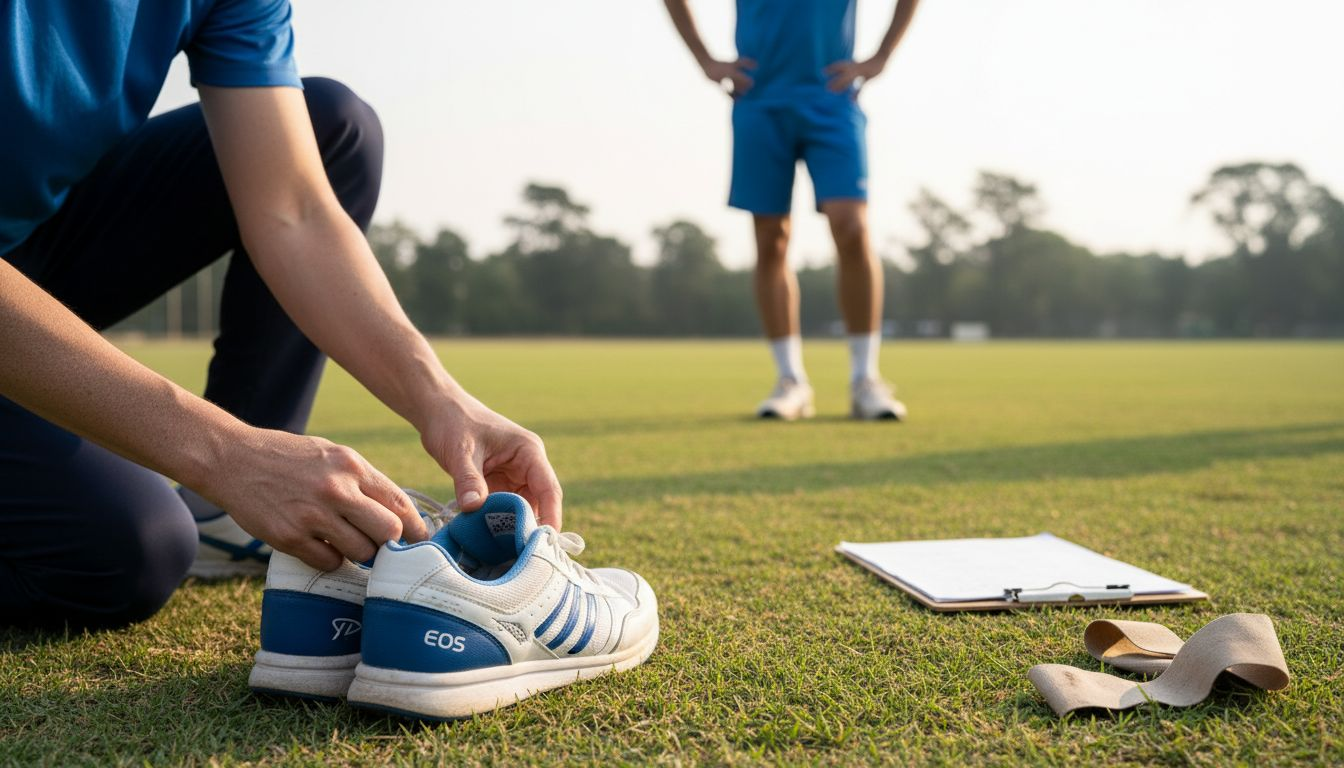
Rotational traction separates cricket shoes from other athletic footwear. Bowlers generate enormous rotational forces during their delivery, while batsmen pivot rapidly between wickets. Specialized role-based cricket shoe features include reinforced pivot points that allow controlled rotation without excessive friction that could cause joint stress.
Biomechanical design elements work synergistically to enhance agility:
- Heel counters provide ankle stability during lateral movements
- Flexible forefoot sections enable natural toe-off during sprinting
- Lightweight construction reduces energy expenditure over long playing periods
- Strategic padding protects high-impact zones without restricting movement
Pro Tip: Test cricket shoes by performing cricket-specific movements in-store, not just walking. Try quick direction changes and pivots to assess whether the shoe supports your natural movement patterns.
The biomechanics of cricket movement demand footwear that can handle multi-directional forces while maintaining comfort over extended periods. Quality cricket shoes balance these competing demands through thoughtful engineering backed by research on biomechanical support and injury reduction.
Material and Construction Factors Influencing Durability
The longevity of cricket shoes depends heavily on material selection and construction quality. Understanding these factors helps players make informed purchases that deliver value over multiple seasons.
Outsole rubber composition directly impacts wear resistance and traction retention. Premium cricket shoes use high-density rubber compounds in high-wear areas like the toe and heel, while maintaining softer rubber under the forefoot for flexibility. Cheaper alternatives often use uniform rubber hardness that either wears too quickly or sacrifices comfort.
Upper material choices create tradeoffs between breathability, durability, and water resistance:
- Full-grain leather offers superior durability and molds to foot shape but requires more break-in time
- Synthetic meshes provide excellent ventilation and lightweight comfort but may wear faster
- Hybrid constructions combine leather reinforcements with mesh panels for balanced performance
- Waterproof membranes add protection but can reduce breathability in hot conditions
Reinforcement technologies extend shoe life in critical stress zones. Quality manufacturers add double stitching, rubberized overlays, or thermoplastic reinforcements at the toe box, medial arch, and heel counter. These enhancements prevent premature breakdown in areas that experience repetitive impact and friction.
Proper maintenance amplifies the durability benefits of quality materials. Regular cleaning removes abrasive dirt and grass particles that accelerate wear. Inspecting soles for cleat damage or separation catches problems before they compromise performance. Studies suggest these simple practices can extend cricket shoe life by approximately 30%.
Pro Tip: Rotate between two pairs of cricket shoes if you play frequently. Allowing 48 hours between uses lets materials fully dry and recover their shape, significantly extending overall lifespan.
The initial cost difference between budget and premium cricket shoes often disappears when calculating cost per use over the shoe’s lifetime. Quality materials and construction deliver better performance and longer service, making them the economical choice for serious players. Detailed maintenance tips for cricket gear can further maximize your equipment investment.
Differences in Cricket Shoe Design for UK vs Australian Conditions
Regional climate and pitch variations drive significant design differences between cricket shoes optimized for UK versus Australian conditions. Players competing in both regions or those planning equipment purchases abroad should understand these distinctions.
UK cricket environments typically involve wetter conditions and softer pitch surfaces. Shoes designed for these conditions prioritize waterproofing through treated leather uppers or integrated membranes. Cleat configurations tend toward longer studs spaced to prevent mud accumulation. The dampness also demands materials that resist breakdown from moisture exposure over repeated wet sessions.
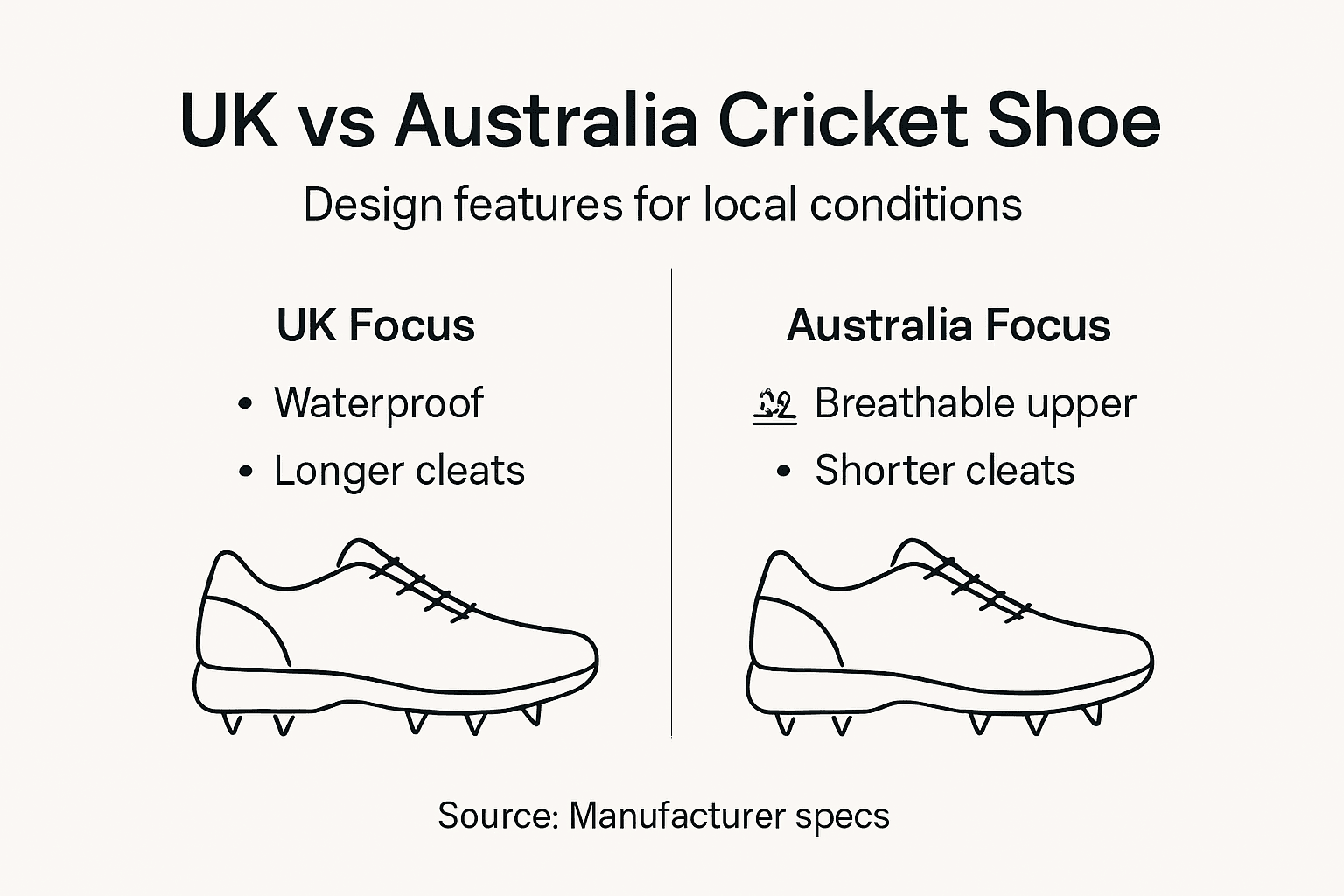
Australian cricket occurs predominantly in hot, dry conditions that create different footwear demands. Australian cricket shoes improve moisture wicking by 20% to suit hotter, drier climates, using advanced synthetic meshes and ventilation channels. The firm, fast pitches common in Australia favor shorter, more numerous cleats or dimpled rubber soles that provide traction without excessive penetration.
| Feature | UK Design Focus | Australian Design Focus |
|---|---|---|
| Upper Material | Waterproof leather or treated synthetics | Breathable mesh with moisture-wicking properties |
| Cleat Configuration | Longer studs (12-15mm) for soft ground grip | Shorter multi-studs or rubber dimples for hard pitches |
| Ventilation | Moderate airflow with water protection | Maximum ventilation through mesh panels |
| Sole Flexibility | Firmer for stability on soft surfaces | More flexible for harder ground impact |
Material durability considerations shift based on environmental stressors. UK shoes must withstand moisture cycling and mud exposure that can degrade adhesives and stitching. Australian shoes face UV degradation and heat-related material fatigue that demands different protective treatments and construction methods.
The UK and Australian climate impact on cricket gear extends beyond footwear to all equipment choices. Players relocating between regions or competing internationally should budget for region-appropriate gear rather than expecting universal performance. The performance and durability gains from properly matched equipment justify the investment. Detailed study on climatic differences influencing cricket shoe design provides technical insights for equipment managers and serious players.
Role-Based Cricket Shoe Design Considerations
The distinct biomechanical demands of batting, bowling, and fielding create specific footwear requirements that optimize performance and reduce injury risk for each role. Generic cricket shoes compromise effectiveness by attempting to serve all purposes adequately rather than excelling at specific functions.
Bowlers face the most extreme footwear demands due to repetitive high-impact landings during delivery strides. Quality bowling shoes incorporate substantial heel cushioning to absorb forces that can exceed three times body weight. Lateral support structures prevent ankle rolling during the rotational component of bowling actions. The front foot landing zone requires reinforced materials to withstand constant abrasion. Fast bowlers particularly benefit from shoes with enhanced stability features that maintain alignment through explosive movements.
Batsmen need flexible soles that enable quick footwork and rapid direction changes between wickets. Lighter weight construction reduces fatigue during long innings while maintaining adequate protection. The emphasis shifts from maximum cushioning to responsive ground feel that aids timing and balance. Batsmen’s shoes typically feature more uniform cleat distribution since they move in all directions rather than following the linear path of bowlers.
Fielders require a balanced design emphasizing agility and durability across varied movements:
- Lightweight construction for explosive acceleration during chases
- Responsive cushioning for repeated jumping and diving
- Durable uppers to withstand sliding and ground contact
- Secure fit systems that prevent internal foot movement during direction changes
| Role | Primary Design Priority | Key Feature | Durability Tradeoff |
|---|---|---|---|
| Fast Bowler | Impact absorption and stability | Extra heel cushioning, reinforced toe | Heavier weight, slightly reduced flexibility |
| Batsman | Agility and ground feel | Flexible sole, lightweight build | Less protective in high-impact zones |
| Fielder | Multi-directional movement | Balanced cushioning, secure fit | Moderate across all factors |
Role-specific optimization creates durability tradeoffs that players should understand. Heavily cushioned bowling shoes last longer in their primary function but wear faster if used extensively for batting or fielding. Lightweight batting shoes sacrifice some protective features that could extend lifespan under bowling stresses.
Serious players who regularly perform multiple roles may benefit from owning role-specific footwear. The performance gains and injury prevention benefits often justify the additional investment. Those seeking a single pair should prioritize their primary role’s requirements while accepting moderate compromises in secondary functions. Understanding role-specific footwear needs helps players make informed equipment decisions aligned with their playing style.
Common Misconceptions About Cricket Shoes
Several persistent myths about cricket footwear lead players toward poor purchasing decisions that compromise performance and increase injury risk. Addressing these misconceptions helps cricketers make informed choices based on evidence rather than assumptions.
Myth one: any athletic shoe works for cricket. This dangerous belief ignores biomechanical research showing significantly elevated injury rates with inappropriate footwear. Running shoes lack lateral stability features essential for cricket’s multi-directional movements. Tennis shoes provide some lateral support but miss the specialized traction patterns needed for grass pitches. Cross-trainers offer compromise performance across activities but excel at none. Generic athletic shoes force players to compensate through altered movement patterns that increase joint stress and reduce power output.
Myth two: higher price automatically means better performance. While quality materials and construction often cost more, price alone fails to predict how well a shoe matches individual needs. An expensive bowling shoe performs poorly for batsmen despite its premium construction. Proper fit matters more than brand prestige or cost. Shoes that match foot shape and biomechanical needs at moderate prices often outperform ill-fitting premium options. Marketing budgets and brand positioning influence retail prices as much as manufacturing quality.
Myth three: one cricket shoe design suits all playing roles. This misconception stems from seeing multipurpose cricket shoes marketed as universal solutions:
- Bowlers lose crucial heel cushioning and stability in generalist designs
- Batsmen sacrifice flexibility and ground feel with over-built protective features
- Fielders get neither the specialized support nor optimal weight distribution they need
- Injury risk increases when footwear mismatches movement patterns
- Performance suffers across technical skills when biomechanical needs go unmet
Myth four: cricket shoes require extensive break-in periods causing blisters and discomfort. Modern manufacturing and materials have largely eliminated the painful break-in associated with older leather cricket boots. Quality contemporary cricket shoes should feel comfortable immediately, though optimal fit develops over several sessions as materials adapt to foot shape. Persistent discomfort signals poor fit or design mismatch rather than normal break-in. Players should never accept painful shoes hoping they improve with use.
Myth five: maintenance makes little difference to cricket shoe longevity. This belief leads to premature equipment failure and unnecessary replacement costs. Simple cleaning, proper drying, and storage practices dramatically extend shoe life. Neglected shoes accumulate performance-degrading dirt, develop odor-causing bacteria, and experience accelerated material breakdown from moisture damage.
Practical Guidance for Selecting and Maintaining Cricket Shoes
Applying the insights from previous sections requires concrete steps for choosing optimal cricket footwear and maximizing its lifespan through proper care. These practical guidelines help players translate knowledge into equipment decisions that enhance performance.
Selection process for cricket shoes:
- Identify your primary playing role (bowler, batsman, or fielder) to prioritize relevant design features
- Assess typical playing conditions including pitch type and climate to match waterproofing and ventilation needs
- Determine whether you need UK-style shoes for wet conditions or Australian-style for dry heat
- Try multiple brands and models since sizing varies significantly between manufacturers
- Perform cricket-specific movements during fitting rather than just walking to evaluate true performance
- Prioritize biomechanical support and proper fit over brand names or aesthetic preferences
- Budget for quality materials and construction that deliver long-term value through extended lifespan
Maintenance practices that extend cricket shoe durability:
- Remove loose dirt and grass immediately after each use before it embeds in materials
- Clean uppers with appropriate products for leather or synthetic materials every few sessions
- Inspect cleats and sole attachment points weekly for wear or separation requiring repair
- Air-dry shoes thoroughly away from direct heat that can damage adhesives and materials
- Store in a cool, dry location with shoe trees or crumpled paper to maintain shape
- Rotate between pairs if playing frequently to allow materials full recovery time between uses
- Apply protective treatments to leather uppers seasonally to maintain water resistance
Pro Tip: Keep a dedicated brush and cleaning supplies in your cricket bag so maintenance becomes part of your post-session routine rather than a forgotten chore.
Common fitting mistakes compromise even quality cricket shoes. Shoes should secure the heel firmly while allowing toe movement. Width matters as much as length since lateral movements require stable foot positioning. Trying shoes with cricket socks rather than thin dress socks ensures accurate fit assessment. Late afternoon fittings account for normal foot swelling that occurs during play.
The maintenance checklist for cricket gear includes footwear care alongside bat and pad maintenance. Comprehensive maintenance tips for cricket shoes provide detailed cleaning protocols. Expert tips on maintaining equipment longevity apply across sports equipment categories. Investing time in proper selection and ongoing care delivers returns through enhanced performance, injury prevention, and extended equipment lifespan.
Conclusion: Optimizing Cricket Performance Through The Right Shoes
Cricket shoes represent far more than footwear. They function as essential performance equipment that directly impacts safety, effectiveness, and playing longevity. The specialized engineering behind quality cricket shoes delivers measurable benefits including superior grip, targeted biomechanical support, and significant injury risk reduction.
Durability emerges from the interaction between quality materials, appropriate construction, and consistent maintenance practices. Players who select shoes matched to their specific role and playing conditions while following basic care protocols maximize both performance and equipment value. The 30% lifespan extension from proper maintenance transforms cricket shoes from disposable items into durable investments.
Regional adaptations matter significantly for players in UK versus Australian environments. Waterproofing, ventilation, cleat design, and material selection should align with typical playing conditions to deliver optimal performance and longevity. Attempting to use UK-optimized shoes in Australian conditions or vice versa compromises both effectiveness and durability.
Role-specific design features make cricket shoes purchased for your primary playing position the smart choice. Bowlers, batsmen, and fielders each benefit from targeted engineering that addresses their unique biomechanical demands. While multipurpose shoes offer convenience, specialized footwear delivers superior performance and injury prevention for serious players.
Explore Top Cricket Gear to Elevate Your Game
Equipping yourself with knowledge about cricket shoes forms just one part of optimizing your cricket performance. Complete your setup by exploring the high-quality cricket equipment available at cricketbats.com.

Our carefully curated selection includes premium cricket bats from trusted manufacturers like Gunn & Moore, designed to complement your improved footwear choices. Whether you need equipment suited to UK or Australian conditions, our range addresses the specific demands of your playing environment. Shop quality cricket bats and accessories that match your commitment to performance excellence. Discover gear tailored for cricket roles to complete your cricket kit with equipment engineered for your position. Our expert team helps you make informed decisions that enhance every aspect of your game.
FAQ
What makes cricket shoes different from regular athletic shoes?
Cricket shoes feature specialized cleats or sole patterns designed specifically for grass pitch traction and the lateral stability demands of cricket movements. They incorporate biomechanical support elements like medial arch reinforcement and strategic cushioning that prevent cricket-specific injuries. Generic athletic shoes lack these features and significantly increase injury risk while compromising performance.
How should I choose cricket shoes for UK versus Australian conditions?
UK conditions favor waterproof shoes with longer cleats designed for softer, wetter pitches that characterize British cricket environments. Australian conditions demand highly ventilated shoes with shorter cleats or dimpled soles suited to harder, drier pitches and hot playing conditions. Material selection and construction should match your primary playing environment’s specific demands.
Can I use one type of cricket shoe for all playing roles?
While multipurpose cricket shoes exist, role-specific designs optimize performance for bowlers, batsmen, and fielders. Bowlers need extra heel cushioning and lateral support that batsmen find restrictive. Batsmen benefit from flexible, lightweight shoes that lack the protective features bowlers require. Serious players performing one role primarily should choose footwear designed for their position’s specific biomechanical demands.
What maintenance steps prolong cricket shoe durability?
Regularly remove dirt and grass after each session to prevent embedded debris from accelerating wear. Inspect cleats and sole attachments weekly for damage requiring repair. Air-dry shoes thoroughly away from direct heat and store them in cool, dry locations. These simple practices extend shoe life by up to 30% while maintaining performance characteristics. Visit our comprehensive cricket gear maintenance tips for detailed care protocols.
Recommended
- Cricket Shop Stocking Checklist: 30% Protective Gear Boosts Sales – Cricket Bats Com
- Cricket Bat Customisation Guide for Optimal Performance – Cricket Bats Com
- How to Prepare a New Cricket Bat: 20% Better Performance – Cricket Bats Com
- Cricket Bat Performance Factors: Maximising Your Game – Cricket Bats Com
Many players assume any athletic shoe works for cricket, but this common belief puts them at serious risk. Injury rates are 40% higher among players using non-cricket shoes, highlighting why specialized footwear matters. Cricket shoes are engineered specifically for the sport’s unique demands across batting, bowling, and fielding. This guide explores how the right cricket shoes enhance performance, prevent injuries, and deliver durability suited to UK and Australian playing conditions.
Table of Contents
- Introduction To Cricket Shoes And Their Importance
- Key Functional Roles Of Cricket Shoes In Performance
- Material And Construction Factors Influencing Durability
- Differences In Cricket Shoe Design For Uk Vs Australian Conditions
- Role-Based Cricket Shoe Design Considerations
- Common Misconceptions About Cricket Shoes
- Practical Guidance For Selecting And Maintaining Cricket Shoes
- Conclusion: Optimizing Cricket Performance Through The Right Shoes
- Explore Top Cricket Gear To Elevate Your Game
Key Takeaways
| Point | Details |
|---|---|
| Cricket shoes reduce injuries through specialized design | Role-specific features provide targeted support for batsmen, bowlers, and fielders, cutting injury risk by 35%. |
| Material quality drives durability across climates | Proper construction and maintenance extend shoe life by 30% in varied UK and Australian conditions. |
| Regional differences demand distinct shoe features | UK shoes prioritize waterproofing for wet pitches while Australian designs emphasize ventilation for dry heat. |
| Biomechanical support enhances player performance | Traction, stability, and cushioning features directly improve agility, power delivery, and movement efficiency. |
| Maintenance practices maximize equipment value | Regular cleaning, cleat inspection, and proper storage preserve performance and extend usable lifespan. |
Introduction to Cricket Shoes and Their Importance
Cricket shoes stand apart from generic athletic footwear through specialized engineering that addresses the sport’s specific biomechanical demands. Standard running shoes or trainers lack the lateral stability, rotational traction, and impact absorption essential for cricket movements. The consequences extend beyond mere discomfort.
These shoes deliver measurable performance enhancements across three critical areas. First, they provide superior traction through strategically placed cleats or dimpled soles designed for grass pitches. Second, they offer targeted stability features that support the rapid directional changes inherent to batting, bowling, and fielding. Third, they incorporate protective elements that reduce stress on joints and soft tissues during explosive movements.
Injury prevention represents perhaps the most compelling reason for investing in proper cricket footwear. Players who skip specialized shoes face elevated risks of ankle sprains, plantar fasciitis, and knee problems. The financial and physical costs of these injuries far exceed any initial savings from using inadequate footwear.
UK and Australian cricket environments present distinct challenges that quality cricket shoes address through adapted designs:
- Wet UK pitches demand enhanced waterproofing and deeper cleats for grip
- Dry Australian conditions require superior ventilation and moisture management
- Variable pitch hardness across both regions necessitates flexible yet durable sole construction
- Extended playing sessions in both climates benefit from advanced cushioning technologies
Key Functional Roles of Cricket Shoes in Performance
The biomechanical advantages of cricket shoes translate directly into measurable performance improvements on the field. Understanding these functional roles helps players appreciate why generic athletic footwear falls short for cricket’s unique movement patterns.
Traction forms the foundation of every cricket movement. Cleats or specialized sole patterns grip grass surfaces during acceleration, deceleration, and pivoting. Bowlers rely on this grip during their delivery stride, batsmen need it for quick singles, and fielders depend on it for explosive starts. Without proper traction, players compensate through altered biomechanics that reduce power output and increase injury risk.
Medial arch support and strategic cushioning deliver remarkable injury prevention benefits. Cricket shoes with medial arch support reduce injury rates like plantar fasciitis by approximately 35%, making them essential for player longevity. This support maintains proper foot alignment during the thousands of steps and impacts that occur during matches and training.
Rotational traction separates cricket shoes from other athletic footwear. Bowlers generate enormous rotational forces during their delivery, while batsmen pivot rapidly between wickets. Specialized role-based cricket shoe features include reinforced pivot points that allow controlled rotation without excessive friction that could cause joint stress.
Biomechanical design elements work synergistically to enhance agility:
- Heel counters provide ankle stability during lateral movements
- Flexible forefoot sections enable natural toe-off during sprinting
- Lightweight construction reduces energy expenditure over long playing periods
- Strategic padding protects high-impact zones without restricting movement
Pro Tip: Test cricket shoes by performing cricket-specific movements in-store, not just walking. Try quick direction changes and pivots to assess whether the shoe supports your natural movement patterns.
The biomechanics of cricket movement demand footwear that can handle multi-directional forces while maintaining comfort over extended periods. Quality cricket shoes balance these competing demands through thoughtful engineering backed by research on biomechanical support and injury reduction.
Material and Construction Factors Influencing Durability
The longevity of cricket shoes depends heavily on material selection and construction quality. Understanding these factors helps players make informed purchases that deliver value over multiple seasons.
Outsole rubber composition directly impacts wear resistance and traction retention. Premium cricket shoes use high-density rubber compounds in high-wear areas like the toe and heel, while maintaining softer rubber under the forefoot for flexibility. Cheaper alternatives often use uniform rubber hardness that either wears too quickly or sacrifices comfort.
Upper material choices create tradeoffs between breathability, durability, and water resistance:
- Full-grain leather offers superior durability and molds to foot shape but requires more break-in time
- Synthetic meshes provide excellent ventilation and lightweight comfort but may wear faster
- Hybrid constructions combine leather reinforcements with mesh panels for balanced performance
- Waterproof membranes add protection but can reduce breathability in hot conditions
Reinforcement technologies extend shoe life in critical stress zones. Quality manufacturers add double stitching, rubberized overlays, or thermoplastic reinforcements at the toe box, medial arch, and heel counter. These enhancements prevent premature breakdown in areas that experience repetitive impact and friction.
Proper maintenance amplifies the durability benefits of quality materials. Regular cleaning removes abrasive dirt and grass particles that accelerate wear. Inspecting soles for cleat damage or separation catches problems before they compromise performance. Studies suggest these simple practices can extend cricket shoe life by approximately 30%.
Pro Tip: Rotate between two pairs of cricket shoes if you play frequently. Allowing 48 hours between uses lets materials fully dry and recover their shape, significantly extending overall lifespan.
The initial cost difference between budget and premium cricket shoes often disappears when calculating cost per use over the shoe’s lifetime. Quality materials and construction deliver better performance and longer service, making them the economical choice for serious players. Detailed maintenance tips for cricket gear can further maximize your equipment investment.
Differences in Cricket Shoe Design for UK vs Australian Conditions
Regional climate and pitch variations drive significant design differences between cricket shoes optimized for UK versus Australian conditions. Players competing in both regions or those planning equipment purchases abroad should understand these distinctions.
UK cricket environments typically involve wetter conditions and softer pitch surfaces. Shoes designed for these conditions prioritize waterproofing through treated leather uppers or integrated membranes. Cleat configurations tend toward longer studs spaced to prevent mud accumulation. The dampness also demands materials that resist breakdown from moisture exposure over repeated wet sessions.
Australian cricket occurs predominantly in hot, dry conditions that create different footwear demands. Australian cricket shoes improve moisture wicking by 20% to suit hotter, drier climates, using advanced synthetic meshes and ventilation channels. The firm, fast pitches common in Australia favor shorter, more numerous cleats or dimpled rubber soles that provide traction without excessive penetration.
| Feature | UK Design Focus | Australian Design Focus |
|---|---|---|
| Upper Material | Waterproof leather or treated synthetics | Breathable mesh with moisture-wicking properties |
| Cleat Configuration | Longer studs (12-15mm) for soft ground grip | Shorter multi-studs or rubber dimples for hard pitches |
| Ventilation | Moderate airflow with water protection | Maximum ventilation through mesh panels |
| Sole Flexibility | Firmer for stability on soft surfaces | More flexible for harder ground impact |
Material durability considerations shift based on environmental stressors. UK shoes must withstand moisture cycling and mud exposure that can degrade adhesives and stitching. Australian shoes face UV degradation and heat-related material fatigue that demands different protective treatments and construction methods.
The UK and Australian climate impact on cricket gear extends beyond footwear to all equipment choices. Players relocating between regions or competing internationally should budget for region-appropriate gear rather than expecting universal performance. The performance and durability gains from properly matched equipment justify the investment. Detailed study on climatic differences influencing cricket shoe design provides technical insights for equipment managers and serious players.
Role-Based Cricket Shoe Design Considerations
The distinct biomechanical demands of batting, bowling, and fielding create specific footwear requirements that optimize performance and reduce injury risk for each role. Generic cricket shoes compromise effectiveness by attempting to serve all purposes adequately rather than excelling at specific functions.
Bowlers face the most extreme footwear demands due to repetitive high-impact landings during delivery strides. Quality bowling shoes incorporate substantial heel cushioning to absorb forces that can exceed three times body weight. Lateral support structures prevent ankle rolling during the rotational component of bowling actions. The front foot landing zone requires reinforced materials to withstand constant abrasion. Fast bowlers particularly benefit from shoes with enhanced stability features that maintain alignment through explosive movements.
Batsmen need flexible soles that enable quick footwork and rapid direction changes between wickets. Lighter weight construction reduces fatigue during long innings while maintaining adequate protection. The emphasis shifts from maximum cushioning to responsive ground feel that aids timing and balance. Batsmen’s shoes typically feature more uniform cleat distribution since they move in all directions rather than following the linear path of bowlers.
Fielders require a balanced design emphasizing agility and durability across varied movements:
- Lightweight construction for explosive acceleration during chases
- Responsive cushioning for repeated jumping and diving
- Durable uppers to withstand sliding and ground contact
- Secure fit systems that prevent internal foot movement during direction changes
| Role | Primary Design Priority | Key Feature | Durability Tradeoff |
|---|---|---|---|
| Fast Bowler | Impact absorption and stability | Extra heel cushioning, reinforced toe | Heavier weight, slightly reduced flexibility |
| Batsman | Agility and ground feel | Flexible sole, lightweight build | Less protective in high-impact zones |
| Fielder | Multi-directional movement | Balanced cushioning, secure fit | Moderate across all factors |
Role-specific optimization creates durability tradeoffs that players should understand. Heavily cushioned bowling shoes last longer in their primary function but wear faster if used extensively for batting or fielding. Lightweight batting shoes sacrifice some protective features that could extend lifespan under bowling stresses.
Serious players who regularly perform multiple roles may benefit from owning role-specific footwear. The performance gains and injury prevention benefits often justify the additional investment. Those seeking a single pair should prioritize their primary role’s requirements while accepting moderate compromises in secondary functions. Understanding role-specific footwear needs helps players make informed equipment decisions aligned with their playing style.
Common Misconceptions About Cricket Shoes
Several persistent myths about cricket footwear lead players toward poor purchasing decisions that compromise performance and increase injury risk. Addressing these misconceptions helps cricketers make informed choices based on evidence rather than assumptions.
Myth one: any athletic shoe works for cricket. This dangerous belief ignores biomechanical research showing significantly elevated injury rates with inappropriate footwear. Running shoes lack lateral stability features essential for cricket’s multi-directional movements. Tennis shoes provide some lateral support but miss the specialized traction patterns needed for grass pitches. Cross-trainers offer compromise performance across activities but excel at none. Generic athletic shoes force players to compensate through altered movement patterns that increase joint stress and reduce power output.
Myth two: higher price automatically means better performance. While quality materials and construction often cost more, price alone fails to predict how well a shoe matches individual needs. An expensive bowling shoe performs poorly for batsmen despite its premium construction. Proper fit matters more than brand prestige or cost. Shoes that match foot shape and biomechanical needs at moderate prices often outperform ill-fitting premium options. Marketing budgets and brand positioning influence retail prices as much as manufacturing quality.
Myth three: one cricket shoe design suits all playing roles. This misconception stems from seeing multipurpose cricket shoes marketed as universal solutions:
- Bowlers lose crucial heel cushioning and stability in generalist designs
- Batsmen sacrifice flexibility and ground feel with over-built protective features
- Fielders get neither the specialized support nor optimal weight distribution they need
- Injury risk increases when footwear mismatches movement patterns
- Performance suffers across technical skills when biomechanical needs go unmet
Myth four: cricket shoes require extensive break-in periods causing blisters and discomfort. Modern manufacturing and materials have largely eliminated the painful break-in associated with older leather cricket boots. Quality contemporary cricket shoes should feel comfortable immediately, though optimal fit develops over several sessions as materials adapt to foot shape. Persistent discomfort signals poor fit or design mismatch rather than normal break-in. Players should never accept painful shoes hoping they improve with use.
Myth five: maintenance makes little difference to cricket shoe longevity. This belief leads to premature equipment failure and unnecessary replacement costs. Simple cleaning, proper drying, and storage practices dramatically extend shoe life. Neglected shoes accumulate performance-degrading dirt, develop odor-causing bacteria, and experience accelerated material breakdown from moisture damage.
Practical Guidance for Selecting and Maintaining Cricket Shoes
Applying the insights from previous sections requires concrete steps for choosing optimal cricket footwear and maximizing its lifespan through proper care. These practical guidelines help players translate knowledge into equipment decisions that enhance performance.
Selection process for cricket shoes:
- Identify your primary playing role (bowler, batsman, or fielder) to prioritize relevant design features
- Assess typical playing conditions including pitch type and climate to match waterproofing and ventilation needs
- Determine whether you need UK-style shoes for wet conditions or Australian-style for dry heat
- Try multiple brands and models since sizing varies significantly between manufacturers
- Perform cricket-specific movements during fitting rather than just walking to evaluate true performance
- Prioritize biomechanical support and proper fit over brand names or aesthetic preferences
- Budget for quality materials and construction that deliver long-term value through extended lifespan
Maintenance practices that extend cricket shoe durability:
- Remove loose dirt and grass immediately after each use before it embeds in materials
- Clean uppers with appropriate products for leather or synthetic materials every few sessions
- Inspect cleats and sole attachment points weekly for wear or separation requiring repair
- Air-dry shoes thoroughly away from direct heat that can damage adhesives and materials
- Store in a cool, dry location with shoe trees or crumpled paper to maintain shape
- Rotate between pairs if playing frequently to allow materials full recovery time between uses
- Apply protective treatments to leather uppers seasonally to maintain water resistance
Pro Tip: Keep a dedicated brush and cleaning supplies in your cricket bag so maintenance becomes part of your post-session routine rather than a forgotten chore.
Common fitting mistakes compromise even quality cricket shoes. Shoes should secure the heel firmly while allowing toe movement. Width matters as much as length since lateral movements require stable foot positioning. Trying shoes with cricket socks rather than thin dress socks ensures accurate fit assessment. Late afternoon fittings account for normal foot swelling that occurs during play.
The maintenance checklist for cricket gear includes footwear care alongside bat and pad maintenance. Comprehensive maintenance tips for cricket shoes provide detailed cleaning protocols. Expert tips on maintaining equipment longevity apply across sports equipment categories. Investing time in proper selection and ongoing care delivers returns through enhanced performance, injury prevention, and extended equipment lifespan.
Conclusion: Optimizing Cricket Performance Through The Right Shoes
Cricket shoes represent far more than footwear. They function as essential performance equipment that directly impacts safety, effectiveness, and playing longevity. The specialized engineering behind quality cricket shoes delivers measurable benefits including superior grip, targeted biomechanical support, and significant injury risk reduction.
Durability emerges from the interaction between quality materials, appropriate construction, and consistent maintenance practices. Players who select shoes matched to their specific role and playing conditions while following basic care protocols maximize both performance and equipment value. The 30% lifespan extension from proper maintenance transforms cricket shoes from disposable items into durable investments.
Regional adaptations matter significantly for players in UK versus Australian environments. Waterproofing, ventilation, cleat design, and material selection should align with typical playing conditions to deliver optimal performance and longevity. Attempting to use UK-optimized shoes in Australian conditions or vice versa compromises both effectiveness and durability.
Role-specific design features make cricket shoes purchased for your primary playing position the smart choice. Bowlers, batsmen, and fielders each benefit from targeted engineering that addresses their unique biomechanical demands. While multipurpose shoes offer convenience, specialized footwear delivers superior performance and injury prevention for serious players.
Explore Top Cricket Gear to Elevate Your Game
Equipping yourself with knowledge about cricket shoes forms just one part of optimizing your cricket performance. Complete your setup by exploring the high-quality cricket equipment available at cricketbats.com.
Our carefully curated selection includes premium cricket bats from trusted manufacturers like Gunn & Moore, designed to complement your improved footwear choices. Whether you need equipment suited to UK or Australian conditions, our range addresses the specific demands of your playing environment. Shop quality cricket bats and accessories that match your commitment to performance excellence. Discover gear tailored for cricket roles to complete your cricket kit with equipment engineered for your position. Our expert team helps you make informed decisions that enhance every aspect of your game.
FAQ
What makes cricket shoes different from regular athletic shoes?
Cricket shoes feature specialized cleats or sole patterns designed specifically for grass pitch traction and the lateral stability demands of cricket movements. They incorporate biomechanical support elements like medial arch reinforcement and strategic cushioning that prevent cricket-specific injuries. Generic athletic shoes lack these features and significantly increase injury risk while compromising performance.
How should I choose cricket shoes for UK versus Australian conditions?
UK conditions favor waterproof shoes with longer cleats designed for softer, wetter pitches that characterize British cricket environments. Australian conditions demand highly ventilated shoes with shorter cleats or dimpled soles suited to harder, drier pitches and hot playing conditions. Material selection and construction should match your primary playing environment’s specific demands.
Can I use one type of cricket shoe for all playing roles?
While multipurpose cricket shoes exist, role-specific designs optimize performance for bowlers, batsmen, and fielders. Bowlers need extra heel cushioning and lateral support that batsmen find restrictive. Batsmen benefit from flexible, lightweight shoes that lack the protective features bowlers require. Serious players performing one role primarily should choose footwear designed for their position’s specific biomechanical demands.
What maintenance steps prolong cricket shoe durability?
Regularly remove dirt and grass after each session to prevent embedded debris from accelerating wear. Inspect cleats and sole attachments weekly for damage requiring repair. Air-dry shoes thoroughly away from direct heat and store them in cool, dry locations. These simple practices extend shoe life by up to 30% while maintaining performance characteristics. Visit our comprehensive cricket gear maintenance tips for detailed care protocols.
Recommended
- Cricket Shop Stocking Checklist: 30% Protective Gear Boosts Sales – Cricket Bats Com
- Cricket Bat Customisation Guide for Optimal Performance – Cricket Bats Com
- How to Prepare a New Cricket Bat: 20% Better Performance – Cricket Bats Com
- Cricket Bat Performance Factors: Maximising Your Game – Cricket Bats Com