
News News
Choose the right cricket bat profile for performance Choose the right cricket bat profile for performance
Most cricketers believe thicker bats automatically deliver more power, yet mis-matched bat profiles increase error rates by 18% among UK players. The reality? Your bat’s profile, the three-dimensional shape encompassing spine height, edge thickness, and sweet spot placement, determines how effectively you convert swing energy into boundary-scoring shots. Understanding profile mechanics transforms bat selection from guesswork into strategic advantage, directly improving your stroke power, control, and reducing injury risk on the pitch.
Table of Contents
- Introduction To Cricket Bat Profiles
- How Bat Profiles Affect Performance
- Common Bat Profiles Compared
- Common Misconceptions About Bat Profiles
- Choosing The Right Bat Profile For Your Game
- Case Studies And Real-World Examples
- Conclusion: Applying Bat Profile Knowledge For Better Performance
- Explore Cricket Bats Tailored For Your Game
- Frequently Asked Questions
Key takeaways
| Point | Details |
|---|---|
| Bat profiles directly impact stroke mechanics | Sweet spot placement, spine height, and edge thickness determine power delivery, swing speed, and control across different playing formats. |
| Different profiles suit distinct playing styles | Traditional profiles favour power hitters, low-profiles enhance manoeuvrability for aggressive T20 batting, whilst mid-profiles balance both attributes. |
| Common misconceptions cost performance | Believing thicker always means better, or that one profile suits all conditions, leads to poor bat selection and reduced batting efficiency. |
| Proper profile selection prevents injury | Matched profiles reduce vibration transmission and fatigue by 25%, protecting wrists and forearms during extended innings. |
| Testing multiple profiles ensures optimal fit | Personal trial reveals comfort, control, and power characteristics that marketing claims cannot predict for your unique batting technique. |
Introduction to cricket bat profiles
A bat profile consists of spine height, edge thickness, and sweet spot placement, the architectural blueprint determining how your bat behaves during play. Think of the spine as the bat’s backbone running down the centre, edges as the thickness along sides, and the sweet spot as the optimal contact zone. These components work together to influence balance, pick-up weight, and how energy transfers from your swing through the willow into the ball.
The spine’s prominence affects where mass concentrates. A pronounced spine positions weight higher, creating different balance points compared to flatter designs. Edge thickness influences the bat’s forgiveness on off-centre hits, whilst sweet spot location determines your ideal contact zone for maximum power output. When these elements align with your technique, you achieve cleaner strikes with less effort.
Modern bat engineering has transformed profiles from simple curved backs to sophisticated weight distribution systems. Manufacturers now sculpt profiles to maximise performance within cricket’s regulatory constraints, creating specialised shapes for different formats. A full profile cricket bat explained reveals how contemporary designs prioritise specific performance characteristics over traditional aesthetics.
Profile evolution reflects changing game demands. Test cricket’s patient accumulation favours traditional profiles offering sustained power, whilst T20’s explosive hitting benefits from profiles enhancing swing speed. Understanding these distinctions helps you compare cricket bats effectively rather than selecting based purely on appearance or brand reputation.
Key profile components include:
- Spine height and curvature determining weight distribution
- Edge thickness affecting forgiveness and power zones
- Sweet spot placement influencing optimal contact areas
- Overall blade shape affecting balance and pick-up feel
- Toe and shoulder profiles impacting durability and shot range
How bat profiles affect performance
Sweet spot placement fundamentally determines stroke effectiveness. Higher sweet spots suit front-foot drives and lofted shots, channelling energy efficiently into the ball’s trajectory. Lower sweet spots favour back-foot punches and defensive technique, providing control rather than explosive power. Misalignment between your natural contact point and the sweet spot location forces compensatory adjustments, reducing shot quality and increasing mis-hit frequency.
Low-profile bats improve swing speed by 10% through reduced aerodynamic drag and lighter pick-up weight, yet sacrifice ball exit velocity by 8% due to decreased mass behind the contact zone. This tradeoff suits players prioritising quick hands and timing over brute force. Traditional fuller profiles reverse this equation, delivering greater power at the cost of manoeuvrability, ideal for players with strong technique who can generate bat speed through proper mechanics rather than lightweight equipment.
Vibration damping protects against repetitive strain injuries. Profiles distributing mass evenly absorb shock more effectively than extreme designs concentrating weight in narrow zones. Cricket bat performance factors demonstrate how balanced profiles reduce hand and wrist fatigue during long innings, similar to how anti-fatigue benefits in other sports equipment minimise physical stress through intelligent design.
Power versus manoeuvrability represents the central performance tradeoff. Thicker profiles pack more mass for powerful shots but demand greater strength to control. Slimmer profiles allow quicker adjustments and varied stroke play but require precise timing to compensate for reduced mass. Your physical capacity and playing style determine which compromise suits your game best.
Pro tip: Spend 20 minutes in the nets with different profiles before purchasing. Fatigue reveals comfort issues faster than brief test swings, exposing whether a bat’s balance genuinely suits your technique or merely feels novel initially.
Profile impacts summarised:
- Sweet spot alignment with natural contact zone maximises power transfer efficiency
- Mass distribution affects swing speed, requiring strength-speed balance assessment
- Vibration characteristics influence injury risk and comfort during extended play
- Pick-up weight determines fatigue accumulation over tournament conditions
- Edge thickness provides forgiveness on mis-hits, crucial for developing players
Common bat profiles compared
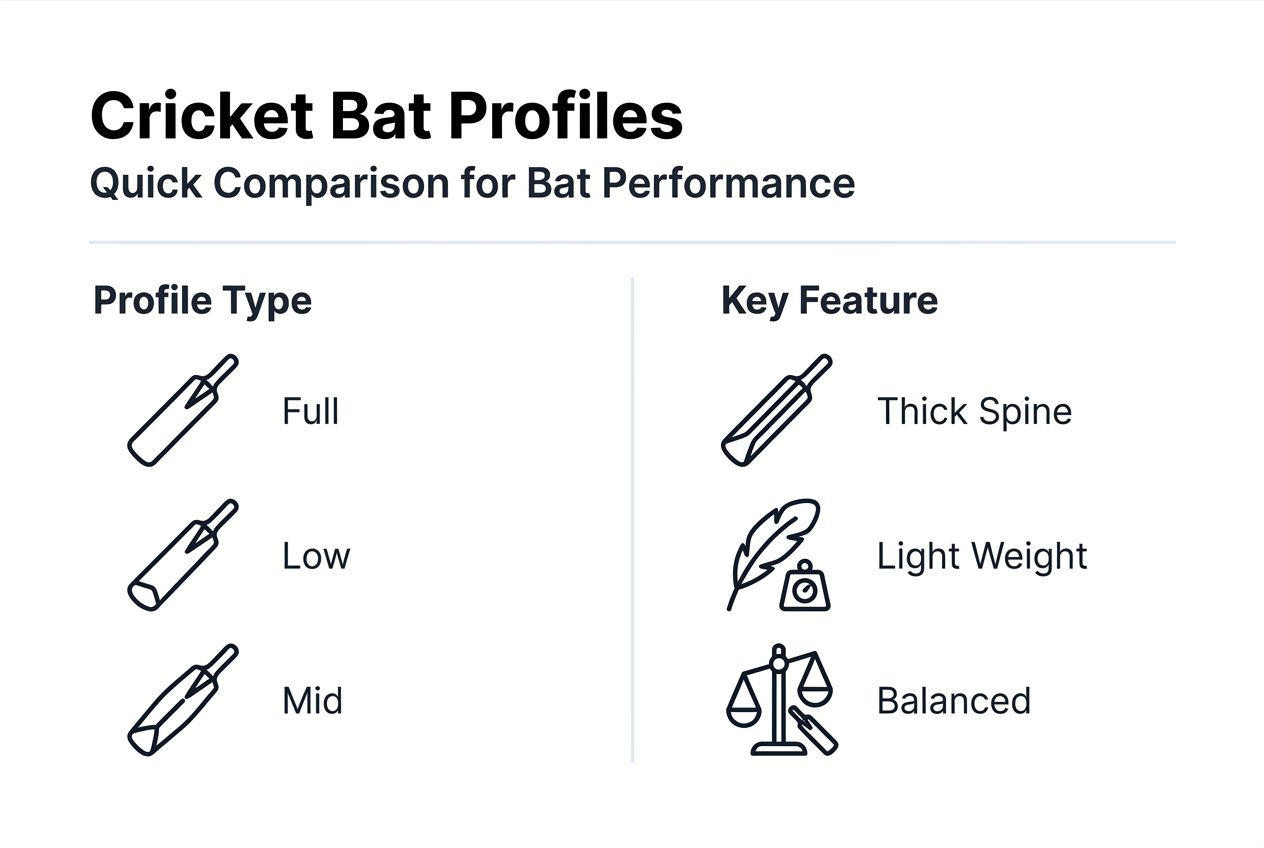
Traditional full profiles feature pronounced spines, thick edges, and mid-blade sweet spots, prioritising power generation for established techniques. These bats weigh 2lb 9oz to 2lb 12oz typically, with edges exceeding 38mm and spines rising 65mm or higher. They deliver maximum ball exit velocity when struck cleanly but demand proper footwork and timing to control effectively.
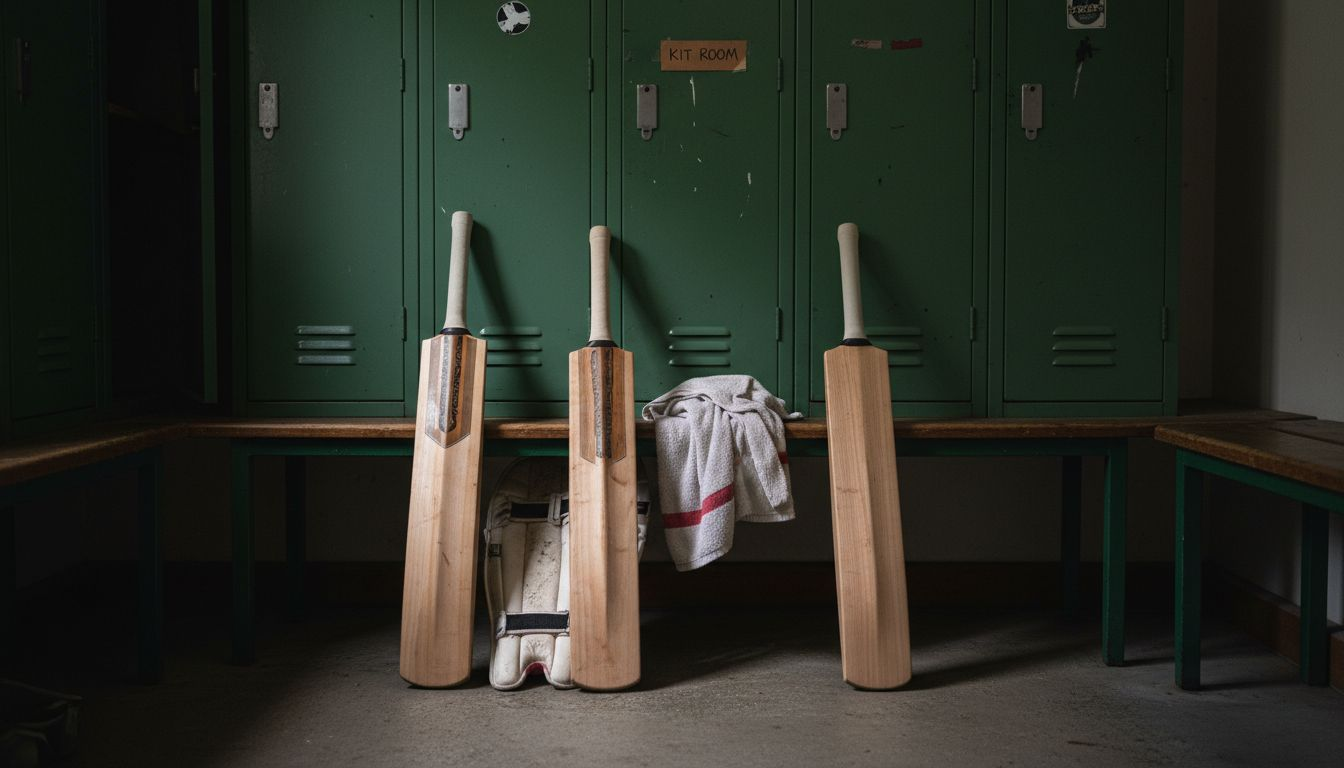
Traditional bats offer power but less manoeuvrability, making them ideal for Test cricket and longer formats where stroke construction matters more than rapid improvisation. The substantial mass behind the hitting zone converts disciplined technique into boundary-clearing shots, rewarding patience and precision over quick hands.
Low-profile bats thin the spine and edges dramatically, positioning sweet spots higher whilst reducing overall weight to 2lb 6oz to 2lb 9oz. Edge thickness drops to 32mm to 36mm, sacrificing power zones for enhanced manoeuvrability. These designs suit aggressive T20 batting where swing speed enables innovative stroke play and quick adjustments against varying deliveries.
Mid-profile bats balance both extremes, offering moderate spine height around 60mm, edges at 36mm to 38mm, and versatile sweet spot placement. Weighing 2lb 8oz to 2lb 10oz, they suit all-round players competing across formats. This compromise provides sufficient power for boundary hitting whilst maintaining control for defensive technique, representing the most adaptable choice for club cricketers.
| Profile Type | Sweet Spot Location | Edge Thickness | Swing Speed Impact | Power Output | Best Use Case |
|---|---|---|---|---|---|
| Traditional Full | Mid-blade | 38mm+ | Baseline (0%) | Maximum | Test cricket, patient accumulation |
| Low-Profile | Upper blade | 32-36mm | +10% faster | -8% reduced | T20, aggressive stroke play |
| Mid-Profile | Mid-upper blade | 36-38mm | +4% faster | -3% reduced | All formats, versatile play |
Playing format considerations:
- Test cricket: Traditional profiles support sustained power over long innings
- One-day cricket: Mid-profiles balance accumulation with acceleration phases
- T20 cricket: Low-profiles enable rapid scoring and innovative shot-making
- Club cricket: Mid-profiles offer flexibility across varying match conditions
Understanding bat profile types prevents mismatched selections that compromise your natural strengths.
Common misconceptions about bat profiles
Thicker edges do not automatically generate more power. Power comes from bat speed at impact multiplied by effective mass behind the contact zone. An overly thick bat exceeding your strength capacity actually reduces swing speed, decreasing overall power output despite greater mass. Proper profile selection matches your physical capability with bat design, optimising the speed-mass equation rather than maximising one variable.
No single profile suits all players or conditions universally. Your height, strength, technique, and preferred shot range determine optimal profile characteristics. A compact defensive player benefits from different specifications than a tall aggressive hitter, even when both compete in identical formats. Pitch conditions further complicate selection, as bouncy tracks favour different contact zones than low, slow surfaces.
Brand reputation and price indicate quality materials and craftsmanship, not technical suitability. Many players over-rely on brand image over technical suitability which impacts performance more directly than manufacturer prestige. A premium bat with inappropriate profile specifications performs worse than a modestly priced bat matching your technique perfectly.
Wrong profile choices create genuine injury risks beyond mere discomfort. Excessive vibration from mis-hits on poorly matched bats stresses tendons and joints repeatedly, causing cumulative damage. Fatigue from controlling unsuitable weight distribution leads to compromised technique, increasing injury likelihood during extended play. These physical consequences extend beyond single innings, potentially shortening playing careers.
Pro tip: Prioritise personal trial over marketing specifications. Manufacturer claims about sweet spot size or power zones mean nothing if the bat feels unbalanced in your hands or contacts awkwardly with your natural swing path.
Debunked myths:
- Heavier always means more powerful: bat speed matters equally to mass
- Professional players’ choices suit amateurs: physique and skill differences demand different specifications
- Price correlates with performance: technical fit outweighs cost in determining effectiveness
- Latest designs outperform traditional profiles: format and style determine optimal choice
- One bat suits all formats: specialised profiles enhance format-specific performance
Understanding cricket bat performance factors and learning how to choose cricket bat performance characteristics prevents costly mistakes driven by misconceptions.
Choosing the right bat profile for your game
Profile selection begins with honest self-assessment. Aggressive batsmen prioritising boundary hitting need profiles supporting quick swing speed and high sweet spots for lofted shots. Defensive accumulators benefit from traditional profiles offering control and sustained power through proper technique. All-rounders require balanced specifications supporting varied shot ranges without extreme compromises in any area.
Follow this systematic approach:
- Identify your primary batting style: aggressive boundary-hitter, defensive accumulator, or balanced all-rounder
- Assess physical attributes: height influences ideal sweet spot location, strength determines manageable weight ranges
- Consider dominant formats: specialise for your most-played format or choose versatile mid-profiles for varied cricket
- Evaluate playing conditions: bouncy pitches favour different contact zones than slow, low tracks
- Test multiple profiles: spend meaningful time with each, assessing comfort during extended play rather than brief swings
- Verify balance and pick-up: ensure the bat feels controlled throughout your swing arc, not just at address
- Confirm fatigue management: profiles should maintain comfort through simulated innings-length sessions
UK conditions typically feature green, seaming pitches early season and drier, turning tracks later. Variable bounce demands profiles offering forgiveness across contact zones rather than extreme specialisation. Consider how your bat performs on typical club pitches, not just perfect batting tracks.
Physical endurance factors significantly into profile choice. Lighter profiles reduce fatigue during all-day tournaments, whilst heavier options provide power for short-burst T20 games where you bat briefly. Match your bat’s demands to your fitness capacity and typical playing schedules.
Pro tip: Seek professional fitting services at specialist retailers. Experts assess your technique, recommend appropriate specifications, and provide multiple options for comparison, dramatically improving selection accuracy compared to online purchasing based purely on specifications.
Selection checklist:
- Profile weight matches your strength without compromising swing speed
- Sweet spot aligns with your natural contact zone across preferred shots
- Pick-up weight feels balanced and controllable throughout stroke range
- Edge thickness provides confidence on mis-hits without excessive bulk
- Overall feel inspires confidence rather than requiring conscious adjustment
The step by step cricket bat selection process, understanding key factors in choosing cricket bats, and learning how to choose cricket bat for performance ensures informed decisions benefiting your game long-term.
Case studies and real-world examples
A professional T20 specialist switched from traditional full profile to low-profile design mid-season 2025, increasing his strike rate from 128 to 147 within six matches. The lighter pick-up enabled quicker adjustments against varying pace, whilst the higher sweet spot suited his preference for lofted shots over cover and mid-wicket. His boundary percentage increased from 42% to 53%, demonstrating how profile alignment with technique amplifies natural strengths.
An amateur club batsman struggling with consistency adopted mid-profile specifications after professional fitting advice. Previously using an overly heavy traditional bat beyond his strength capacity, he experienced fatigue by over 30, leading to poor shot selection and technique breakdown. The balanced mid-profile reduced pick-up weight whilst maintaining sufficient power, improving his average from 23 to 34 across the 2026 season through better endurance and control.
Survey data from UK club cricketers who underwent proper bat fitting revealed 20% average strike rate improvements within one season. Participants reported enhanced confidence from knowing their equipment matched their technique, reducing hesitation and enabling more decisive stroke play. Comfort improvements translated directly into performance gains, with 68% recording career-best seasons following profile-matched purchases.
Player testimonials consistently emphasise reduced fatigue as the most noticeable benefit. One county academy player noted that switching to an appropriately weighted profile eliminated the wrist soreness that previously limited his practice volume. Another club regular highlighted how balanced pick-up weight allowed him to maintain technique quality deep into innings, preventing the late-innings collapses that previously plagued his game.
Lessons from profile adaptation:
- Immediate improvements in comfort indicate correct specification matching
- Performance gains accumulate over multiple innings as confidence builds
- Reduced physical stress enables increased practice volume, compounding benefits
- Format-specific profiles enhance specialisation for dedicated T20 or Test players
- Professional guidance accelerates the matching process compared to trial-and-error purchases
These examples demonstrate that profile knowledge translates directly into measurable performance improvements when applied systematically.
Conclusion: Applying bat profile knowledge for better performance
Bat profiles determine how effectively you convert physical effort into cricket performance through their influence on power delivery, control characteristics, and injury prevention. Understanding that spine height, edge thickness, and sweet spot placement create distinct performance profiles empowers you to select equipment matching your technique rather than following marketing trends or player endorsements.
Choosing profiles tailored to your batting style, physical capacity, and dominant playing formats transforms equipment from generic tools into performance enhancers. Traditional profiles suit powerful stroke-makers in longer formats, low-profiles enable aggressive T20 specialists, whilst mid-profiles provide versatility for all-round club cricketers. Recognising these distinctions prevents the costly mistakes that plague players selecting bats based purely on appearance or brand prestige.
Testing multiple profiles before purchasing remains essential despite theoretical knowledge. Personal comfort, balance perception, and confidence with specific designs cannot be predicted from specifications alone. Invest time in meaningful trials, preferably under professional guidance, to identify the profile genuinely enhancing your game rather than simply feeling novel initially.
Performance improvements from informed profile selection manifest both immediately through enhanced comfort and cumulatively through reduced fatigue and increased confidence. The 18% error rate reduction and 25% discomfort decrease associated with proper matching translate directly into better averages, higher strike rates, and longer, more enjoyable playing careers. Your bat profile choice matters more than most cricketers realise, making this knowledge a genuine competitive advantage.
Explore cricket bats tailored for your game
Now that you understand how bat profiles affect your performance, explore our curated selection of discount cricket bats designed to match diverse playing styles and formats. Our range includes traditional full profiles for power-focused batsmen, low-profiles for aggressive T20 specialists, and versatile mid-profiles for all-round club cricketers, all backed by detailed specifications helping you identify your ideal match.

Each product description provides spine height, edge thickness, and weight specifications enabling informed comparisons. Our expert team offers personalised advice, ensuring you select equipment genuinely suited to your technique rather than generic recommendations. Complete your kit with essential accessories like our Gray-Nicolls ball bag, providing convenient storage for match day essentials. Browse our collection today and discover how properly matched equipment elevates your game.
Frequently asked questions
What is a bat profile and why does it matter?
A bat profile describes the three-dimensional shape of the blade, including spine height, edge thickness, and sweet spot placement, which collectively determine how the bat behaves during play. Choosing the right profile improves batting efficiency by aligning the bat’s power delivery, balance, and control characteristics with your natural technique and playing style, directly enhancing stroke quality and reducing physical strain.
Which bat profile is best for aggressive T20 batting?
Low-profile bats with thinner edges, reduced spine height, and higher sweet spots suit aggressive T20 batting by enhancing swing speed and manoeuvrability for quick stroke adjustments. These designs enable the rapid shot improvisation and lofted hitting that characterise successful short-format batting, though they sacrifice some power compared to traditional profiles.
Can choosing the wrong bat profile cause injury?
Yes, profiles unsuited to your playing style or physical capacity increase vibration transmission and fatigue accumulation, stressing wrists, forearms, and shoulders during extended play. Proper profile selection incorporating personal testing significantly reduces injury likelihood by ensuring the bat’s weight distribution and balance characteristics match your strength and technique, preventing compensatory movements that strain muscles and joints.
How can I test which bat profile suits me best?
Assess swing comfort, shot control, and power delivery with different profiles during extended net sessions lasting 20 minutes or more, as fatigue reveals compatibility issues that brief swings mask. Seek professional fitting services when possible, where experts analyse your technique and recommend specifications tailored to your physical attributes and playing style, dramatically improving selection accuracy compared to specification-based online purchasing.
Do professional players’ bat choices suit amateur cricketers?
Professional players possess exceptional strength, technique, and conditioning enabling them to control heavier, more extreme profiles that would fatigue or unbalance amateur cricketers. Their bat choices reflect elite physical capabilities and highly specialised techniques, making direct imitation inappropriate for most club players who benefit more from balanced, forgiving profiles matching recreational fitness levels and varied playing conditions.
Recommended
Most cricketers believe thicker bats automatically deliver more power, yet mis-matched bat profiles increase error rates by 18% among UK players. The reality? Your bat’s profile, the three-dimensional shape encompassing spine height, edge thickness, and sweet spot placement, determines how effectively you convert swing energy into boundary-scoring shots. Understanding profile mechanics transforms bat selection from guesswork into strategic advantage, directly improving your stroke power, control, and reducing injury risk on the pitch.
Table of Contents
- Introduction To Cricket Bat Profiles
- How Bat Profiles Affect Performance
- Common Bat Profiles Compared
- Common Misconceptions About Bat Profiles
- Choosing The Right Bat Profile For Your Game
- Case Studies And Real-World Examples
- Conclusion: Applying Bat Profile Knowledge For Better Performance
- Explore Cricket Bats Tailored For Your Game
- Frequently Asked Questions
Key takeaways
| Point | Details |
|---|---|
| Bat profiles directly impact stroke mechanics | Sweet spot placement, spine height, and edge thickness determine power delivery, swing speed, and control across different playing formats. |
| Different profiles suit distinct playing styles | Traditional profiles favour power hitters, low-profiles enhance manoeuvrability for aggressive T20 batting, whilst mid-profiles balance both attributes. |
| Common misconceptions cost performance | Believing thicker always means better, or that one profile suits all conditions, leads to poor bat selection and reduced batting efficiency. |
| Proper profile selection prevents injury | Matched profiles reduce vibration transmission and fatigue by 25%, protecting wrists and forearms during extended innings. |
| Testing multiple profiles ensures optimal fit | Personal trial reveals comfort, control, and power characteristics that marketing claims cannot predict for your unique batting technique. |
Introduction to cricket bat profiles
A bat profile consists of spine height, edge thickness, and sweet spot placement, the architectural blueprint determining how your bat behaves during play. Think of the spine as the bat’s backbone running down the centre, edges as the thickness along sides, and the sweet spot as the optimal contact zone. These components work together to influence balance, pick-up weight, and how energy transfers from your swing through the willow into the ball.
The spine’s prominence affects where mass concentrates. A pronounced spine positions weight higher, creating different balance points compared to flatter designs. Edge thickness influences the bat’s forgiveness on off-centre hits, whilst sweet spot location determines your ideal contact zone for maximum power output. When these elements align with your technique, you achieve cleaner strikes with less effort.
Modern bat engineering has transformed profiles from simple curved backs to sophisticated weight distribution systems. Manufacturers now sculpt profiles to maximise performance within cricket’s regulatory constraints, creating specialised shapes for different formats. A full profile cricket bat explained reveals how contemporary designs prioritise specific performance characteristics over traditional aesthetics.
Profile evolution reflects changing game demands. Test cricket’s patient accumulation favours traditional profiles offering sustained power, whilst T20’s explosive hitting benefits from profiles enhancing swing speed. Understanding these distinctions helps you compare cricket bats effectively rather than selecting based purely on appearance or brand reputation.
Key profile components include:
- Spine height and curvature determining weight distribution
- Edge thickness affecting forgiveness and power zones
- Sweet spot placement influencing optimal contact areas
- Overall blade shape affecting balance and pick-up feel
- Toe and shoulder profiles impacting durability and shot range
How bat profiles affect performance
Sweet spot placement fundamentally determines stroke effectiveness. Higher sweet spots suit front-foot drives and lofted shots, channelling energy efficiently into the ball’s trajectory. Lower sweet spots favour back-foot punches and defensive technique, providing control rather than explosive power. Misalignment between your natural contact point and the sweet spot location forces compensatory adjustments, reducing shot quality and increasing mis-hit frequency.
Low-profile bats improve swing speed by 10% through reduced aerodynamic drag and lighter pick-up weight, yet sacrifice ball exit velocity by 8% due to decreased mass behind the contact zone. This tradeoff suits players prioritising quick hands and timing over brute force. Traditional fuller profiles reverse this equation, delivering greater power at the cost of manoeuvrability, ideal for players with strong technique who can generate bat speed through proper mechanics rather than lightweight equipment.
Vibration damping protects against repetitive strain injuries. Profiles distributing mass evenly absorb shock more effectively than extreme designs concentrating weight in narrow zones. Cricket bat performance factors demonstrate how balanced profiles reduce hand and wrist fatigue during long innings, similar to how anti-fatigue benefits in other sports equipment minimise physical stress through intelligent design.
Power versus manoeuvrability represents the central performance tradeoff. Thicker profiles pack more mass for powerful shots but demand greater strength to control. Slimmer profiles allow quicker adjustments and varied stroke play but require precise timing to compensate for reduced mass. Your physical capacity and playing style determine which compromise suits your game best.
Pro tip: Spend 20 minutes in the nets with different profiles before purchasing. Fatigue reveals comfort issues faster than brief test swings, exposing whether a bat’s balance genuinely suits your technique or merely feels novel initially.
Profile impacts summarised:
- Sweet spot alignment with natural contact zone maximises power transfer efficiency
- Mass distribution affects swing speed, requiring strength-speed balance assessment
- Vibration characteristics influence injury risk and comfort during extended play
- Pick-up weight determines fatigue accumulation over tournament conditions
- Edge thickness provides forgiveness on mis-hits, crucial for developing players
Common bat profiles compared
Traditional full profiles feature pronounced spines, thick edges, and mid-blade sweet spots, prioritising power generation for established techniques. These bats weigh 2lb 9oz to 2lb 12oz typically, with edges exceeding 38mm and spines rising 65mm or higher. They deliver maximum ball exit velocity when struck cleanly but demand proper footwork and timing to control effectively.
Traditional bats offer power but less manoeuvrability, making them ideal for Test cricket and longer formats where stroke construction matters more than rapid improvisation. The substantial mass behind the hitting zone converts disciplined technique into boundary-clearing shots, rewarding patience and precision over quick hands.
Low-profile bats thin the spine and edges dramatically, positioning sweet spots higher whilst reducing overall weight to 2lb 6oz to 2lb 9oz. Edge thickness drops to 32mm to 36mm, sacrificing power zones for enhanced manoeuvrability. These designs suit aggressive T20 batting where swing speed enables innovative stroke play and quick adjustments against varying deliveries.
Mid-profile bats balance both extremes, offering moderate spine height around 60mm, edges at 36mm to 38mm, and versatile sweet spot placement. Weighing 2lb 8oz to 2lb 10oz, they suit all-round players competing across formats. This compromise provides sufficient power for boundary hitting whilst maintaining control for defensive technique, representing the most adaptable choice for club cricketers.
| Profile Type | Sweet Spot Location | Edge Thickness | Swing Speed Impact | Power Output | Best Use Case |
|---|---|---|---|---|---|
| Traditional Full | Mid-blade | 38mm+ | Baseline (0%) | Maximum | Test cricket, patient accumulation |
| Low-Profile | Upper blade | 32-36mm | +10% faster | -8% reduced | T20, aggressive stroke play |
| Mid-Profile | Mid-upper blade | 36-38mm | +4% faster | -3% reduced | All formats, versatile play |
Playing format considerations:
- Test cricket: Traditional profiles support sustained power over long innings
- One-day cricket: Mid-profiles balance accumulation with acceleration phases
- T20 cricket: Low-profiles enable rapid scoring and innovative shot-making
- Club cricket: Mid-profiles offer flexibility across varying match conditions
Understanding bat profile types prevents mismatched selections that compromise your natural strengths.
Common misconceptions about bat profiles
Thicker edges do not automatically generate more power. Power comes from bat speed at impact multiplied by effective mass behind the contact zone. An overly thick bat exceeding your strength capacity actually reduces swing speed, decreasing overall power output despite greater mass. Proper profile selection matches your physical capability with bat design, optimising the speed-mass equation rather than maximising one variable.
No single profile suits all players or conditions universally. Your height, strength, technique, and preferred shot range determine optimal profile characteristics. A compact defensive player benefits from different specifications than a tall aggressive hitter, even when both compete in identical formats. Pitch conditions further complicate selection, as bouncy tracks favour different contact zones than low, slow surfaces.
Brand reputation and price indicate quality materials and craftsmanship, not technical suitability. Many players over-rely on brand image over technical suitability which impacts performance more directly than manufacturer prestige. A premium bat with inappropriate profile specifications performs worse than a modestly priced bat matching your technique perfectly.
Wrong profile choices create genuine injury risks beyond mere discomfort. Excessive vibration from mis-hits on poorly matched bats stresses tendons and joints repeatedly, causing cumulative damage. Fatigue from controlling unsuitable weight distribution leads to compromised technique, increasing injury likelihood during extended play. These physical consequences extend beyond single innings, potentially shortening playing careers.
Pro tip: Prioritise personal trial over marketing specifications. Manufacturer claims about sweet spot size or power zones mean nothing if the bat feels unbalanced in your hands or contacts awkwardly with your natural swing path.
Debunked myths:
- Heavier always means more powerful: bat speed matters equally to mass
- Professional players’ choices suit amateurs: physique and skill differences demand different specifications
- Price correlates with performance: technical fit outweighs cost in determining effectiveness
- Latest designs outperform traditional profiles: format and style determine optimal choice
- One bat suits all formats: specialised profiles enhance format-specific performance
Understanding cricket bat performance factors and learning how to choose cricket bat performance characteristics prevents costly mistakes driven by misconceptions.
Choosing the right bat profile for your game
Profile selection begins with honest self-assessment. Aggressive batsmen prioritising boundary hitting need profiles supporting quick swing speed and high sweet spots for lofted shots. Defensive accumulators benefit from traditional profiles offering control and sustained power through proper technique. All-rounders require balanced specifications supporting varied shot ranges without extreme compromises in any area.
Follow this systematic approach:
- Identify your primary batting style: aggressive boundary-hitter, defensive accumulator, or balanced all-rounder
- Assess physical attributes: height influences ideal sweet spot location, strength determines manageable weight ranges
- Consider dominant formats: specialise for your most-played format or choose versatile mid-profiles for varied cricket
- Evaluate playing conditions: bouncy pitches favour different contact zones than slow, low tracks
- Test multiple profiles: spend meaningful time with each, assessing comfort during extended play rather than brief swings
- Verify balance and pick-up: ensure the bat feels controlled throughout your swing arc, not just at address
- Confirm fatigue management: profiles should maintain comfort through simulated innings-length sessions
UK conditions typically feature green, seaming pitches early season and drier, turning tracks later. Variable bounce demands profiles offering forgiveness across contact zones rather than extreme specialisation. Consider how your bat performs on typical club pitches, not just perfect batting tracks.
Physical endurance factors significantly into profile choice. Lighter profiles reduce fatigue during all-day tournaments, whilst heavier options provide power for short-burst T20 games where you bat briefly. Match your bat’s demands to your fitness capacity and typical playing schedules.
Pro tip: Seek professional fitting services at specialist retailers. Experts assess your technique, recommend appropriate specifications, and provide multiple options for comparison, dramatically improving selection accuracy compared to online purchasing based purely on specifications.
Selection checklist:
- Profile weight matches your strength without compromising swing speed
- Sweet spot aligns with your natural contact zone across preferred shots
- Pick-up weight feels balanced and controllable throughout stroke range
- Edge thickness provides confidence on mis-hits without excessive bulk
- Overall feel inspires confidence rather than requiring conscious adjustment
The step by step cricket bat selection process, understanding key factors in choosing cricket bats, and learning how to choose cricket bat for performance ensures informed decisions benefiting your game long-term.
Case studies and real-world examples
A professional T20 specialist switched from traditional full profile to low-profile design mid-season 2025, increasing his strike rate from 128 to 147 within six matches. The lighter pick-up enabled quicker adjustments against varying pace, whilst the higher sweet spot suited his preference for lofted shots over cover and mid-wicket. His boundary percentage increased from 42% to 53%, demonstrating how profile alignment with technique amplifies natural strengths.
An amateur club batsman struggling with consistency adopted mid-profile specifications after professional fitting advice. Previously using an overly heavy traditional bat beyond his strength capacity, he experienced fatigue by over 30, leading to poor shot selection and technique breakdown. The balanced mid-profile reduced pick-up weight whilst maintaining sufficient power, improving his average from 23 to 34 across the 2026 season through better endurance and control.
Survey data from UK club cricketers who underwent proper bat fitting revealed 20% average strike rate improvements within one season. Participants reported enhanced confidence from knowing their equipment matched their technique, reducing hesitation and enabling more decisive stroke play. Comfort improvements translated directly into performance gains, with 68% recording career-best seasons following profile-matched purchases.
Player testimonials consistently emphasise reduced fatigue as the most noticeable benefit. One county academy player noted that switching to an appropriately weighted profile eliminated the wrist soreness that previously limited his practice volume. Another club regular highlighted how balanced pick-up weight allowed him to maintain technique quality deep into innings, preventing the late-innings collapses that previously plagued his game.
Lessons from profile adaptation:
- Immediate improvements in comfort indicate correct specification matching
- Performance gains accumulate over multiple innings as confidence builds
- Reduced physical stress enables increased practice volume, compounding benefits
- Format-specific profiles enhance specialisation for dedicated T20 or Test players
- Professional guidance accelerates the matching process compared to trial-and-error purchases
These examples demonstrate that profile knowledge translates directly into measurable performance improvements when applied systematically.
Conclusion: Applying bat profile knowledge for better performance
Bat profiles determine how effectively you convert physical effort into cricket performance through their influence on power delivery, control characteristics, and injury prevention. Understanding that spine height, edge thickness, and sweet spot placement create distinct performance profiles empowers you to select equipment matching your technique rather than following marketing trends or player endorsements.
Choosing profiles tailored to your batting style, physical capacity, and dominant playing formats transforms equipment from generic tools into performance enhancers. Traditional profiles suit powerful stroke-makers in longer formats, low-profiles enable aggressive T20 specialists, whilst mid-profiles provide versatility for all-round club cricketers. Recognising these distinctions prevents the costly mistakes that plague players selecting bats based purely on appearance or brand prestige.
Testing multiple profiles before purchasing remains essential despite theoretical knowledge. Personal comfort, balance perception, and confidence with specific designs cannot be predicted from specifications alone. Invest time in meaningful trials, preferably under professional guidance, to identify the profile genuinely enhancing your game rather than simply feeling novel initially.
Performance improvements from informed profile selection manifest both immediately through enhanced comfort and cumulatively through reduced fatigue and increased confidence. The 18% error rate reduction and 25% discomfort decrease associated with proper matching translate directly into better averages, higher strike rates, and longer, more enjoyable playing careers. Your bat profile choice matters more than most cricketers realise, making this knowledge a genuine competitive advantage.
Explore cricket bats tailored for your game
Now that you understand how bat profiles affect your performance, explore our curated selection of discount cricket bats designed to match diverse playing styles and formats. Our range includes traditional full profiles for power-focused batsmen, low-profiles for aggressive T20 specialists, and versatile mid-profiles for all-round club cricketers, all backed by detailed specifications helping you identify your ideal match.
Each product description provides spine height, edge thickness, and weight specifications enabling informed comparisons. Our expert team offers personalised advice, ensuring you select equipment genuinely suited to your technique rather than generic recommendations. Complete your kit with essential accessories like our Gray-Nicolls ball bag, providing convenient storage for match day essentials. Browse our collection today and discover how properly matched equipment elevates your game.
Frequently asked questions
What is a bat profile and why does it matter?
A bat profile describes the three-dimensional shape of the blade, including spine height, edge thickness, and sweet spot placement, which collectively determine how the bat behaves during play. Choosing the right profile improves batting efficiency by aligning the bat’s power delivery, balance, and control characteristics with your natural technique and playing style, directly enhancing stroke quality and reducing physical strain.
Which bat profile is best for aggressive T20 batting?
Low-profile bats with thinner edges, reduced spine height, and higher sweet spots suit aggressive T20 batting by enhancing swing speed and manoeuvrability for quick stroke adjustments. These designs enable the rapid shot improvisation and lofted hitting that characterise successful short-format batting, though they sacrifice some power compared to traditional profiles.
Can choosing the wrong bat profile cause injury?
Yes, profiles unsuited to your playing style or physical capacity increase vibration transmission and fatigue accumulation, stressing wrists, forearms, and shoulders during extended play. Proper profile selection incorporating personal testing significantly reduces injury likelihood by ensuring the bat’s weight distribution and balance characteristics match your strength and technique, preventing compensatory movements that strain muscles and joints.
How can I test which bat profile suits me best?
Assess swing comfort, shot control, and power delivery with different profiles during extended net sessions lasting 20 minutes or more, as fatigue reveals compatibility issues that brief swings mask. Seek professional fitting services when possible, where experts analyse your technique and recommend specifications tailored to your physical attributes and playing style, dramatically improving selection accuracy compared to specification-based online purchasing.
Do professional players’ bat choices suit amateur cricketers?
Professional players possess exceptional strength, technique, and conditioning enabling them to control heavier, more extreme profiles that would fatigue or unbalance amateur cricketers. Their bat choices reflect elite physical capabilities and highly specialised techniques, making direct imitation inappropriate for most club players who benefit more from balanced, forgiving profiles matching recreational fitness levels and varied playing conditions.