
News News
Why Choose Lightweight Bats for Better Performance Why Choose Lightweight Bats for Better Performance
Trying to find a bat that feels light in your hands but still packs a punch is a common challenge for young cricketers, whether you’re playing in INDIA or training in AUSTRALIA. Lightweight bats, especially those made from ENGLISH willow, offer a unique balance of power and speed that can improve your swing and boost your confidence at the crease. This guide reveals what makes a cricket bat truly lightweight and how the right choice can enhance your performance during both practice and matches.
Table of Contents
- What Makes A Cricket Bat Lightweight
- Popular Lightweight Bat Types And Materials
- How Lighter Bats Enhance Player Technique
- Comparing Lightweight And Traditional Bats
- Common Mistakes When Selecting Bat Weight
Key Takeaways
| Point | Details |
|---|---|
| Lightweight Bats Enhance Performance | Lighter cricket bats provide increased swing speed, better manoeuvrability, and less muscle fatigue, allowing players to execute complex shots more efficiently. |
| Material Selection is Crucial | The choice of wood, such as English and Kashmir Willow, significantly affects the bat’s weight and performance characteristics. |
| Balance Over Weight is Essential | When selecting a bat, players should prioritise balance and personal comfort over simply choosing the lightest option. |
| Testing is Key | Players are advised to test multiple bat weights and styles to find the best fit for their technique and playing style. |
What Makes a Cricket Bat Lightweight
The lightweight nature of a cricket bat is a complex interplay of material selection, wood processing, and advanced design techniques. At its core, the quest for a lightweight bat begins with choosing the right wood, primarily focusing on willow varieties known for their exceptional strength-to-weight ratio.
Willow selection plays a critical role in determining bat weight. Cricket bat material innovations have revealed distinct characteristics between wood types:
- English Willow: Prized for being exceptionally lightweight
- Kashmir Willow: Denser and naturally heavier
- Processed Willow: Modern treatments can reduce overall weight
The internal structure of the wood significantly influences weight and performance. Bat manufacturing techniques focus on creating natural air pockets and optimising grain structure to reduce density without compromising structural integrity.
Modern bat designers employ sophisticated techniques to minimise weight while maximising performance. These include:
- Strategic grain alignment
- Precision weight distribution
- Advanced wood treatment processes
- Innovative sweet spot positioning
The goal is creating a bat that feels light in the hands but delivers powerful, consistent strikes. Wood selection, processing techniques, and design innovations work together to achieve this delicate balance.
Pro tip: When selecting a lightweight bat, always test its balance and pick up weight personally to ensure it matches your playing style and physical capabilities.
Popular Lightweight Bat Types and Materials
Navigating the world of lightweight cricket bats involves understanding the diverse materials and types available to players seeking optimal performance. Cricket bat materials have evolved significantly, offering players multiple options for achieving the perfect balance and weight.
The primary lightweight bat materials include:
Here is a comparison of popular lightweight cricket bat materials and their main attributes:
| Material Type | Strength-to-Weight Ratio | Typical Usage Level | Durability |
|---|---|---|---|
| English Willow | Exceptional | Professional matches | Moderate to High |
| Kashmir Willow | Moderate | Recreational and training | High |
| Grade 1 Willow | Excellent | Elite and advanced training | High |
| Composite Materials | Good, varies by design | Entry-level and innovation | Varies |
- English Willow: Premium choice for professional players
- Grade 1 Willow: Highest quality, minimal blemishes
- Grade 2 Willow: Slightly more cosmetic imperfections
- Composite Materials: Emerging alternatives with unique performance characteristics
Bat Types range from professional-grade instruments to recreational models, each designed with specific weight considerations:
- Professional Match Bats: Ultralight, precision-engineered designs
- Training Bats: Slightly heavier for strength development
- Junior Bats: Specifically designed for younger players with reduced weight
- Practice Bats: Durable construction with balanced weight distribution
Modern bat manufacturers are increasingly experimenting with innovative materials and construction techniques to reduce weight without compromising structural integrity. Lightweight bat technologies continue to push the boundaries of performance, incorporating advanced wood treatments and precision engineering.

The selection of a lightweight bat depends on multiple factors, including player physique, playing style, and skill level. Professional players often prefer bats with minimal weight but maximum power transfer, while amateur players might prioritise comfort and ease of handling.
Pro tip: Always test multiple bat weights personally to find the perfect balance between manoeuvrability and power that complements your unique playing technique.
How Lighter Bats Enhance Player Technique
Cricket bat technology has dramatically transformed how players approach their batting technique. Lighter bats enable cricketers to develop more nuanced and dynamic playing styles, fundamentally changing the way shots are executed and perceived.
The key technical advantages of lightweight bats include:
- Increased Bat Speed: Faster swing mechanics
- Enhanced Manoeuvrability: Quicker positioning and shot adjustment
- Reduced Muscle Fatigue: Less strain during extended play
- Improved Timing: More precise shot execution
These technical improvements manifest in several critical performance areas:
- Faster Reaction Times
- Greater Shot Range
- More Consistent Strike Patterns
- Reduced Physical Stress
Professional players particularly benefit from lightweight bat designs, as they allow for more complex shot-making techniques. The reduced weight enables cricketers to make split-second decisions, adjust mid-swing, and generate exceptional power with minimal physical effort.
Lightweight bats transform technical limitations into performance opportunities, giving players unprecedented control and flexibility.
Skill development becomes more intuitive with lighter bats, as players can focus on technique refinement rather than managing bat weight. Young and developing cricketers especially find these bats instrumental in building confidence and developing sophisticated batting skills.
Pro tip: Practice with progressively lighter bats to gradually improve your bat speed and technical precision without compromising your fundamental batting technique.
This table summarises the impact of bat weight on player technique and performance:
| Bat Weight | Swing Speed | Shot Precision | Muscle Fatigue |
|---|---|---|---|
| Lightweight | Very fast | High | Low |
| Midweight | Moderate | Good | Moderate |
| Heavyweight | Slower | Lower, less responsive | High |
Comparing Lightweight and Traditional Bats
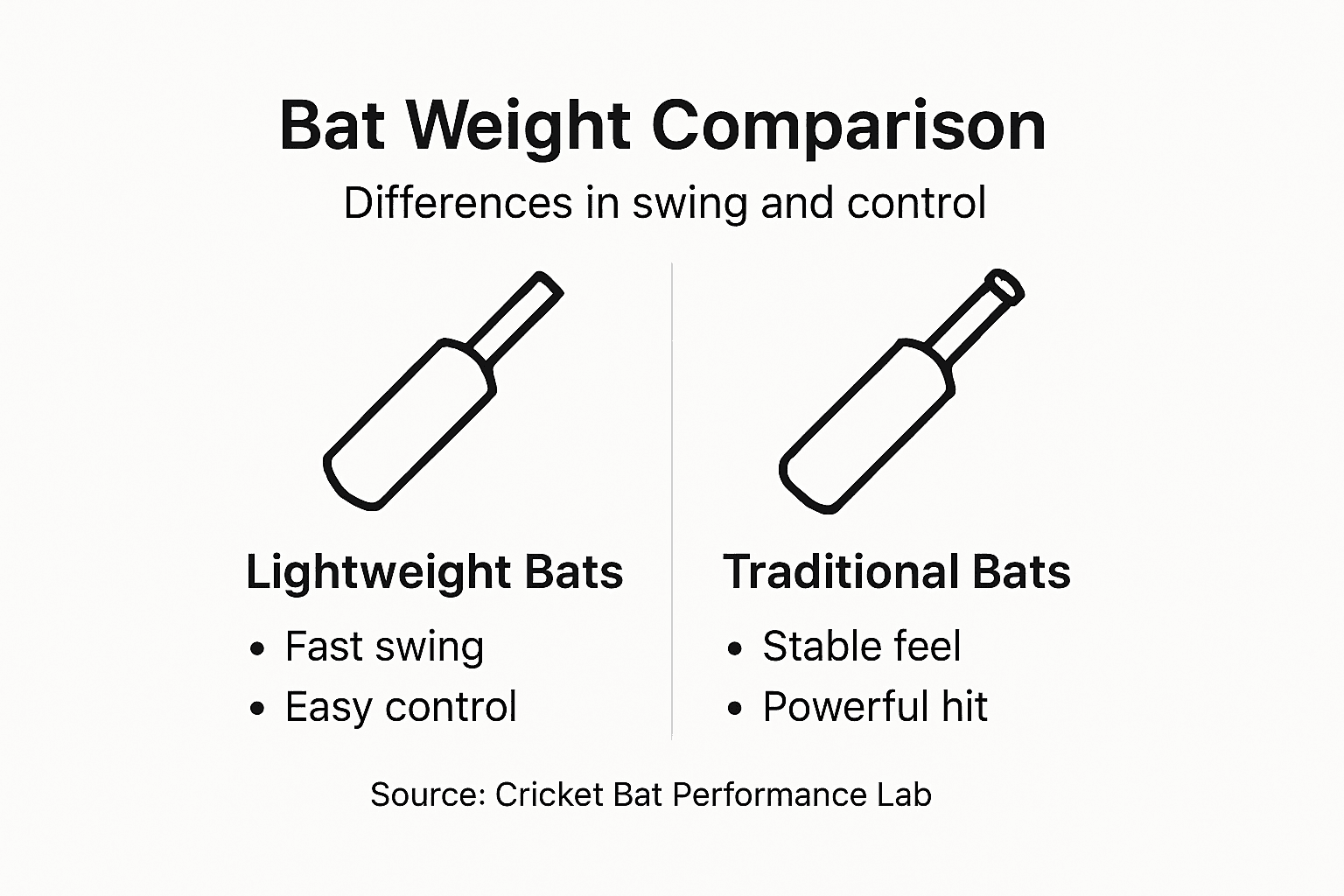
Cricket bat performance factors reveal fundamental differences between lightweight and traditional bat designs that significantly impact a player’s game. The evolution of cricket bat technology has created a clear distinction between modern lightweight bats and their heavier traditional counterparts.
Key differences between lightweight and traditional bats include:
- Weight Distribution: Lighter bats offer more balanced weight transfer
- Material Composition: Modern lightweight bats use advanced materials
- Swing Mechanics: Reduced weight enables faster bat movement
- Player Control: Enhanced manoeuvrability with lighter designs
Traditional bat characteristics typically involve:
- Heavier overall construction
- More dense wood materials
- Limited swing speed
- Higher physical strain during extended play
In contrast, lightweight bats present several performance advantages:
- Faster bat speed
- Reduced muscle fatigue
- Improved shot precision
- Greater range of shot selection
The transition from traditional to lightweight bats represents a significant technological leap in cricket equipment design.
Skill level plays a crucial role in selecting between lightweight and traditional bats. Professional and advanced players tend to prefer lightweight bats for their dynamic performance characteristics, while beginners might initially benefit from slightly heavier bats to develop fundamental techniques.
Pro tip: Experiment with different bat weights during practice sessions to understand how variations in weight impact your personal playing technique and comfort.
Common Mistakes When Selecting Bat Weight
Cricket bat selection factors reveal that choosing the wrong bat weight can dramatically impact a player’s performance and potential development. Many amateur cricketers make critical errors when selecting their equipment, often misunderstanding the nuanced relationship between bat weight and playing technique.
The most common mistakes players make include:
- Overlooking Personal Physique: Selecting a bat without considering individual strength
- Ignoring Playing Style: Choosing weight based on appearance rather than technique
- Prioritising Weight Over Balance: Focusing solely on numerical weight
- Neglecting Skill Level: Using professional-grade equipment prematurely
Several specific weight-related selection errors can hinder player development:
- Selecting Excessively Heavy Bats
- Choosing Ultralight Bats Without Proper Technique
- Ignoring Bat Pick-Up Characteristics
- Failing to Test Multiple Bat Weights
Bat weight is not a one-size-fits-all solution; it requires personalised consideration and careful assessment.
Beginners particularly struggle with understanding the subtle differences between bat weights. A bat that feels comfortable during initial testing might prove exhausting during extended play, highlighting the importance of comprehensive evaluation.
Pro tip: Always test multiple bat weights during extended practice sessions, paying close attention to your comfort, swing speed, and overall energy levels throughout the training period.
Discover the Power of Lightweight Bats for Your Best Performance
Struggling to find the perfect balance between bat speed and control? As highlighted in the article, selecting a lightweight cricket bat can dramatically improve your swing speed, reduce muscle fatigue, and enhance your shot precision. Whether you are a professional aiming for that extra edge or an amateur wanting to refine your technique, the right bat weight aligned with your playing style is crucial to unlocking your full potential.

Explore our premium collection of lightweight cricket bats, especially the New Balance Cricket Bats – Cricket Bats Com designed for exceptional balance and power. For younger or emerging players, our Junior Cricket Bats | Cheap Junior Cricket Bats – Cricket Bats Com selection offers perfectly weighted options to build skills confidently. Visit cricketbats.com today to find your ideal bat, take advantage of free shipping, and experience a seamless purchase that supports your cricket journey right away.
Frequently Asked Questions
What are the advantages of using a lightweight cricket bat?
Lightweight cricket bats offer increased bat speed, enhanced manoeuvrability, and reduced muscle fatigue, allowing players to execute shots more quickly and with better precision.
How does the material of a cricket bat impact its weight?
The weight of a cricket bat is significantly influenced by its material, with English willow being the lightest and strongest option, while Kashmir willow tends to be denser and heavier.
Can a lightweight bat negatively affect my performance?
If selected improperly, a lightweight bat may lead to less control for some players. It’s crucial to ensure the bat’s balance suits your playing style and physical capabilities.
What should I consider when choosing the weight of a cricket bat?
When choosing a bat weight, consider your personal physique, playing style, comfort, and skill level. Testing multiple weights during practice can help identify the best fit for your technique.
Recommended
- Why Select Lightweight Bats: Performance and Comfort – Cricket Bats Com
- Cricket Bat Weight Guides: Boost Comfort and Play – Cricket Bats Com
- 7 Types of Cricket Bats Every Amateur Should Know – Cricket Bats Com
- Cricket Bat Performance Factors: Maximising Your Game – Cricket Bats Com
- 12 Best Golf Balls For High Handicappers: UK 2026 Guide – More Sports
Trying to find a bat that feels light in your hands but still packs a punch is a common challenge for young cricketers, whether you’re playing in INDIA or training in AUSTRALIA. Lightweight bats, especially those made from ENGLISH willow, offer a unique balance of power and speed that can improve your swing and boost your confidence at the crease. This guide reveals what makes a cricket bat truly lightweight and how the right choice can enhance your performance during both practice and matches.
Table of Contents
- What Makes A Cricket Bat Lightweight
- Popular Lightweight Bat Types And Materials
- How Lighter Bats Enhance Player Technique
- Comparing Lightweight And Traditional Bats
- Common Mistakes When Selecting Bat Weight
Key Takeaways
| Point | Details |
|---|---|
| Lightweight Bats Enhance Performance | Lighter cricket bats provide increased swing speed, better manoeuvrability, and less muscle fatigue, allowing players to execute complex shots more efficiently. |
| Material Selection is Crucial | The choice of wood, such as English and Kashmir Willow, significantly affects the bat’s weight and performance characteristics. |
| Balance Over Weight is Essential | When selecting a bat, players should prioritise balance and personal comfort over simply choosing the lightest option. |
| Testing is Key | Players are advised to test multiple bat weights and styles to find the best fit for their technique and playing style. |
What Makes a Cricket Bat Lightweight
The lightweight nature of a cricket bat is a complex interplay of material selection, wood processing, and advanced design techniques. At its core, the quest for a lightweight bat begins with choosing the right wood, primarily focusing on willow varieties known for their exceptional strength-to-weight ratio.
Willow selection plays a critical role in determining bat weight. Cricket bat material innovations have revealed distinct characteristics between wood types:
- English Willow: Prized for being exceptionally lightweight
- Kashmir Willow: Denser and naturally heavier
- Processed Willow: Modern treatments can reduce overall weight
The internal structure of the wood significantly influences weight and performance. Bat manufacturing techniques focus on creating natural air pockets and optimising grain structure to reduce density without compromising structural integrity.
Modern bat designers employ sophisticated techniques to minimise weight while maximising performance. These include:
- Strategic grain alignment
- Precision weight distribution
- Advanced wood treatment processes
- Innovative sweet spot positioning
The goal is creating a bat that feels light in the hands but delivers powerful, consistent strikes. Wood selection, processing techniques, and design innovations work together to achieve this delicate balance.
Pro tip: When selecting a lightweight bat, always test its balance and pick up weight personally to ensure it matches your playing style and physical capabilities.
Popular Lightweight Bat Types and Materials
Navigating the world of lightweight cricket bats involves understanding the diverse materials and types available to players seeking optimal performance. Cricket bat materials have evolved significantly, offering players multiple options for achieving the perfect balance and weight.
The primary lightweight bat materials include:
Here is a comparison of popular lightweight cricket bat materials and their main attributes:
| Material Type | Strength-to-Weight Ratio | Typical Usage Level | Durability |
|---|---|---|---|
| English Willow | Exceptional | Professional matches | Moderate to High |
| Kashmir Willow | Moderate | Recreational and training | High |
| Grade 1 Willow | Excellent | Elite and advanced training | High |
| Composite Materials | Good, varies by design | Entry-level and innovation | Varies |
- English Willow: Premium choice for professional players
- Grade 1 Willow: Highest quality, minimal blemishes
- Grade 2 Willow: Slightly more cosmetic imperfections
- Composite Materials: Emerging alternatives with unique performance characteristics
Bat Types range from professional-grade instruments to recreational models, each designed with specific weight considerations:
- Professional Match Bats: Ultralight, precision-engineered designs
- Training Bats: Slightly heavier for strength development
- Junior Bats: Specifically designed for younger players with reduced weight
- Practice Bats: Durable construction with balanced weight distribution
Modern bat manufacturers are increasingly experimenting with innovative materials and construction techniques to reduce weight without compromising structural integrity. Lightweight bat technologies continue to push the boundaries of performance, incorporating advanced wood treatments and precision engineering.
The selection of a lightweight bat depends on multiple factors, including player physique, playing style, and skill level. Professional players often prefer bats with minimal weight but maximum power transfer, while amateur players might prioritise comfort and ease of handling.
Pro tip: Always test multiple bat weights personally to find the perfect balance between manoeuvrability and power that complements your unique playing technique.
How Lighter Bats Enhance Player Technique
Cricket bat technology has dramatically transformed how players approach their batting technique. Lighter bats enable cricketers to develop more nuanced and dynamic playing styles, fundamentally changing the way shots are executed and perceived.
The key technical advantages of lightweight bats include:
- Increased Bat Speed: Faster swing mechanics
- Enhanced Manoeuvrability: Quicker positioning and shot adjustment
- Reduced Muscle Fatigue: Less strain during extended play
- Improved Timing: More precise shot execution
These technical improvements manifest in several critical performance areas:
- Faster Reaction Times
- Greater Shot Range
- More Consistent Strike Patterns
- Reduced Physical Stress
Professional players particularly benefit from lightweight bat designs, as they allow for more complex shot-making techniques. The reduced weight enables cricketers to make split-second decisions, adjust mid-swing, and generate exceptional power with minimal physical effort.
Lightweight bats transform technical limitations into performance opportunities, giving players unprecedented control and flexibility.
Skill development becomes more intuitive with lighter bats, as players can focus on technique refinement rather than managing bat weight. Young and developing cricketers especially find these bats instrumental in building confidence and developing sophisticated batting skills.
Pro tip: Practice with progressively lighter bats to gradually improve your bat speed and technical precision without compromising your fundamental batting technique.
This table summarises the impact of bat weight on player technique and performance:
| Bat Weight | Swing Speed | Shot Precision | Muscle Fatigue |
|---|---|---|---|
| Lightweight | Very fast | High | Low |
| Midweight | Moderate | Good | Moderate |
| Heavyweight | Slower | Lower, less responsive | High |
Comparing Lightweight and Traditional Bats
Cricket bat performance factors reveal fundamental differences between lightweight and traditional bat designs that significantly impact a player’s game. The evolution of cricket bat technology has created a clear distinction between modern lightweight bats and their heavier traditional counterparts.
Key differences between lightweight and traditional bats include:
- Weight Distribution: Lighter bats offer more balanced weight transfer
- Material Composition: Modern lightweight bats use advanced materials
- Swing Mechanics: Reduced weight enables faster bat movement
- Player Control: Enhanced manoeuvrability with lighter designs
Traditional bat characteristics typically involve:
- Heavier overall construction
- More dense wood materials
- Limited swing speed
- Higher physical strain during extended play
In contrast, lightweight bats present several performance advantages:
- Faster bat speed
- Reduced muscle fatigue
- Improved shot precision
- Greater range of shot selection
The transition from traditional to lightweight bats represents a significant technological leap in cricket equipment design.
Skill level plays a crucial role in selecting between lightweight and traditional bats. Professional and advanced players tend to prefer lightweight bats for their dynamic performance characteristics, while beginners might initially benefit from slightly heavier bats to develop fundamental techniques.
Pro tip: Experiment with different bat weights during practice sessions to understand how variations in weight impact your personal playing technique and comfort.
Common Mistakes When Selecting Bat Weight
Cricket bat selection factors reveal that choosing the wrong bat weight can dramatically impact a player’s performance and potential development. Many amateur cricketers make critical errors when selecting their equipment, often misunderstanding the nuanced relationship between bat weight and playing technique.
The most common mistakes players make include:
- Overlooking Personal Physique: Selecting a bat without considering individual strength
- Ignoring Playing Style: Choosing weight based on appearance rather than technique
- Prioritising Weight Over Balance: Focusing solely on numerical weight
- Neglecting Skill Level: Using professional-grade equipment prematurely
Several specific weight-related selection errors can hinder player development:
- Selecting Excessively Heavy Bats
- Choosing Ultralight Bats Without Proper Technique
- Ignoring Bat Pick-Up Characteristics
- Failing to Test Multiple Bat Weights
Bat weight is not a one-size-fits-all solution; it requires personalised consideration and careful assessment.
Beginners particularly struggle with understanding the subtle differences between bat weights. A bat that feels comfortable during initial testing might prove exhausting during extended play, highlighting the importance of comprehensive evaluation.
Pro tip: Always test multiple bat weights during extended practice sessions, paying close attention to your comfort, swing speed, and overall energy levels throughout the training period.
Discover the Power of Lightweight Bats for Your Best Performance
Struggling to find the perfect balance between bat speed and control? As highlighted in the article, selecting a lightweight cricket bat can dramatically improve your swing speed, reduce muscle fatigue, and enhance your shot precision. Whether you are a professional aiming for that extra edge or an amateur wanting to refine your technique, the right bat weight aligned with your playing style is crucial to unlocking your full potential.
Explore our premium collection of lightweight cricket bats, especially the New Balance Cricket Bats – Cricket Bats Com designed for exceptional balance and power. For younger or emerging players, our Junior Cricket Bats | Cheap Junior Cricket Bats – Cricket Bats Com selection offers perfectly weighted options to build skills confidently. Visit cricketbats.com today to find your ideal bat, take advantage of free shipping, and experience a seamless purchase that supports your cricket journey right away.
Frequently Asked Questions
What are the advantages of using a lightweight cricket bat?
Lightweight cricket bats offer increased bat speed, enhanced manoeuvrability, and reduced muscle fatigue, allowing players to execute shots more quickly and with better precision.
How does the material of a cricket bat impact its weight?
The weight of a cricket bat is significantly influenced by its material, with English willow being the lightest and strongest option, while Kashmir willow tends to be denser and heavier.
Can a lightweight bat negatively affect my performance?
If selected improperly, a lightweight bat may lead to less control for some players. It’s crucial to ensure the bat’s balance suits your playing style and physical capabilities.
What should I consider when choosing the weight of a cricket bat?
When choosing a bat weight, consider your personal physique, playing style, comfort, and skill level. Testing multiple weights during practice can help identify the best fit for your technique.
Recommended
- Why Select Lightweight Bats: Performance and Comfort – Cricket Bats Com
- Cricket Bat Weight Guides: Boost Comfort and Play – Cricket Bats Com
- 7 Types of Cricket Bats Every Amateur Should Know – Cricket Bats Com
- Cricket Bat Performance Factors: Maximising Your Game – Cricket Bats Com
- 12 Best Golf Balls For High Handicappers: UK 2026 Guide – More Sports