
News News
Role of Bat Manufacturers – Impact on UK Cricket Role of Bat Manufacturers – Impact on UK Cricket
Finding the right cricket bat can make all the difference when you are facing a pace attack on a wet Sheffield pitch or digging in for a long knock at your local London club. Every swing relies on expert craftsmanship and quality raw materials, which is why cricket bat manufacturers are so important to the British game. This article highlights how these skilled producers shape everything from your match experience to supporting thriving cricket communities across the UK.
Table of Contents
- Cricket Bat Manufacturers – Definition And Importance
- Types Of Cricket Bats And Manufacturing Processes
- Key Performance Features And Quality Controls
- Regulations Governing Bat Specifications In The UK
- Risks, Costs, And Common Purchasing Mistakes
Key Takeaways
| Point | Details |
|---|---|
| Role of Manufacturers | Cricket bat manufacturers are essential, ensuring players have high-quality equipment to enhance their game performance. |
| Impact of Quality | Investing in bats from reputable manufacturers guarantees compliance with safety standards and enhances playability, improving overall player experience. |
| Customisation Benefits | Custom bat making offers tailored options resulting in superior performance that meets individual playing styles and preferences. |
| Avoiding Common Mistakes | Players should research specifications and reviews to avoid pitfalls associated with brand reputation, size selection, and material quality when purchasing bats. |
Cricket bat manufacturers – definition and importance
Cricket bat manufacturers are companies or individual craftspeople who design, produce, and distribute bats used in the sport. They range from large multinational corporations to small-scale rural producers, each playing a distinct role in shaping the game across the UK.
Think of them as the backbone of competitive cricket. Without manufacturers, you wouldn’t have the equipment to develop your skills or compete effectively.
What Manufacturers Actually Do
Manufacturers don’t simply assemble wood and handles. They engage in a complex process involving:
- Sourcing raw materials (willow, cane, rubber, and composite materials)
- Designing bat shapes to meet performance specifications
- Producing and testing equipment for safety and durability
- Distributing products through retailers and online platforms
- Innovating to improve player performance
Understanding the cricket bat manufacturing process reveals how much expertise goes into the equipment you hold.
Why This Matters to You
As an amateur or semi-professional player, manufacturers directly impact your experience. Quality manufacturers invest in cricket bat certifications ensuring bats meet safety standards and performance requirements. They determine whether your bat feels responsive, balanced, and reliable during matches.
Manufacturers shape not just the equipment you use, but the competitive standards of UK cricket itself.
The Craft vs Industrial Divide
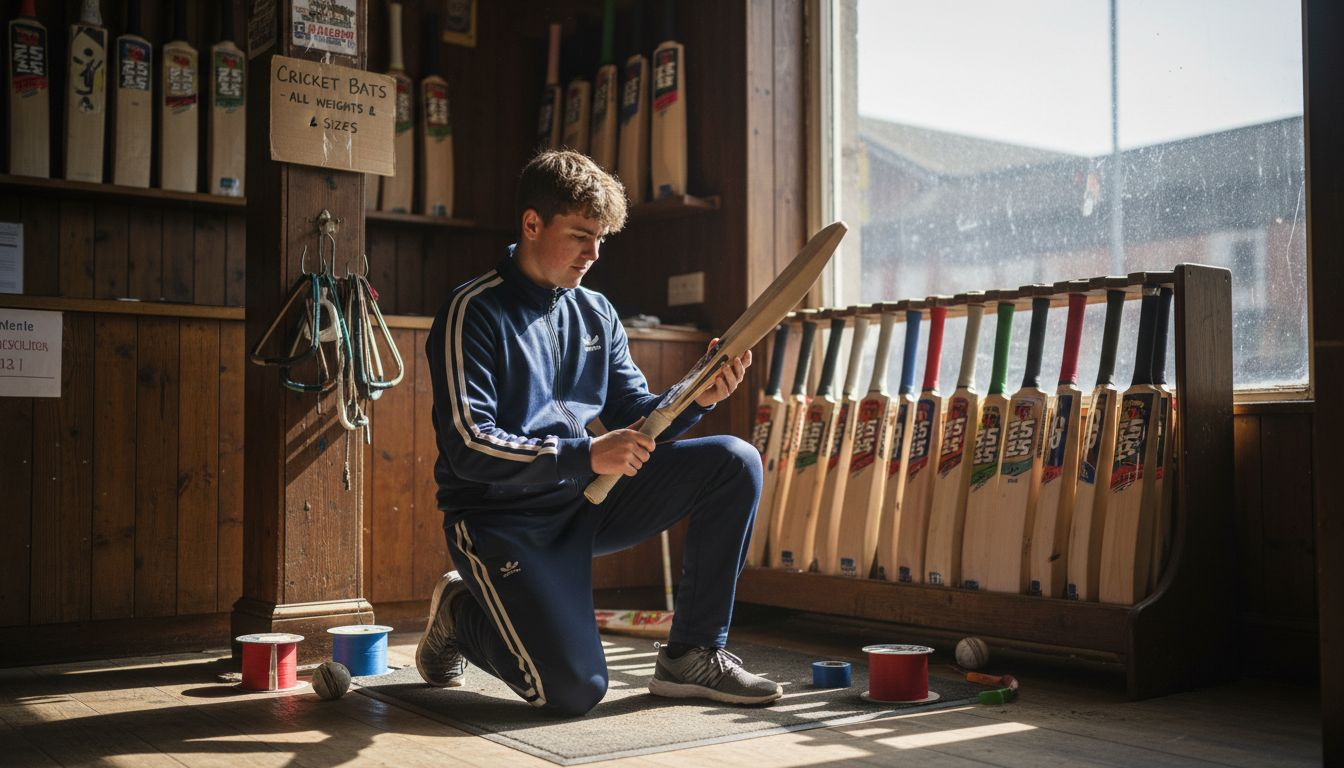
The UK cricket industry includes two distinct manufacturing approaches. Large-scale manufacturers prioritise efficiency and consistency for mass markets. Meanwhile, craft bat makers preserve traditional handmade techniques in rural areas, maintaining heritage methods whilst supporting local economies.
Small-scale producers often create bespoke bats tailored to individual player specifications. This personalisation attracts serious players seeking competitive advantage.
Economic and Community Impact
Cricket bat manufacturing represents substantial economic value. Research shows the industry provides crucial employment across production, quality control, and distribution roles.
Local manufacturers strengthen community cricket by:
- Sponsoring youth teams and grassroots programmes
- Sourcing materials from local suppliers
- Creating skilled jobs requiring years of training
- Supporting cricket clubs through partnerships and donations
When you purchase from UK manufacturers, you’re backing these communities directly.
Why Quality Manufacturing Matters
Poor manufacturing leads to inconsistent performance, safety issues, and wasted money. Quality producers invest in research, testing, and continuous improvement.
This directly benefits you through equipment that performs consistently and lasts longer. Investing in bats from reputable manufacturers genuinely improves your game.
Pro tip: When selecting a bat, research the manufacturer’s background, certifications, and customer reviews—quality manufacturers stand behind their products with transparent information and customer support.
Types of cricket bats and manufacturing processes
Cricket bats come in several distinct types, each designed for different player preferences and playing conditions. Understanding these variations helps you choose equipment that actually suits your game rather than just picking whatever looks good.
Manufacturers produce bats using traditional and modern techniques that have evolved significantly over time. The construction method directly affects how your bat performs, feels, and lasts through a season.
Main Bat Types
You’ll encounter three primary categories when shopping for cricket bats:
- English willow bats: Premium grade made from Salix alba wood, offering superior responsiveness and traditional performance. These are the gold standard for serious players.
- Kashmir willow bats: More affordable alternative using wood from Kashmir region, providing decent performance at lower cost. Popular with developing players.
- Composite bats: Modern construction using mixed materials (fibreglass, carbon fibre, resin), offering consistency and durability with minimal maintenance required.
Each type serves different budgets, skill levels, and playing styles. English willow remains preferred by professionals because it delivers unmatched feedback and control.
Here’s a summary of the main cricket bat types, including their advantages and typical users:
| Bat Type | Key Benefit | Typical User | Price Range |
|---|---|---|---|
| English willow | Maximum responsiveness | Professionals | £300–£500+ |
| Kashmir willow | Affordable entry-level option | Developing players | £50–£150 |
| Composite | Consistency and durability | Casual/social players | £100–£200 |
Manufacturing Evolution
Bat construction has transformed dramatically over recent decades. The evolution from traditional single-piece wood to modern spliced and laminated designs shows how manufacturers continuously improve performance and durability.
Traditional methods involve:
- Selecting and seasoning raw willow for 12-18 months
- Hand-shaping the blade and handle individually
- Binding components with binding tape
- Testing for straightness and balance
- Final finishing and protective coating
This process demands skilled craftspeople and extensive time investment. Modern factories have adapted these techniques using precision machinery whilst maintaining quality standards.
The table below contrasts traditional and modern cricket bat manufacturing approaches:
| Aspect | Traditional Craft | Modern Industrial |
|---|---|---|
| Main Process | Hand-fashioned shaping | Computer-aided design |
| Time Investment | 2–3 days per bat | Several hours per bat |
| Variation/Personalisation | Highly customisable | Consistently standardised |
| Community Impact | Supports rural jobs | Supports factory employment |
Modern Manufacturing Processes
Contemporary manufacturers use advanced equipment to streamline production without sacrificing quality. Understanding how bats are made with artistry reveals the balance between tradition and innovation in UK manufacturing.
Modern processes include:
- Computer-aided design for consistent blade shapes
- Hydraulic presses for uniform binding pressure
- Spectral analysis testing for wood quality verification
- Machine routing for precise handle shaping
- Automated quality control checks
Modern manufacturing doesn’t replace craftsmanship—it enhances it by removing variables so craftspeople can focus on excellence.
Spliced vs Laminated Design
Spliced bats feature a handle splice joining separate wood pieces at the neck, offering improved durability by distributing stress across the joint. This construction suits players wanting traditional feel with improved longevity.
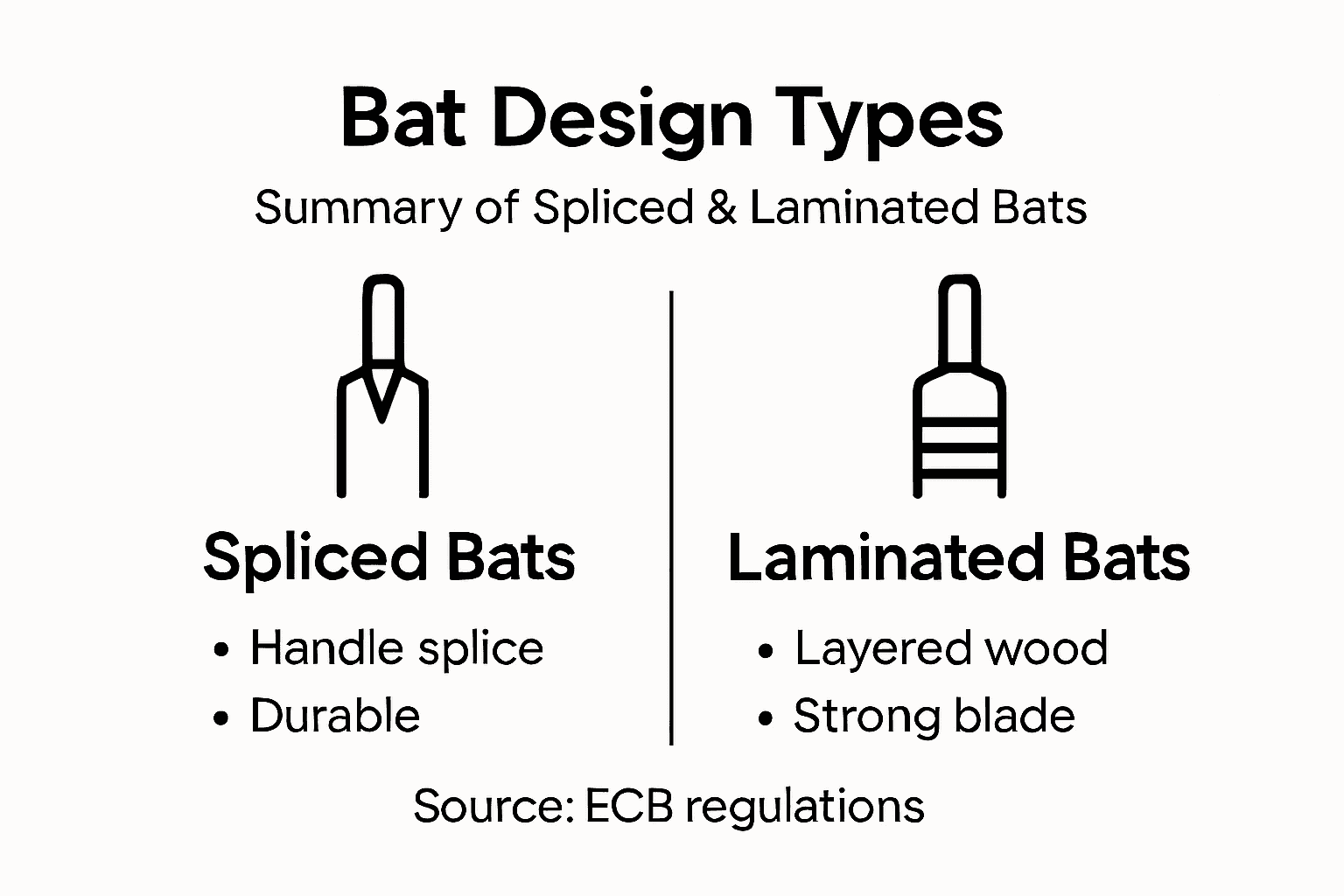
Laminated bats use multiple thin wood layers bonded together, increasing overall strength and reducing cracking risk. These cost slightly more but last longer with heavy use.
Custom Manufacturing
Many UK manufacturers offer custom bat making services tailoring bats to your specifications. Customisation includes handle thickness, blade curve, and weight distribution based on your playing style.
Custom bats typically cost 20-30% more but deliver superior performance when matched to your exact requirements.
Pro tip: Test multiple bat types before committing to a purchase—borrow from teammates or visit retailers offering trial periods, as the right bat should feel natural in your hands immediately, not require weeks of adjustment.
Key performance features and quality controls
What separates a premium bat from a mediocre one comes down to specific performance features and rigorous quality controls during manufacturing. These factors determine whether your bat delivers consistent performance or frustrates you match after match.
Manufacturers who prioritise quality invest heavily in testing and verification at every production stage. This commitment directly translates to equipment you can trust.
Critical Performance Features
When evaluating cricket bats, focus on these key characteristics:
- Sweet spot size: The larger the sweet spot, the more forgiving your shots become. A bigger hitting zone means better results on off-centre strikes.
- Bat stiffness and elasticity: The balance between these determines how much energy the ball absorbs versus returns. Research on bat stiffness and elasticity shows these properties directly affect batted-ball speed and player performance.
- Weight distribution: A well-balanced bat reduces arm fatigue and improves shot consistency across longer innings.
- Pick-up and feel: How the bat feels in your hands matters more than specifications alone. Good bats feel responsive immediately upon contact.
These features work together, not independently. A stiff bat with poor weight distribution performs worse than a slightly softer bat balanced perfectly.
Manufacturing Quality Controls
Reputable manufacturers implement multiple checkpoints throughout production:
- Raw material inspection verifying wood quality and moisture content
- Blade straightness testing using precision measuring equipment
- Weight verification ensuring consistency batch-to-batch
- Composite skin application checks for adhesion and coverage
- Edge profiling measurement confirming blade specifications
- Impact testing simulating real-game conditions
- Final visual inspection catching cosmetic defects
Skipping any step compromises the finished product. Premium manufacturers never cut corners here.
Wood Selection Standards
English willow requires meticulous selection. Top-grade wood exhibits:
- Tight, consistent grain structure
- Minimal knots or blemishes
- Proper seasoning achieving correct moisture levels
- Straightness within millimetre tolerances
Manufacturers who select wood carefully produce bats lasting 5-7 seasons. Poor selection results in bats cracking within a single season.
Composite Material Standards
Composite bats demand equally rigorous quality control. Manufacturing consistency affects:
- Resin-to-fibre ratio uniformity
- Layering precision ensuring balanced strength
- Moisture resistance in sealed edges
- Consistent colour matching across production runs
Quality controls aren’t bureaucratic overhead—they’re the difference between equipment that enhances your game and equipment that holds you back.
Durability Testing
Serious manufacturers conduct durability testing mimicking actual playing conditions. This includes:
- Repeated impact testing on the sweet spot
- Edge impact testing (catching the ball on the edge)
- Torsional stress testing (twisting forces during shots)
- Moisture exposure testing for environmental resistance
Bats failing these tests never reach retail shelves.
Certification and Standards
Look for bats meeting International Cricket Council (ICC) specifications. ICC certification confirms:
- Maximum bat length and depth measurements
- Edge and toe thickness limits
- Handle construction standards
- Overall weight requirements
All reputable manufacturers produce ICC-compliant equipment.
Pro tip: When purchasing, ask retailers about specific quality certifications and durability testing performed—manufacturers confident in their quality readily share this information, whilst those cutting corners remain vague about testing protocols.
Regulations governing bat specifications in the UK
Cricket bat regulations in the UK exist to maintain fairness and protect player safety. These rules apply whether you’re playing in your local club or competing at higher levels, so understanding them matters for your equipment choices.
The Marylebone Cricket Club (MCC) and England and Wales Cricket Board (ECB) establish and enforce these standards across all forms of the game.
Official Bat Dimensions
All cricket bats must comply with strict size limitations set by the MCC. Official bat specifications define:
- Maximum length: 38 inches (965 millimetres) from handle end to blade tip
- Maximum width: 4.25 inches (108 millimetres) across the blade face
- Handle diameter: No specific maximum, but proportionate to overall bat design
- Blade thickness: Unrestricted, though practical limits apply for balance
Bats exceeding these dimensions won’t be permitted in official matches, regardless of how good they feel. Manufacturers must design within these constraints.
Material Requirements
Bats must be constructed entirely from wood with specific allowances for handle coverings and protective materials.
Permitted materials include:
- Solid wood construction for blade and handle
- Cane binding for handle wrapping
- Rubber grips for comfort and moisture control
- Protective coverings for damage repair (tape, toe guards)
- Binding thread to hold components together
Composite materials, metal cores, and synthetic blade materials are strictly prohibited. This ensures consistency across recreational and elite cricket.
Handle and Binding Standards
Handle construction faces specific regulations regarding materials and coverings. The handle must remain wood-based throughout, with only approved coverings permitted for grip or repair purposes.
Bindings must be:
- Applied only where necessary for structural integrity
- Non-excessive in thickness
- Incapable of causing ball damage through hardness or roughness
Ball Protection Requirements
Regulations specifically address ball safety. Bat coverings and bindings must not damage the cricket ball through sharp edges, rough surfaces, or protruding materials.
This means:
- Toe guards must be smoothly applied
- Edge tape cannot protrude beyond blade edges
- Handle bindings must be evenly wrapped
- All repairs must maintain smooth surfaces
Regulations protect player safety and fair competition—they’re not bureaucratic restrictions but essential safeguards for the game’s integrity.
ECB Governance Framework
The ECB enforces comprehensive equipment regulations covering all levels of cricket in England and Wales. These regulations ensure consistency from grassroots to professional cricket.
ECB standards address:
- Compliance with MCC Laws
- Additional safety requirements for youth cricket
- Equipment standards for different competition formats
- Inspection protocols for domestic and international matches
- Penalties for non-compliant equipment usage
Practical Implications for Players
These regulations mean:
- All bats sold by reputable retailers meet legal standards
- Vintage or modified bats may not comply with current rules
- Tournament organisers conduct equipment inspections before matches
- Using non-compliant bats results in disqualification
When purchasing, check retailers verify bat compliance rather than assuming all bats meet regulations.
Pro tip: Before buying a bat, confirm it carries official certification or comes from a manufacturer publicly committed to MCC and ECB compliance—reputable sellers display this information prominently to reassure customers about equipment legality.
Risks, costs, and common purchasing mistakes
Buying a cricket bat without understanding the risks often leads to wasted money and disappointing performance. Many players make preventable mistakes that manufacturers and retailers could help them avoid if they knew what to watch for.
Understanding these pitfalls protects your investment and ensures you select equipment that genuinely improves your game.
Financial Risks and Costs
Cricket bats represent significant investment depending on quality level:
- Budget bats: £50-£100, suitable for beginners experimenting with the sport
- Mid-range bats: £150-£250, offering good quality for developing players
- Premium English willow bats: £300-£500+, delivering professional-grade performance
- Custom bats: £400-£700+, tailored to individual specifications
Buying the wrong category wastes money regardless of price point. A £400 bat poorly matched to your playing style performs worse than a £200 bat suited perfectly to your needs.
Brand Versus Quality Mistakes
Research on cricket bat purchasing behaviour reveals players often prioritise brand reputation over actual quality specifications. This approach backfires when famous brands cut corners or release poorly tested models.
Common mistakes include:
- Assuming expensive brands guarantee quality performance
- Neglecting to read specifications and material composition
- Ignoring customer reviews from other players
- Purchasing based on aesthetics rather than performance metrics
- Trusting marketing claims without independent verification
Brand names matter less than specifications, quality certifications, and genuine player reviews.
Size and Weight Selection Errors
Choosing incorrect bat dimensions represents the most common costly mistake. Many players select bats based on what looks impressive rather than what matches their physical characteristics and playing style.
Frequent errors include:
- Too heavy: Reduces bat speed, increases fatigue, compromises shot timing
- Too light: Reduces power transfer, feels unresponsive on impact, lacks control
- Incorrect blade curve: Poor sweet spot alignment for individual technique
- Wrong balance point: Creates arm strain during extended batting sessions
A bat feeling heavy initially becomes unplayable after three hours in the field. Test weight thoroughly before purchasing.
Material Quality Risks
Not all English willow bats offer equal performance. Some manufacturers use lower-grade wood to reduce costs, resulting in:
- Bats cracking within single season
- Inconsistent performance across the blade
- Poor moisture resistance
- Delamination in spliced designs
Demand detailed wood grading information from retailers. Grade 1 English willow costs more but lasts significantly longer.
Information and Misinformation Risks
Online shopping introduces misinformation risks. False product descriptions, misleading specifications, and fabricated reviews mislead uninformed buyers.
Protect yourself by:
- Purchasing from established retailers with verified customer feedback
- Cross-referencing specifications across multiple sources
- Reading recent reviews (last 6 months) reflecting current production quality
- Seeking recommendations from your cricket club
- Verifying manufacturer certifications independently
Durability and Longevity Issues
Bats failing prematurely indicate poor manufacturing or material selection. Quality bats typically last 3-5 seasons with proper care. Cheaper bats often fail within weeks of use.
Watch for:
- Handle splinters appearing early
- Edge damage from normal play
- Blade warping or cracking
- Handle separation from blade
Pro tip: Before purchasing any bat, verify the retailer offers a clear return or exchange policy covering manufacturing defects—reputable sellers confidently stand behind their products and allow testing periods, whilst unreliable retailers impose strict no-return policies.
Elevate Your Game with Quality Cricket Bats from Trusted UK Manufacturers
The article highlights how vital cricket bat manufacturers are to your playing experience and the broader cricket community in the UK. You want a bat that combines expert craftsmanship, quality materials like English willow, and rigorous quality controls to ensure durability and performance. Avoid costly mistakes by choosing bats that truly meet official standards and support the heritage of UK cricket.
Discover our curated collection at Cricket Bats – Cricket Bats Com where you will find a wide range of premium cricket bats from reputable brands engineered for consistency and balance. Whether you are searching for a personalised feel or professional-grade equipment, we offer options to suit your style and budget. Experience the difference that proven manufacturing processes can make in your game.

Shop now at cricketbats.com and benefit from free shipping, expert advice, and easy returns. Support quality manufacturing and stand behind the bats that shape UK cricket standards by choosing your perfect cricket bat today. Take the first step to improve your performance and back the community with every purchase.
Frequently Asked Questions
What are the different types of cricket bats produced by manufacturers?
Cricket bats are primarily categorized into three types: English willow bats, Kashmir willow bats, and composite bats. English willow bats are premium and preferred by professionals, Kashmir willow bats are more affordable for developing players, and composite bats offer consistency and durability using mixed materials.
How does the manufacturing process of cricket bats impact their performance?
The manufacturing process greatly affects a bat’s performance. Factors such as the selection and seasoning of wood, hand-shaping techniques, and quality control standards contribute to the bat’s responsiveness, durability, and overall playing experience.
Why is it important to choose a bat from a reputable manufacturer?
Choosing a bat from a reputable manufacturer ensures quality and performance. Quality manufacturers invest in research, testing, and certification, which guarantees that the bat meets safety standards and performs consistently, enhancing your game and preventing issues like cracking and uneven performance.
What are the key performance features to consider when selecting a cricket bat?
When selecting a cricket bat, consider key features such as the sweet spot size, bat stiffness and elasticity, weight distribution, and overall pick-up and feel. These characteristics significantly impact shot quality, control, and player comfort during matches.
Recommended
- Cricket Bat Certifications: What Every Player Needs – Cricket Bats Com
- Branding in Cricket Bats – How It Influences Performance – Cricket Bats Com
- Industry Trends in Cricket Bats 2025 – What Players Need Now – Cricket Bats Com
- Cricket Bat Manufacturing Process: What Buyers Should Know – Cricket Bats Com
Finding the right cricket bat can make all the difference when you are facing a pace attack on a wet Sheffield pitch or digging in for a long knock at your local London club. Every swing relies on expert craftsmanship and quality raw materials, which is why cricket bat manufacturers are so important to the British game. This article highlights how these skilled producers shape everything from your match experience to supporting thriving cricket communities across the UK.
Table of Contents
- Cricket Bat Manufacturers – Definition And Importance
- Types Of Cricket Bats And Manufacturing Processes
- Key Performance Features And Quality Controls
- Regulations Governing Bat Specifications In The UK
- Risks, Costs, And Common Purchasing Mistakes
Key Takeaways
| Point | Details |
|---|---|
| Role of Manufacturers | Cricket bat manufacturers are essential, ensuring players have high-quality equipment to enhance their game performance. |
| Impact of Quality | Investing in bats from reputable manufacturers guarantees compliance with safety standards and enhances playability, improving overall player experience. |
| Customisation Benefits | Custom bat making offers tailored options resulting in superior performance that meets individual playing styles and preferences. |
| Avoiding Common Mistakes | Players should research specifications and reviews to avoid pitfalls associated with brand reputation, size selection, and material quality when purchasing bats. |
Cricket bat manufacturers – definition and importance
Cricket bat manufacturers are companies or individual craftspeople who design, produce, and distribute bats used in the sport. They range from large multinational corporations to small-scale rural producers, each playing a distinct role in shaping the game across the UK.
Think of them as the backbone of competitive cricket. Without manufacturers, you wouldn’t have the equipment to develop your skills or compete effectively.
What Manufacturers Actually Do
Manufacturers don’t simply assemble wood and handles. They engage in a complex process involving:
- Sourcing raw materials (willow, cane, rubber, and composite materials)
- Designing bat shapes to meet performance specifications
- Producing and testing equipment for safety and durability
- Distributing products through retailers and online platforms
- Innovating to improve player performance
Understanding the cricket bat manufacturing process reveals how much expertise goes into the equipment you hold.
Why This Matters to You
As an amateur or semi-professional player, manufacturers directly impact your experience. Quality manufacturers invest in cricket bat certifications ensuring bats meet safety standards and performance requirements. They determine whether your bat feels responsive, balanced, and reliable during matches.
Manufacturers shape not just the equipment you use, but the competitive standards of UK cricket itself.
The Craft vs Industrial Divide
The UK cricket industry includes two distinct manufacturing approaches. Large-scale manufacturers prioritise efficiency and consistency for mass markets. Meanwhile, craft bat makers preserve traditional handmade techniques in rural areas, maintaining heritage methods whilst supporting local economies.
Small-scale producers often create bespoke bats tailored to individual player specifications. This personalisation attracts serious players seeking competitive advantage.
Economic and Community Impact
Cricket bat manufacturing represents substantial economic value. Research shows the industry provides crucial employment across production, quality control, and distribution roles.
Local manufacturers strengthen community cricket by:
- Sponsoring youth teams and grassroots programmes
- Sourcing materials from local suppliers
- Creating skilled jobs requiring years of training
- Supporting cricket clubs through partnerships and donations
When you purchase from UK manufacturers, you’re backing these communities directly.
Why Quality Manufacturing Matters
Poor manufacturing leads to inconsistent performance, safety issues, and wasted money. Quality producers invest in research, testing, and continuous improvement.
This directly benefits you through equipment that performs consistently and lasts longer. Investing in bats from reputable manufacturers genuinely improves your game.
Pro tip: When selecting a bat, research the manufacturer’s background, certifications, and customer reviews—quality manufacturers stand behind their products with transparent information and customer support.
Types of cricket bats and manufacturing processes
Cricket bats come in several distinct types, each designed for different player preferences and playing conditions. Understanding these variations helps you choose equipment that actually suits your game rather than just picking whatever looks good.
Manufacturers produce bats using traditional and modern techniques that have evolved significantly over time. The construction method directly affects how your bat performs, feels, and lasts through a season.
Main Bat Types
You’ll encounter three primary categories when shopping for cricket bats:
- English willow bats: Premium grade made from Salix alba wood, offering superior responsiveness and traditional performance. These are the gold standard for serious players.
- Kashmir willow bats: More affordable alternative using wood from Kashmir region, providing decent performance at lower cost. Popular with developing players.
- Composite bats: Modern construction using mixed materials (fibreglass, carbon fibre, resin), offering consistency and durability with minimal maintenance required.
Each type serves different budgets, skill levels, and playing styles. English willow remains preferred by professionals because it delivers unmatched feedback and control.
Here’s a summary of the main cricket bat types, including their advantages and typical users:
| Bat Type | Key Benefit | Typical User | Price Range |
|---|---|---|---|
| English willow | Maximum responsiveness | Professionals | £300–£500+ |
| Kashmir willow | Affordable entry-level option | Developing players | £50–£150 |
| Composite | Consistency and durability | Casual/social players | £100–£200 |
Manufacturing Evolution
Bat construction has transformed dramatically over recent decades. The evolution from traditional single-piece wood to modern spliced and laminated designs shows how manufacturers continuously improve performance and durability.
Traditional methods involve:
- Selecting and seasoning raw willow for 12-18 months
- Hand-shaping the blade and handle individually
- Binding components with binding tape
- Testing for straightness and balance
- Final finishing and protective coating
This process demands skilled craftspeople and extensive time investment. Modern factories have adapted these techniques using precision machinery whilst maintaining quality standards.
The table below contrasts traditional and modern cricket bat manufacturing approaches:
| Aspect | Traditional Craft | Modern Industrial |
|---|---|---|
| Main Process | Hand-fashioned shaping | Computer-aided design |
| Time Investment | 2–3 days per bat | Several hours per bat |
| Variation/Personalisation | Highly customisable | Consistently standardised |
| Community Impact | Supports rural jobs | Supports factory employment |
Modern Manufacturing Processes
Contemporary manufacturers use advanced equipment to streamline production without sacrificing quality. Understanding how bats are made with artistry reveals the balance between tradition and innovation in UK manufacturing.
Modern processes include:
- Computer-aided design for consistent blade shapes
- Hydraulic presses for uniform binding pressure
- Spectral analysis testing for wood quality verification
- Machine routing for precise handle shaping
- Automated quality control checks
Modern manufacturing doesn’t replace craftsmanship—it enhances it by removing variables so craftspeople can focus on excellence.
Spliced vs Laminated Design
Spliced bats feature a handle splice joining separate wood pieces at the neck, offering improved durability by distributing stress across the joint. This construction suits players wanting traditional feel with improved longevity.
Laminated bats use multiple thin wood layers bonded together, increasing overall strength and reducing cracking risk. These cost slightly more but last longer with heavy use.
Custom Manufacturing
Many UK manufacturers offer custom bat making services tailoring bats to your specifications. Customisation includes handle thickness, blade curve, and weight distribution based on your playing style.
Custom bats typically cost 20-30% more but deliver superior performance when matched to your exact requirements.
Pro tip: Test multiple bat types before committing to a purchase—borrow from teammates or visit retailers offering trial periods, as the right bat should feel natural in your hands immediately, not require weeks of adjustment.
Key performance features and quality controls
What separates a premium bat from a mediocre one comes down to specific performance features and rigorous quality controls during manufacturing. These factors determine whether your bat delivers consistent performance or frustrates you match after match.
Manufacturers who prioritise quality invest heavily in testing and verification at every production stage. This commitment directly translates to equipment you can trust.
Critical Performance Features
When evaluating cricket bats, focus on these key characteristics:
- Sweet spot size: The larger the sweet spot, the more forgiving your shots become. A bigger hitting zone means better results on off-centre strikes.
- Bat stiffness and elasticity: The balance between these determines how much energy the ball absorbs versus returns. Research on bat stiffness and elasticity shows these properties directly affect batted-ball speed and player performance.
- Weight distribution: A well-balanced bat reduces arm fatigue and improves shot consistency across longer innings.
- Pick-up and feel: How the bat feels in your hands matters more than specifications alone. Good bats feel responsive immediately upon contact.
These features work together, not independently. A stiff bat with poor weight distribution performs worse than a slightly softer bat balanced perfectly.
Manufacturing Quality Controls
Reputable manufacturers implement multiple checkpoints throughout production:
- Raw material inspection verifying wood quality and moisture content
- Blade straightness testing using precision measuring equipment
- Weight verification ensuring consistency batch-to-batch
- Composite skin application checks for adhesion and coverage
- Edge profiling measurement confirming blade specifications
- Impact testing simulating real-game conditions
- Final visual inspection catching cosmetic defects
Skipping any step compromises the finished product. Premium manufacturers never cut corners here.
Wood Selection Standards
English willow requires meticulous selection. Top-grade wood exhibits:
- Tight, consistent grain structure
- Minimal knots or blemishes
- Proper seasoning achieving correct moisture levels
- Straightness within millimetre tolerances
Manufacturers who select wood carefully produce bats lasting 5-7 seasons. Poor selection results in bats cracking within a single season.
Composite Material Standards
Composite bats demand equally rigorous quality control. Manufacturing consistency affects:
- Resin-to-fibre ratio uniformity
- Layering precision ensuring balanced strength
- Moisture resistance in sealed edges
- Consistent colour matching across production runs
Quality controls aren’t bureaucratic overhead—they’re the difference between equipment that enhances your game and equipment that holds you back.
Durability Testing
Serious manufacturers conduct durability testing mimicking actual playing conditions. This includes:
- Repeated impact testing on the sweet spot
- Edge impact testing (catching the ball on the edge)
- Torsional stress testing (twisting forces during shots)
- Moisture exposure testing for environmental resistance
Bats failing these tests never reach retail shelves.
Certification and Standards
Look for bats meeting International Cricket Council (ICC) specifications. ICC certification confirms:
- Maximum bat length and depth measurements
- Edge and toe thickness limits
- Handle construction standards
- Overall weight requirements
All reputable manufacturers produce ICC-compliant equipment.
Pro tip: When purchasing, ask retailers about specific quality certifications and durability testing performed—manufacturers confident in their quality readily share this information, whilst those cutting corners remain vague about testing protocols.
Regulations governing bat specifications in the UK
Cricket bat regulations in the UK exist to maintain fairness and protect player safety. These rules apply whether you’re playing in your local club or competing at higher levels, so understanding them matters for your equipment choices.
The Marylebone Cricket Club (MCC) and England and Wales Cricket Board (ECB) establish and enforce these standards across all forms of the game.
Official Bat Dimensions
All cricket bats must comply with strict size limitations set by the MCC. Official bat specifications define:
- Maximum length: 38 inches (965 millimetres) from handle end to blade tip
- Maximum width: 4.25 inches (108 millimetres) across the blade face
- Handle diameter: No specific maximum, but proportionate to overall bat design
- Blade thickness: Unrestricted, though practical limits apply for balance
Bats exceeding these dimensions won’t be permitted in official matches, regardless of how good they feel. Manufacturers must design within these constraints.
Material Requirements
Bats must be constructed entirely from wood with specific allowances for handle coverings and protective materials.
Permitted materials include:
- Solid wood construction for blade and handle
- Cane binding for handle wrapping
- Rubber grips for comfort and moisture control
- Protective coverings for damage repair (tape, toe guards)
- Binding thread to hold components together
Composite materials, metal cores, and synthetic blade materials are strictly prohibited. This ensures consistency across recreational and elite cricket.
Handle and Binding Standards
Handle construction faces specific regulations regarding materials and coverings. The handle must remain wood-based throughout, with only approved coverings permitted for grip or repair purposes.
Bindings must be:
- Applied only where necessary for structural integrity
- Non-excessive in thickness
- Incapable of causing ball damage through hardness or roughness
Ball Protection Requirements
Regulations specifically address ball safety. Bat coverings and bindings must not damage the cricket ball through sharp edges, rough surfaces, or protruding materials.
This means:
- Toe guards must be smoothly applied
- Edge tape cannot protrude beyond blade edges
- Handle bindings must be evenly wrapped
- All repairs must maintain smooth surfaces
Regulations protect player safety and fair competition—they’re not bureaucratic restrictions but essential safeguards for the game’s integrity.
ECB Governance Framework
The ECB enforces comprehensive equipment regulations covering all levels of cricket in England and Wales. These regulations ensure consistency from grassroots to professional cricket.
ECB standards address:
- Compliance with MCC Laws
- Additional safety requirements for youth cricket
- Equipment standards for different competition formats
- Inspection protocols for domestic and international matches
- Penalties for non-compliant equipment usage
Practical Implications for Players
These regulations mean:
- All bats sold by reputable retailers meet legal standards
- Vintage or modified bats may not comply with current rules
- Tournament organisers conduct equipment inspections before matches
- Using non-compliant bats results in disqualification
When purchasing, check retailers verify bat compliance rather than assuming all bats meet regulations.
Pro tip: Before buying a bat, confirm it carries official certification or comes from a manufacturer publicly committed to MCC and ECB compliance—reputable sellers display this information prominently to reassure customers about equipment legality.
Risks, costs, and common purchasing mistakes
Buying a cricket bat without understanding the risks often leads to wasted money and disappointing performance. Many players make preventable mistakes that manufacturers and retailers could help them avoid if they knew what to watch for.
Understanding these pitfalls protects your investment and ensures you select equipment that genuinely improves your game.
Financial Risks and Costs
Cricket bats represent significant investment depending on quality level:
- Budget bats: £50-£100, suitable for beginners experimenting with the sport
- Mid-range bats: £150-£250, offering good quality for developing players
- Premium English willow bats: £300-£500+, delivering professional-grade performance
- Custom bats: £400-£700+, tailored to individual specifications
Buying the wrong category wastes money regardless of price point. A £400 bat poorly matched to your playing style performs worse than a £200 bat suited perfectly to your needs.
Brand Versus Quality Mistakes
Research on cricket bat purchasing behaviour reveals players often prioritise brand reputation over actual quality specifications. This approach backfires when famous brands cut corners or release poorly tested models.
Common mistakes include:
- Assuming expensive brands guarantee quality performance
- Neglecting to read specifications and material composition
- Ignoring customer reviews from other players
- Purchasing based on aesthetics rather than performance metrics
- Trusting marketing claims without independent verification
Brand names matter less than specifications, quality certifications, and genuine player reviews.
Size and Weight Selection Errors
Choosing incorrect bat dimensions represents the most common costly mistake. Many players select bats based on what looks impressive rather than what matches their physical characteristics and playing style.
Frequent errors include:
- Too heavy: Reduces bat speed, increases fatigue, compromises shot timing
- Too light: Reduces power transfer, feels unresponsive on impact, lacks control
- Incorrect blade curve: Poor sweet spot alignment for individual technique
- Wrong balance point: Creates arm strain during extended batting sessions
A bat feeling heavy initially becomes unplayable after three hours in the field. Test weight thoroughly before purchasing.
Material Quality Risks
Not all English willow bats offer equal performance. Some manufacturers use lower-grade wood to reduce costs, resulting in:
- Bats cracking within single season
- Inconsistent performance across the blade
- Poor moisture resistance
- Delamination in spliced designs
Demand detailed wood grading information from retailers. Grade 1 English willow costs more but lasts significantly longer.
Information and Misinformation Risks
Online shopping introduces misinformation risks. False product descriptions, misleading specifications, and fabricated reviews mislead uninformed buyers.
Protect yourself by:
- Purchasing from established retailers with verified customer feedback
- Cross-referencing specifications across multiple sources
- Reading recent reviews (last 6 months) reflecting current production quality
- Seeking recommendations from your cricket club
- Verifying manufacturer certifications independently
Durability and Longevity Issues
Bats failing prematurely indicate poor manufacturing or material selection. Quality bats typically last 3-5 seasons with proper care. Cheaper bats often fail within weeks of use.
Watch for:
- Handle splinters appearing early
- Edge damage from normal play
- Blade warping or cracking
- Handle separation from blade
Pro tip: Before purchasing any bat, verify the retailer offers a clear return or exchange policy covering manufacturing defects—reputable sellers confidently stand behind their products and allow testing periods, whilst unreliable retailers impose strict no-return policies.
Elevate Your Game with Quality Cricket Bats from Trusted UK Manufacturers
The article highlights how vital cricket bat manufacturers are to your playing experience and the broader cricket community in the UK. You want a bat that combines expert craftsmanship, quality materials like English willow, and rigorous quality controls to ensure durability and performance. Avoid costly mistakes by choosing bats that truly meet official standards and support the heritage of UK cricket.
Discover our curated collection at Cricket Bats – Cricket Bats Com where you will find a wide range of premium cricket bats from reputable brands engineered for consistency and balance. Whether you are searching for a personalised feel or professional-grade equipment, we offer options to suit your style and budget. Experience the difference that proven manufacturing processes can make in your game.
Shop now at cricketbats.com and benefit from free shipping, expert advice, and easy returns. Support quality manufacturing and stand behind the bats that shape UK cricket standards by choosing your perfect cricket bat today. Take the first step to improve your performance and back the community with every purchase.
Frequently Asked Questions
What are the different types of cricket bats produced by manufacturers?
Cricket bats are primarily categorized into three types: English willow bats, Kashmir willow bats, and composite bats. English willow bats are premium and preferred by professionals, Kashmir willow bats are more affordable for developing players, and composite bats offer consistency and durability using mixed materials.
How does the manufacturing process of cricket bats impact their performance?
The manufacturing process greatly affects a bat’s performance. Factors such as the selection and seasoning of wood, hand-shaping techniques, and quality control standards contribute to the bat’s responsiveness, durability, and overall playing experience.
Why is it important to choose a bat from a reputable manufacturer?
Choosing a bat from a reputable manufacturer ensures quality and performance. Quality manufacturers invest in research, testing, and certification, which guarantees that the bat meets safety standards and performs consistently, enhancing your game and preventing issues like cracking and uneven performance.
What are the key performance features to consider when selecting a cricket bat?
When selecting a cricket bat, consider key features such as the sweet spot size, bat stiffness and elasticity, weight distribution, and overall pick-up and feel. These characteristics significantly impact shot quality, control, and player comfort during matches.
Recommended
- Cricket Bat Certifications: What Every Player Needs – Cricket Bats Com
- Branding in Cricket Bats – How It Influences Performance – Cricket Bats Com
- Industry Trends in Cricket Bats 2025 – What Players Need Now – Cricket Bats Com
- Cricket Bat Manufacturing Process: What Buyers Should Know – Cricket Bats Com