
News News
Role of Club Level Bats – Impact on Amateur Performance Role of Club Level Bats – Impact on Amateur Performance
Choosing a club level cricket bat often feels like navigating a maze of opinions and marketing hype. For amateur players across the United Kingdom, getting the right bat can be the difference between growing in confidence at the crease or struggling through another lost weekend fixture. Misconceptions about bat grades, balance, and value are everywhere, yet the right club bat supports better technique and improves match performance without emptying your wallet. This guide clarifies the real purpose of club level bats and clears up the myths that confuse so many club cricketers.
Table of Contents
- Club Level Bats – Core Purpose And Misconceptions
- Types And Grades Of Club Level Bats Explained
- Sizing, Balance, And Player Fit Essentials
- How Bat Choice Affects Technique And Performance
- Mistakes To Avoid When Buying Club Bats
Key Takeaways
| Point | Details |
|---|---|
| Understanding Club Level Bats | Club level bats are designed for amateur players, providing quality performance in competitive scenarios without the professional price tag. |
| Importance of Correct Bat Fit | Selecting the right size, weight, and balance of a bat is crucial to optimise performance and avoid compromising technique. |
| Common Misconceptions | Players often confuse price with quality, believing that higher prices guarantee better performance; understanding the construction and grade of bats is essential for smart purchasing. |
| Testing Before Buying | Always test multiple bats for comfort and performance at your local cricket shop to find the best fit for your playing style. |
Club level bats – core purpose and misconceptions
Club level bats exist for one reason: to bridge the gap between recreational equipment and elite performance gear. They’re designed specifically for amateur players like you who compete in league matches, club tournaments, or weekend fixtures. Understanding what they actually do—and what they don’t—separates smart buyers from those wasting money on the wrong equipment.
The core purpose of a club level bat is straightforward.
- Deliver consistent performance in competitive conditions without the premium price tag of professional-grade equipment
- Provide balanced weight distribution for improved stroke consistency across different shot types
- Use quality materials that withstand regular club use and match play
- Offer better middle-of-bat contact zones than budget recreational bats
Many misconceptions cloud this picture, though. Like the persistent myths that education can dispel about understanding complex subjects, misinformation about club level bats affects how players make equipment choices.
Common myths holding you back
The biggest myth? That club level bats and professional bats perform identically. They don’t. Professional bats use premium willow grades, hand-crafted construction, and meticulous quality control that club bats skip to keep costs lower.
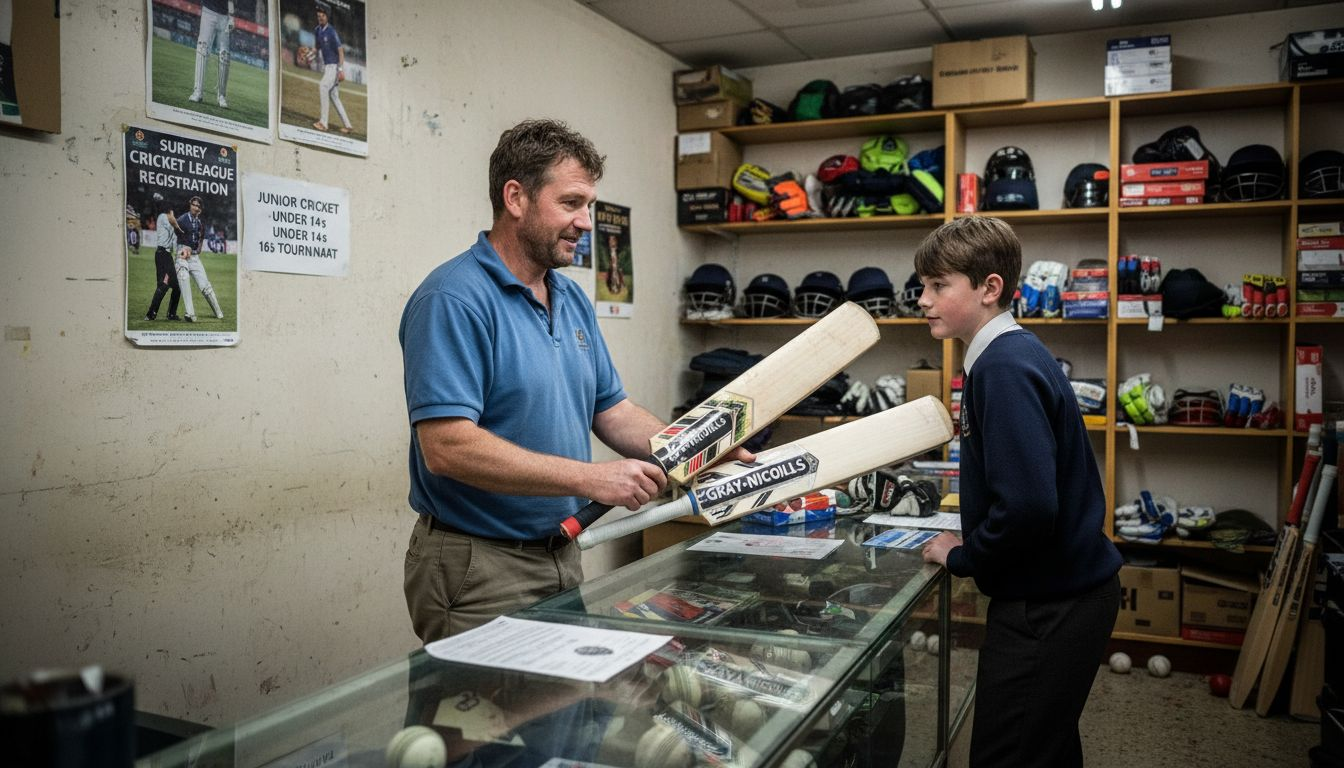
Another false belief: price equals quality across all price ranges. A £150 club bat isn’t automatically worse than a £200 one. Performance differences flatten out significantly once you move past budget options—what changes is cosmetics, brand prestige, and marginal refinements.
Here’s one that costs players real money: thinking all club bats suit your playing style. They don’t. Pick-ups vary dramatically. A heavy top-weighted bat isn’t better for everyone, despite what your teammate insists.
The gap between misconceptions and reality directly impacts your purchasing decisions and on-field performance.
The research shows that misinformation persists even with education, but knowledge still wins. When you understand exactly what club level bats deliver, you make better choices.
Club bats aren’t “cheap professional bats.” They’re engineered differently—lighter construction in some areas, different wood grades, reduced hand-finishing. This makes them ideal for club cricket where you need reliability without paying elite prices.
Why does this matter? Because a proper club level bat gives you a legitimate performance edge over budget equipment, whilst keeping more cash in your pocket. That’s their actual purpose.
To help visualise the differences between club and professional cricket bats, see this comparison table below:
| Characteristic | Club Level Bat | Professional Bat |
|---|---|---|
| Willow grade | English willow Grade 2–3 | English willow Grade 1 |
| Construction | Part hand, part machine | Fully hand-crafted |
| Quality control | Standard batch checks | Meticulous individual checks |
| Target price range | £100–£200 | £250+ |
| Suitability | Club matches, league play | First-class/pro matches |
| Cosmetic finish | Functional, less refined | Premium, flawless aesthetics |
Pro tip: Test multiple club bats at your local cricket shop before buying—pick-up and sweet spot location vary significantly, and what feels right in your hands beats following brand recommendations.
Types and grades of club level bats explained
Club level bats split into distinct categories based on construction quality, willow grade, and intended use. Knowing the difference prevents you from overpaying for features you don’t need or undershooting with equipment that won’t perform. The grading system directly determines how the bat behaves in your hands.
Understanding bat grades
Bat grading systems classify bats by willow quality and manufacturing precision. Higher grades use premium English willow with consistent grain patterns and minimal defects. Lower grades contain knots, inconsistent grain spacing, and colour variation—but still perform adequately for club cricket.
Grades typically follow this hierarchy:
- Grade 1 – Premium willow, perfect aesthetics, minimal flaws, longest middle zone
- Grade 2 – Good quality willow, slight colour variation, occasional knots, strong middle zone
- Grade 3 – Usable willow, more pronounced knots, colour inconsistency, acceptable middle zone
- Grade 4 – Budget-friendly, visible defects, narrower sweet spot, lower price point
For club cricket, Grade 2 and Grade 3 bats deliver genuine performance without the premium cost. Grade 1 bats suit players wanting maximum longevity and aesthetics. Grade 4 bats work for beginners or practice scenarios only.
Type variations within club level
Club bats come in different profiles based on playing style and preference. Traditional profile bats feature a rounded edge with moderate depth—ideal for classic technique and balanced play. Modern profile bats carry thicker edges and more pronounced curves, offering higher sweet spots and easier power generation.
Shorter bats (under 2 pounds 7 ounces) suit quick hands and shorter batsmen. Longer bats (over 2 pounds 9 ounces) favour taller players and those wanting maximum reach. Pick-up weight varies significantly across models—test before purchasing.
The grade you select matters more than the type; a Grade 2 bat outperforms a Grade 4 regardless of profile.
Manufacturers also vary construction methods. Hand-crafted club bats receive individual finishing and quality checks, yielding consistent performance. Machine-finished alternatives reduce costs through automated processes, still maintaining acceptable standards for competitive club cricket.
Pro tip: Check the cricket bat grading information before buying—Grade 2 or Grade 3 bats offer the best value-to-performance ratio for club players, delivering reliability without Grade 1 pricing.
Sizing, balance, and player fit essentials
Getting the right bat size matters more than you think. A bat that’s too heavy drains energy by the 20th over. One that’s too short limits your reach and forces awkward stroke execution. The sweet spot—your actual fit—transforms how you play.
Finding your ideal bat length
Cricket bat sizes range from 5 feet 2 inches to 5 feet 8 inches. Your height and arm length determine what works. Stand naturally with the bat beside you; the toe should reach between your chin and eyebrows when standing upright.
Length affects several things:
- Reach and coverage against fuller deliveries
- Natural stance width and foot positioning
- Ability to play both attacking and defensive shots comfortably
- Confidence when facing short-pitched bowling
Younger players and shorter batsmen thrive with smaller bats (5 feet 2 to 5 feet 4 inches). Taller players benefit from longer bats (5 feet 6 to 5 feet 8 inches). Test multiple lengths at your club shop before deciding.
Weight and balance dynamics
Balance point matters more than total weight. A balanced bat centres weight evenly between handle and blade. Top-heavy bats favour power hitters with strong wrists. Handle-heavy bats suit players preferring control and maneuverability.
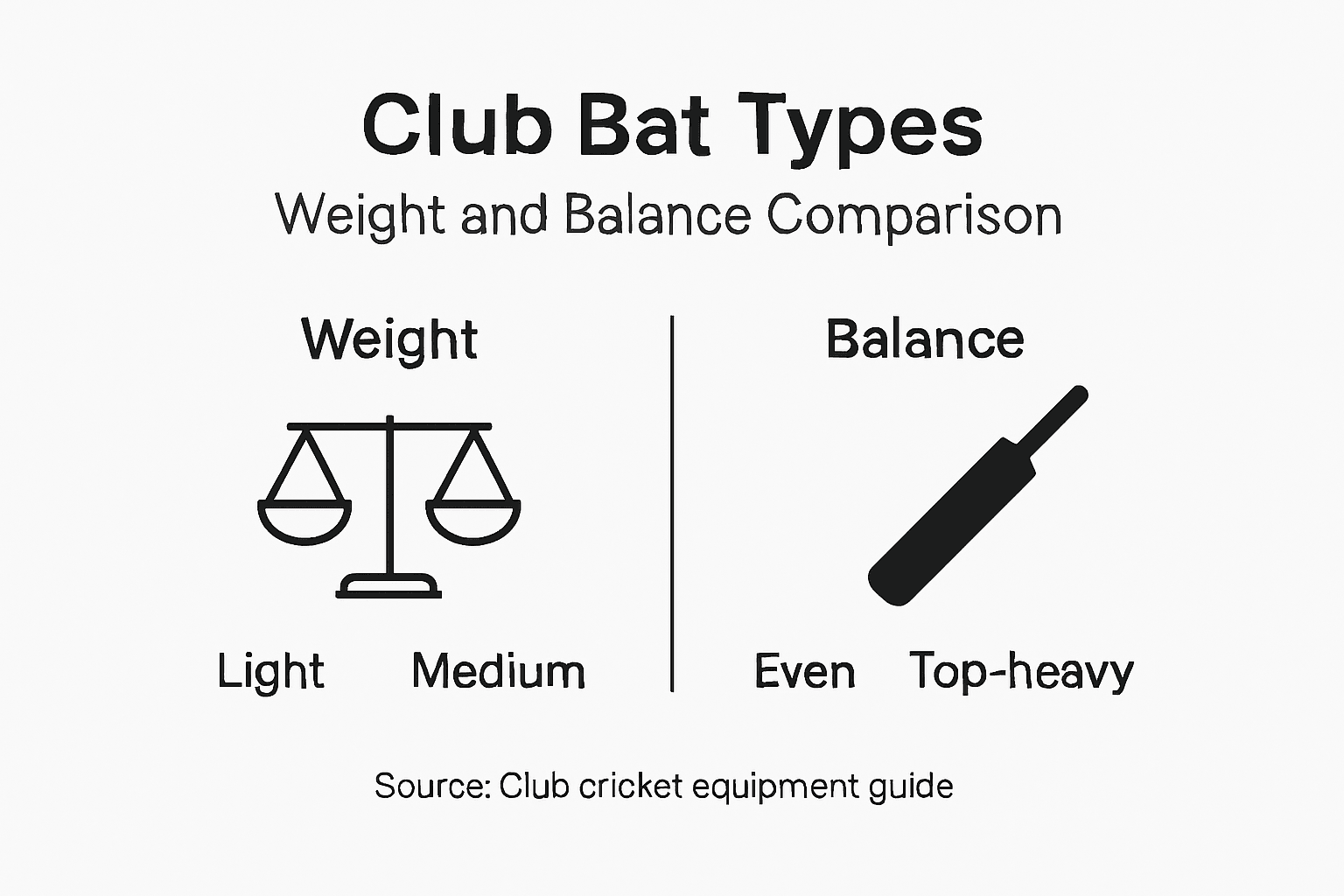
Cricket bat weight guides typically range from 2 pounds 6 ounces to 2 pounds 11 ounces. Pick-up weight—how heavy the bat feels in your hands—differs from actual weight due to balance distribution.
Your strength level determines what works:
- Lighter bats (2.6–2.8 lbs) – Better for younger or slighter players, quicker bat speed
- Medium bats (2.8–2.10 lbs) – Versatile option suiting most club players
- Heavier bats (2.10+ lbs) – Requires established strength and technique
The perfect bat feels light in your hands despite its actual weight—that’s balance working correctly.
Swing your options in the nets. If you’re struggling to accelerate through shots by the final overs, the bat’s too heavy. If you lack impact when connecting cleanly, consider adding weight.
Here’s a summary table to clarify how cricket bat weight relates to playing style and physical capability:
| Weight Category | Ideal For | Bat Speed Impact | Potential Drawback |
|---|---|---|---|
| Lighter (2.6–2.8 lbs) | Youth/slighter players | Enables rapid swing, quick shots | Reduced power for strong hitters |
| Medium (2.8–2.10 lbs) | Most club players | Balances speed and power | Few, versatile option |
| Heavier (2.10+ lbs) | Strong/powerful batsmen | Low swing speed, high impact | Early fatigue, slower shots |
Player fit assessment
Fit extends beyond measurements. Your playing style, physical condition, and confidence level all matter. Aggressive batsmen often prefer heavier, top-weighted bats. Technically sound players favour balanced, lighter options.
Test these specifics before purchasing:
- Swing the bat in your normal stance—does it feel natural?
- Play shadow shots—can you accelerate smoothly?
- Hold defensively—does your wrist stay firm?
- Check sweet spot location—does it match your typical impact zone?
Pro tip: Borrow club bats during practice nets before buying—spending 30 minutes with different sizes, weights, and balance points reveals your genuine preference far better than shop time alone.
How bat choice affects technique and performance
Your bat doesn’t just hold the ball impact—it shapes how you swing, where you make contact, and ultimately how far and accurately you hit. The wrong choice creates compensatory movements that undermine technique. The right choice amplifies what you already do well.
Bat speed and impact quality
Bat speed at impact directly determines ball velocity and shot distance. A balanced, appropriately weighted club bat allows faster acceleration through the hitting zone. Heavy bats slow your swing speed, reducing bat velocity at contact—even if your technique is perfect.
The mechanics work like this:
- Lighter bats enable quicker acceleration and higher bat speeds
- Faster bat speed generates greater post-impact ball velocity
- Increased ball speed translates directly to longer carry distance
- Heavier bats force compensatory movements, straining technique
Most club batsmen sacrifice bat speed trying to generate power through weight alone. This fails. A medium-weight club bat that matches your physical capability accelerates faster through the crease, producing superior results.
Strike location and technique consistency
Centre of strike location determines how cleanly ball meets bat. When your bat’s sweet spot aligns with natural shot contact points, technique feels effortless. Misalignment forces compensation—your hands adjust, your body rotates differently, your timing shifts.
Club bats with defined sweet spots make consistent striking easier. You develop repeatable technique because the bat rewards proper contact. Budget bats with narrow sweet spots punish slight misalignments, creating frustration and bad habits.
Bat choice directly influences whether your technique develops correctly or establishes compensatory patterns.
This matters enormously for club players. You’re still refining technique through match play. A bat that punishes poor contact teaches bad lessons. One that rewards proper technique accelerates skill development.
Balance and swing mechanics
Balance point affects how your body moves through shots. A well-balanced club bat requires minimal wrist strength to control, letting you focus on footwork and timing. Top-heavy bats demand constant wrist engagement, tiring forearms and limiting batting duration.
Choose bats considering these technique factors:
- Your current wrist strength and hand speed
- Whether you favour controlled drives or aggressive hitting
- How many overs you typically bat
- Your natural swing plane and follow-through
A bat that drains you by the 30th over compromises technique just when consistency matters most. Club level performance depends on maintaining proper mechanics throughout your innings.
Pro tip: Select club bats based on technique feel, not appearance—spend 15 minutes swinging each option focusing on acceleration and contact zone consistency rather than total weight or aesthetic appeal.
Mistakes to avoid when buying club bats
Club bat purchases often go wrong before you even step into the shop. Players ignore critical specifications, chase brand names, and mistake price for value. These errors cost money and undermine performance throughout your season.
The brand and price trap
Most club players assume expensive means better. It doesn’t. A £250 professional-grade bat won’t perform better than a properly selected £150 club bat for your playing style and strength level. You’re paying for brand prestige and marginal refinements, not performance gains.
Common mistakes when buying bats include fixating on brand reputation over fit. This backwards thinking wastes money. Your actual specifications—height, strength, playing style—matter infinitely more than whose name decorates the blade.
Budget clubs bats deliver solid value. Quality Grade 2 and Grade 3 bats perform reliably without premium pricing. Spend the money you save on coaching or additional match opportunities instead.
Ignoring willow type and grade
English willow dominates club cricket. It offers consistency, performance, and durability you need. Many players don’t verify willow type before buying, accidentally purchasing Kashmir or lower-grade options at club prices.
Check these specifications before purchasing:
- Willow type – Confirm English willow, not Kashmir or mixed grades
- Grade level – Grade 2 or Grade 3 for club players, not Grade 4
- Grain pattern – Consistent spacing indicates quality manufacturing
- Visual defects – Inspect for significant knots or colour issues
Manufacturers sometimes downgrade specifications without changing price points. Know exactly what you’re buying.
Size and weight negligence
Buying without testing is the biggest mistake. You assume your teammate’s bat size will suit you. Wrong. Heights and arm lengths vary dramatically. A bat that feels perfect for a 6-foot-2-inch player will restrict a 5-foot-8-inch batsman.
Never purchase without holding and swinging the actual bat you’re buying—specifications on paper never reveal how it feels in match situations.
Weight mistakes compound the problem. Many club players select bats too heavy, thinking weight generates power. This backfires. By the 30th over, fatigue compromises technique and consistency.
Overlooking balance completely
Balance point determines comfort and control, yet most players ignore it entirely. A top-heavy bat demands constant wrist strength. A handle-heavy bat feels sluggish. Proper balance should feel natural in your hands.
Test balance by swinging each bat:
- Does the bat accelerate smoothly through your shots?
- Do your wrists tire after shadow batting?
- Can you hold defensively without strain?
- Does the sweet spot align with your natural contact zone?
If any answer is no, that bat isn’t right regardless of price or appearance.
Pro tip: Visit your local cricket shop with a list of three bats matching your specifications, swing each for 10 minutes, then sleep on your choice before purchasing—impulsive decisions based on aesthetics cost money and performance.
Elevate Your Game with the Right Club Level Bat
Choosing the correct club level bat is crucial to bridging the performance gap between casual play and competitive cricket. This article highlights how common misconceptions about willow grades, bat balance, and correct sizing can hold back your potential and weaken your technique. If you want to experience the consistent performance and ideal weight distribution vital for club players, it is time to invest wisely in your cricket equipment.
Discover a carefully curated selection of high-quality club bats designed to enhance your stroke consistency and match durability at Cricket Bats. Whether you prefer the refined craftsmanship of Adidas Cricket Bats or need guides on selecting the perfect fit, Cricketbats.com empowers you with expert options and trusted brands.

Take control of your batting performance by choosing a bat that matches your playing style and physical needs today. Visit https://cricketbats.com to explore our range and make an informed purchase that will transform your club cricket experience for the better.
Frequently Asked Questions
What is the core purpose of a club level bat?
The core purpose of a club level bat is to deliver consistent performance in competitive conditions at a reasonable price, providing balanced weight distribution and quality materials that can withstand regular use.
How do I choose the right grade of club level bat for my needs?
Choosing the right grade depends on your playing style and budget. Grade 2 and Grade 3 bats offer good performance for club cricket without the premium cost of Grade 1 bats, which are best suited for players wanting maximum longevity and aesthetics.
Why is bat balance important in club level performance?
Bat balance affects swing mechanics and how comfortably you can control the bat. A well-balanced bat allows for quicker shots and better manoeuvrability, while a top-heavy bat can tire your wrist and slow your swing.
How does the weight of a club bat affect my batting technique?
The weight of a club bat impacts your swing speed and overall technique. A bat that’s too heavy can lead to early fatigue and negatively affect your performance, while a lighter bat allows for quicker acceleration and better control during play.
Recommended
- Role of Bat Manufacturers – Impact on UK Cricket – Cricket Bats Com
- Why Choose Custom Bats – Unmatched Performance Edge – Cricket Bats Com
- Cricket Bat Certifications: What Every Player Needs – Cricket Bats Com
- The Essentials of Making a Cricket Bat With Artistry – Cricket Bats Com
- Golf Blog - Travel, News & Course Reviews | Mulligan+
Choosing a club level cricket bat often feels like navigating a maze of opinions and marketing hype. For amateur players across the United Kingdom, getting the right bat can be the difference between growing in confidence at the crease or struggling through another lost weekend fixture. Misconceptions about bat grades, balance, and value are everywhere, yet the right club bat supports better technique and improves match performance without emptying your wallet. This guide clarifies the real purpose of club level bats and clears up the myths that confuse so many club cricketers.
Table of Contents
- Club Level Bats – Core Purpose And Misconceptions
- Types And Grades Of Club Level Bats Explained
- Sizing, Balance, And Player Fit Essentials
- How Bat Choice Affects Technique And Performance
- Mistakes To Avoid When Buying Club Bats
Key Takeaways
| Point | Details |
|---|---|
| Understanding Club Level Bats | Club level bats are designed for amateur players, providing quality performance in competitive scenarios without the professional price tag. |
| Importance of Correct Bat Fit | Selecting the right size, weight, and balance of a bat is crucial to optimise performance and avoid compromising technique. |
| Common Misconceptions | Players often confuse price with quality, believing that higher prices guarantee better performance; understanding the construction and grade of bats is essential for smart purchasing. |
| Testing Before Buying | Always test multiple bats for comfort and performance at your local cricket shop to find the best fit for your playing style. |
Club level bats – core purpose and misconceptions
Club level bats exist for one reason: to bridge the gap between recreational equipment and elite performance gear. They’re designed specifically for amateur players like you who compete in league matches, club tournaments, or weekend fixtures. Understanding what they actually do—and what they don’t—separates smart buyers from those wasting money on the wrong equipment.
The core purpose of a club level bat is straightforward.
- Deliver consistent performance in competitive conditions without the premium price tag of professional-grade equipment
- Provide balanced weight distribution for improved stroke consistency across different shot types
- Use quality materials that withstand regular club use and match play
- Offer better middle-of-bat contact zones than budget recreational bats
Many misconceptions cloud this picture, though. Like the persistent myths that education can dispel about understanding complex subjects, misinformation about club level bats affects how players make equipment choices.
Common myths holding you back
The biggest myth? That club level bats and professional bats perform identically. They don’t. Professional bats use premium willow grades, hand-crafted construction, and meticulous quality control that club bats skip to keep costs lower.
Another false belief: price equals quality across all price ranges. A £150 club bat isn’t automatically worse than a £200 one. Performance differences flatten out significantly once you move past budget options—what changes is cosmetics, brand prestige, and marginal refinements.
Here’s one that costs players real money: thinking all club bats suit your playing style. They don’t. Pick-ups vary dramatically. A heavy top-weighted bat isn’t better for everyone, despite what your teammate insists.
The gap between misconceptions and reality directly impacts your purchasing decisions and on-field performance.
The research shows that misinformation persists even with education, but knowledge still wins. When you understand exactly what club level bats deliver, you make better choices.
Club bats aren’t “cheap professional bats.” They’re engineered differently—lighter construction in some areas, different wood grades, reduced hand-finishing. This makes them ideal for club cricket where you need reliability without paying elite prices.
Why does this matter? Because a proper club level bat gives you a legitimate performance edge over budget equipment, whilst keeping more cash in your pocket. That’s their actual purpose.
To help visualise the differences between club and professional cricket bats, see this comparison table below:
| Characteristic | Club Level Bat | Professional Bat |
|---|---|---|
| Willow grade | English willow Grade 2–3 | English willow Grade 1 |
| Construction | Part hand, part machine | Fully hand-crafted |
| Quality control | Standard batch checks | Meticulous individual checks |
| Target price range | £100–£200 | £250+ |
| Suitability | Club matches, league play | First-class/pro matches |
| Cosmetic finish | Functional, less refined | Premium, flawless aesthetics |
Pro tip: Test multiple club bats at your local cricket shop before buying—pick-up and sweet spot location vary significantly, and what feels right in your hands beats following brand recommendations.
Types and grades of club level bats explained
Club level bats split into distinct categories based on construction quality, willow grade, and intended use. Knowing the difference prevents you from overpaying for features you don’t need or undershooting with equipment that won’t perform. The grading system directly determines how the bat behaves in your hands.
Understanding bat grades
Bat grading systems classify bats by willow quality and manufacturing precision. Higher grades use premium English willow with consistent grain patterns and minimal defects. Lower grades contain knots, inconsistent grain spacing, and colour variation—but still perform adequately for club cricket.
Grades typically follow this hierarchy:
- Grade 1 – Premium willow, perfect aesthetics, minimal flaws, longest middle zone
- Grade 2 – Good quality willow, slight colour variation, occasional knots, strong middle zone
- Grade 3 – Usable willow, more pronounced knots, colour inconsistency, acceptable middle zone
- Grade 4 – Budget-friendly, visible defects, narrower sweet spot, lower price point
For club cricket, Grade 2 and Grade 3 bats deliver genuine performance without the premium cost. Grade 1 bats suit players wanting maximum longevity and aesthetics. Grade 4 bats work for beginners or practice scenarios only.
Type variations within club level
Club bats come in different profiles based on playing style and preference. Traditional profile bats feature a rounded edge with moderate depth—ideal for classic technique and balanced play. Modern profile bats carry thicker edges and more pronounced curves, offering higher sweet spots and easier power generation.
Shorter bats (under 2 pounds 7 ounces) suit quick hands and shorter batsmen. Longer bats (over 2 pounds 9 ounces) favour taller players and those wanting maximum reach. Pick-up weight varies significantly across models—test before purchasing.
The grade you select matters more than the type; a Grade 2 bat outperforms a Grade 4 regardless of profile.
Manufacturers also vary construction methods. Hand-crafted club bats receive individual finishing and quality checks, yielding consistent performance. Machine-finished alternatives reduce costs through automated processes, still maintaining acceptable standards for competitive club cricket.
Pro tip: Check the cricket bat grading information before buying—Grade 2 or Grade 3 bats offer the best value-to-performance ratio for club players, delivering reliability without Grade 1 pricing.
Sizing, balance, and player fit essentials
Getting the right bat size matters more than you think. A bat that’s too heavy drains energy by the 20th over. One that’s too short limits your reach and forces awkward stroke execution. The sweet spot—your actual fit—transforms how you play.
Finding your ideal bat length
Cricket bat sizes range from 5 feet 2 inches to 5 feet 8 inches. Your height and arm length determine what works. Stand naturally with the bat beside you; the toe should reach between your chin and eyebrows when standing upright.
Length affects several things:
- Reach and coverage against fuller deliveries
- Natural stance width and foot positioning
- Ability to play both attacking and defensive shots comfortably
- Confidence when facing short-pitched bowling
Younger players and shorter batsmen thrive with smaller bats (5 feet 2 to 5 feet 4 inches). Taller players benefit from longer bats (5 feet 6 to 5 feet 8 inches). Test multiple lengths at your club shop before deciding.
Weight and balance dynamics
Balance point matters more than total weight. A balanced bat centres weight evenly between handle and blade. Top-heavy bats favour power hitters with strong wrists. Handle-heavy bats suit players preferring control and maneuverability.
Cricket bat weight guides typically range from 2 pounds 6 ounces to 2 pounds 11 ounces. Pick-up weight—how heavy the bat feels in your hands—differs from actual weight due to balance distribution.
Your strength level determines what works:
- Lighter bats (2.6–2.8 lbs) – Better for younger or slighter players, quicker bat speed
- Medium bats (2.8–2.10 lbs) – Versatile option suiting most club players
- Heavier bats (2.10+ lbs) – Requires established strength and technique
The perfect bat feels light in your hands despite its actual weight—that’s balance working correctly.
Swing your options in the nets. If you’re struggling to accelerate through shots by the final overs, the bat’s too heavy. If you lack impact when connecting cleanly, consider adding weight.
Here’s a summary table to clarify how cricket bat weight relates to playing style and physical capability:
| Weight Category | Ideal For | Bat Speed Impact | Potential Drawback |
|---|---|---|---|
| Lighter (2.6–2.8 lbs) | Youth/slighter players | Enables rapid swing, quick shots | Reduced power for strong hitters |
| Medium (2.8–2.10 lbs) | Most club players | Balances speed and power | Few, versatile option |
| Heavier (2.10+ lbs) | Strong/powerful batsmen | Low swing speed, high impact | Early fatigue, slower shots |
Player fit assessment
Fit extends beyond measurements. Your playing style, physical condition, and confidence level all matter. Aggressive batsmen often prefer heavier, top-weighted bats. Technically sound players favour balanced, lighter options.
Test these specifics before purchasing:
- Swing the bat in your normal stance—does it feel natural?
- Play shadow shots—can you accelerate smoothly?
- Hold defensively—does your wrist stay firm?
- Check sweet spot location—does it match your typical impact zone?
Pro tip: Borrow club bats during practice nets before buying—spending 30 minutes with different sizes, weights, and balance points reveals your genuine preference far better than shop time alone.
How bat choice affects technique and performance
Your bat doesn’t just hold the ball impact—it shapes how you swing, where you make contact, and ultimately how far and accurately you hit. The wrong choice creates compensatory movements that undermine technique. The right choice amplifies what you already do well.
Bat speed and impact quality
Bat speed at impact directly determines ball velocity and shot distance. A balanced, appropriately weighted club bat allows faster acceleration through the hitting zone. Heavy bats slow your swing speed, reducing bat velocity at contact—even if your technique is perfect.
The mechanics work like this:
- Lighter bats enable quicker acceleration and higher bat speeds
- Faster bat speed generates greater post-impact ball velocity
- Increased ball speed translates directly to longer carry distance
- Heavier bats force compensatory movements, straining technique
Most club batsmen sacrifice bat speed trying to generate power through weight alone. This fails. A medium-weight club bat that matches your physical capability accelerates faster through the crease, producing superior results.
Strike location and technique consistency
Centre of strike location determines how cleanly ball meets bat. When your bat’s sweet spot aligns with natural shot contact points, technique feels effortless. Misalignment forces compensation—your hands adjust, your body rotates differently, your timing shifts.
Club bats with defined sweet spots make consistent striking easier. You develop repeatable technique because the bat rewards proper contact. Budget bats with narrow sweet spots punish slight misalignments, creating frustration and bad habits.
Bat choice directly influences whether your technique develops correctly or establishes compensatory patterns.
This matters enormously for club players. You’re still refining technique through match play. A bat that punishes poor contact teaches bad lessons. One that rewards proper technique accelerates skill development.
Balance and swing mechanics
Balance point affects how your body moves through shots. A well-balanced club bat requires minimal wrist strength to control, letting you focus on footwork and timing. Top-heavy bats demand constant wrist engagement, tiring forearms and limiting batting duration.
Choose bats considering these technique factors:
- Your current wrist strength and hand speed
- Whether you favour controlled drives or aggressive hitting
- How many overs you typically bat
- Your natural swing plane and follow-through
A bat that drains you by the 30th over compromises technique just when consistency matters most. Club level performance depends on maintaining proper mechanics throughout your innings.
Pro tip: Select club bats based on technique feel, not appearance—spend 15 minutes swinging each option focusing on acceleration and contact zone consistency rather than total weight or aesthetic appeal.
Mistakes to avoid when buying club bats
Club bat purchases often go wrong before you even step into the shop. Players ignore critical specifications, chase brand names, and mistake price for value. These errors cost money and undermine performance throughout your season.
The brand and price trap
Most club players assume expensive means better. It doesn’t. A £250 professional-grade bat won’t perform better than a properly selected £150 club bat for your playing style and strength level. You’re paying for brand prestige and marginal refinements, not performance gains.
Common mistakes when buying bats include fixating on brand reputation over fit. This backwards thinking wastes money. Your actual specifications—height, strength, playing style—matter infinitely more than whose name decorates the blade.
Budget clubs bats deliver solid value. Quality Grade 2 and Grade 3 bats perform reliably without premium pricing. Spend the money you save on coaching or additional match opportunities instead.
Ignoring willow type and grade
English willow dominates club cricket. It offers consistency, performance, and durability you need. Many players don’t verify willow type before buying, accidentally purchasing Kashmir or lower-grade options at club prices.
Check these specifications before purchasing:
- Willow type – Confirm English willow, not Kashmir or mixed grades
- Grade level – Grade 2 or Grade 3 for club players, not Grade 4
- Grain pattern – Consistent spacing indicates quality manufacturing
- Visual defects – Inspect for significant knots or colour issues
Manufacturers sometimes downgrade specifications without changing price points. Know exactly what you’re buying.
Size and weight negligence
Buying without testing is the biggest mistake. You assume your teammate’s bat size will suit you. Wrong. Heights and arm lengths vary dramatically. A bat that feels perfect for a 6-foot-2-inch player will restrict a 5-foot-8-inch batsman.
Never purchase without holding and swinging the actual bat you’re buying—specifications on paper never reveal how it feels in match situations.
Weight mistakes compound the problem. Many club players select bats too heavy, thinking weight generates power. This backfires. By the 30th over, fatigue compromises technique and consistency.
Overlooking balance completely
Balance point determines comfort and control, yet most players ignore it entirely. A top-heavy bat demands constant wrist strength. A handle-heavy bat feels sluggish. Proper balance should feel natural in your hands.
Test balance by swinging each bat:
- Does the bat accelerate smoothly through your shots?
- Do your wrists tire after shadow batting?
- Can you hold defensively without strain?
- Does the sweet spot align with your natural contact zone?
If any answer is no, that bat isn’t right regardless of price or appearance.
Pro tip: Visit your local cricket shop with a list of three bats matching your specifications, swing each for 10 minutes, then sleep on your choice before purchasing—impulsive decisions based on aesthetics cost money and performance.
Elevate Your Game with the Right Club Level Bat
Choosing the correct club level bat is crucial to bridging the performance gap between casual play and competitive cricket. This article highlights how common misconceptions about willow grades, bat balance, and correct sizing can hold back your potential and weaken your technique. If you want to experience the consistent performance and ideal weight distribution vital for club players, it is time to invest wisely in your cricket equipment.
Discover a carefully curated selection of high-quality club bats designed to enhance your stroke consistency and match durability at Cricket Bats. Whether you prefer the refined craftsmanship of Adidas Cricket Bats or need guides on selecting the perfect fit, Cricketbats.com empowers you with expert options and trusted brands.
Take control of your batting performance by choosing a bat that matches your playing style and physical needs today. Visit https://cricketbats.com to explore our range and make an informed purchase that will transform your club cricket experience for the better.
Frequently Asked Questions
What is the core purpose of a club level bat?
The core purpose of a club level bat is to deliver consistent performance in competitive conditions at a reasonable price, providing balanced weight distribution and quality materials that can withstand regular use.
How do I choose the right grade of club level bat for my needs?
Choosing the right grade depends on your playing style and budget. Grade 2 and Grade 3 bats offer good performance for club cricket without the premium cost of Grade 1 bats, which are best suited for players wanting maximum longevity and aesthetics.
Why is bat balance important in club level performance?
Bat balance affects swing mechanics and how comfortably you can control the bat. A well-balanced bat allows for quicker shots and better manoeuvrability, while a top-heavy bat can tire your wrist and slow your swing.
How does the weight of a club bat affect my batting technique?
The weight of a club bat impacts your swing speed and overall technique. A bat that’s too heavy can lead to early fatigue and negatively affect your performance, while a lighter bat allows for quicker acceleration and better control during play.
Recommended
- Role of Bat Manufacturers – Impact on UK Cricket – Cricket Bats Com
- Why Choose Custom Bats – Unmatched Performance Edge – Cricket Bats Com
- Cricket Bat Certifications: What Every Player Needs – Cricket Bats Com
- The Essentials of Making a Cricket Bat With Artistry – Cricket Bats Com
- Golf Blog - Travel, News & Course Reviews | Mulligan+