
News News
Cricket Shop Stocking Checklist: 30% Protective Gear Boosts Sales Cricket Shop Stocking Checklist: 30% Protective Gear Boosts Sales
Selecting the right cricket equipment for your shop can feel overwhelming when you need to satisfy everyone from weekend warriors to seasoned professionals. Many shop owners struggle to balance inventory between affordable entry-level gear and premium products, often leaving gaps that frustrate customers. This comprehensive checklist cuts through the confusion, giving you clear, data-backed strategies to optimize your cricket equipment inventory and maximize sales.
Table of Contents
- Selection Criteria For Stocking Cricket Equipment
- Cricket Bats: Types, Brands, And Best Uses
- Protective Gear: Helmets, Pads, Gloves, And Safety Essentials
- Cricket Balls And Accessories: Essential Complements
- Practical Stocking And Pricing Tips For Cricket Shops
- Summary Comparison Table And Situational Recommendations
- Stock Your Cricket Shop With Top Equipment Today
- Frequently Asked Questions
Key Takeaways
| Point | Details |
|---|---|
| Segment by skill level | Separate amateur and professional inventory to meet distinct customer needs efficiently |
| Prioritize protective gear | Allocate 30% of inventory space to helmets, pads, and gloves for safety and revenue |
| Stock varied ball types | Carry both leather and synthetic balls to serve all player categories and training scenarios |
| Implement tiered pricing | Create budget, mid-range, and premium options to capture every customer segment |
| Add complementary accessories | Include bags and footwear to increase average order value and customer satisfaction |
Selection Criteria for Stocking Cricket Equipment
Understanding what drives purchasing decisions helps you stock products that actually sell. Your inventory foundation rests on five critical factors: player skill level, brand reputation, product quality, pricing tiers, and accessory variety.
Player skill level determines equipment specifications in fundamental ways. Amateur players typically need forgiving, durable gear that tolerates inconsistent technique, while professionals demand precision-engineered products that enhance performance at the highest level. Selection should be based on player skill-level compatibility and trusted brands, as emphasized by professional batmakers who understand these distinct requirements.
Brand reputation directly impacts purchasing confidence. Customers gravitate toward established manufacturers with proven track records: Gunn & Moore, Kookaburra, Gray-Nicolls, and SG consistently rank among player preferences. These brands invest heavily in research, quality control, and professional endorsements that translate to customer trust.
Product quality encompasses materials, construction methods, and safety certifications. Look for equipment meeting international standards like ICC regulations for balls and British Safety Standard BS 7928:2013 for helmets. Quality indicators include English willow versus Kashmir willow for bats, genuine leather versus synthetic materials for balls, and proper padding density for protective gear.
Pricing tiers allow you to serve diverse budgets without compromising market coverage. Structure your inventory in three bands: budget (entry-level players), mid-range (committed amateurs), and premium (serious competitors and professionals). This approach captures customers across the spending spectrum.
Accessory variety has grown increasingly important as players seek comprehensive gear solutions. Stock complementary items like cricket bags, footwear, training aids, and maintenance products to increase basket size and provide complete shopping experiences.
Pro Tip: Create clear in-store zones or online categories for amateur versus professional gear. This segmentation helps customers navigate quickly and positions you as an expert who understands their specific needs.
Cricket Bats: Types, Brands, and Best Uses
Bats represent your most visible and profitable product category, demanding careful curation across weight classes, wood grades, and price points. Your bat selection directly reflects your shop’s positioning and expertise.
Weight and balance specifications vary dramatically by skill level. Amateur players benefit from lighter bats (2 lb 7 oz to 2 lb 9 oz) with lower sweet spots that compensate for developing technique. Professional-grade bats typically weigh 2 lb 8 oz to 2 lb 12 oz with higher sweet spots and more precise weight distribution for controlled stroke play.
Wood grade determines performance and pricing. English willow delivers superior performance with its lighter weight, better response, and higher moisture content, making it ideal for professionals and serious amateurs. Kashmir willow provides durability and affordability for recreational players and practice scenarios.
Leading cricket bat brands each offer distinct advantages. Gunn & Moore bats provide 10-15% better balance and stroke control favored by professionals, according to performance testing. Kookaburra excels in power hitting with larger profiles, while Gray-Nicolls specializes in traditional shapes preferred by classical batsmen. SG dominates the subcontinental market with excellent value propositions.
Stocking ratios should reflect your customer base. A balanced inventory might include 40% entry-level bats, 35% mid-range, and 25% premium models. Adjust these ratios based on local demographics and competitive positioning.
Key Bat Features to Highlight:
- Blade profile: fuller profiles for power, slimmer for control and lightweight feel
- Handle type: round for traditional grip, oval for modern wrist work
- Grain count: 6-8 grains minimum for English willow quality indicators
- Edge thickness: 38-42mm for power hitting, 30-35mm for controlled stroke play
- Toe shape: square for durability, round for lightweight performance
Pro Tip: Stock choosing cricket bats guidance materials near your bat display. Educated customers make confident purchases and return for future needs.
| Bat Category | Typical Price Range | Wood Type | Target Customer | Stock Ratio |
|---|---|---|---|---|
| Entry Level | £50-£120 | Kashmir Willow | Beginners, casual players | 40% |
| Mid Range | £120-£250 | Grade 3-4 English Willow | Committed amateurs, club players | 35% |
| Premium | £250-£500+ | Grade 1-2 English Willow | Professionals, serious competitors | 25% |
Protective Gear: Helmets, Pads, Gloves, and Safety Essentials
Safety equipment represents approximately 30% of cricket equipment sales, making protective gear a cornerstone category. Stocking comprehensive protective options builds customer trust and generates consistent revenue.
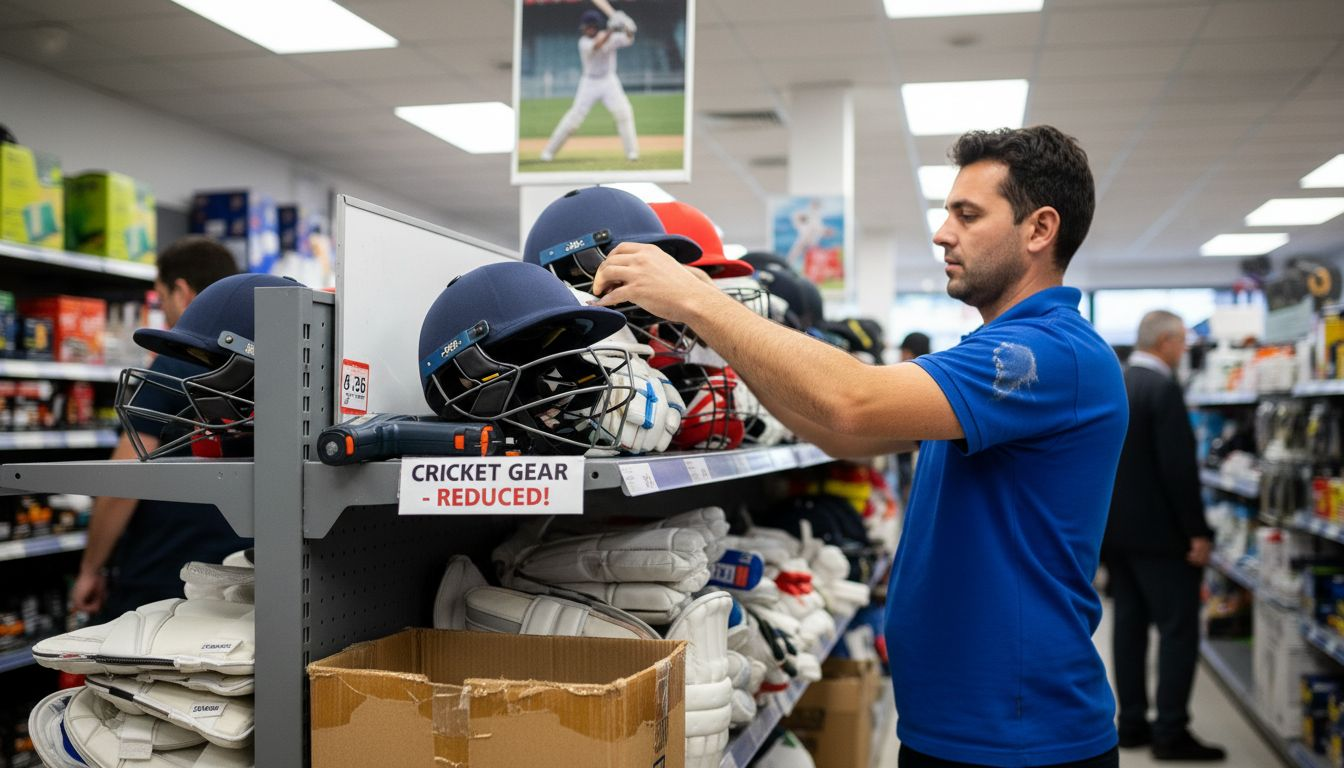
Helmets require particular attention to sizing, ventilation, and safety certification. Stock sizes from youth (52-54cm) through adult large (60-62cm), ensuring British Safety Standard BS 7928:2013 compliance. Modern helmets feature titanium grilles, adjustable vents, and moisture-wicking liners that justify premium pricing.
Pads vary significantly in protection level and mobility. Batting pads range from lightweight practice models with minimal bolstering to professional-grade options featuring high-density foam, reinforced knee rolls, and extended thigh protection. Wicket-keeping pads require specialized designs with lower profiles and enhanced flexibility.
Gloves demand careful material selection and sizing accuracy. Batting gloves feature varying thumb protection levels, finger segmentation designs, and palm materials ranging from traditional leather to modern synthetic blends. Stock multiple sizes within each model, as proper fit dramatically affects performance and comfort.
Essential Protective Gear Inventory:
- Helmets: 3-4 models across price points with full size runs
- Batting pads: lightweight practice and reinforced match-grade options
- Wicket-keeping pads: specialist designs for different playing styles
- Batting gloves: 4-5 models with comprehensive sizing
- Thigh guards, arm guards, chest guards: secondary protection essentials
- Abdominal guards: often overlooked but frequently requested items
STATISTIC: Protective gear accounts for roughly 30% of cricket equipment sales, with helmets and gloves showing highest turnover rates during peak season.
Size availability matters critically for protective equipment. Stock at least three sizes (small, medium, large) for adult products and two youth sizes. Display size charts prominently and train staff to measure customers accurately, reducing returns and building confidence.
Cricket Balls and Accessories: Essential Complements
Balls and accessories transform one-time bat buyers into repeat customers while significantly increasing average transaction values. These categories deserve strategic attention for both variety and presentation.
Cricket ball selection centers on the leather versus synthetic divide. 60% of professional cricket uses leather balls, while 70% of amateurs prefer synthetic for training, according to usage data. Stock red leather balls for traditional formats, white balls for limited-overs cricket, and pink balls for day-night matches. Synthetic balls excel in practice scenarios, offering durability and consistent performance across varied conditions.
Cricket bags represent growing opportunities, as players increasingly invest in proper equipment protection and organization. Wheelie bags suit players with extensive gear collections, duffle bags work for minimalists, and backpack-style options appeal to younger players prioritizing convenience.
Cricket-specific footwear has emerged as a significant category, with the market growing 18% annually according to industry trend analysis. Stock both spike and rubber-soled options across batting, bowling, and all-rounder categories. Proper footwear directly impacts performance and injury prevention, making it an easier upsell than many accessories.
Priority Accessories for Maximum Sales Impact:
- Cricket bags in three styles: wheelie, duffle, backpack across price ranges
- Footwear covering batting, bowling, and all-rounder needs with size depth
- Training equipment: throw-down balls, stumps, coaching aids for serious players
- Maintenance products: bat oil, grip replacements, cleaning supplies for gear longevity
- Protective equipment care: helmet bag, glove deodorizers, pad straps and buckles
- Clothing basics: practice shirts, trousers, socks in team-friendly colors
Ball Type Recommendations:
- Red leather: traditional formats, professional standards (stock 4-6 grades)
- White leather: limited-overs cricket, night matches (stock 2-3 quality levels)
- Pink leather: day-night Test cricket, growing format (stock 1-2 options)
- Synthetic training: durability, all-weather practice (stock budget and quality options)
- Youth-specific: reduced weight, appropriate hardness for developmental safety
Bundle strategies work exceptionally well for accessories. Create beginner kits pairing entry-level bats with basic protective gear and bags. Offer professional packages combining premium bats, high-end gloves, and quality cricket bags. These bundles simplify decisions, increase transaction values, and clear inventory efficiently.
Practical Stocking and Pricing Tips for Cricket Shops
Inventory management separates thriving cricket shops from struggling ones. Smart stocking practices balance customer demand against capital efficiency while pricing strategies maximize both volume and margin.
Seasonal demand patterns require proactive inventory adjustment. Build stock levels 8-10 weeks before the cricket season starts in your region, capturing early-bird shoppers who plan ahead. Reduce inventory 4-6 weeks after season peak, avoiding dead stock during off-months. Consider counter-seasonal promotions to maintain cash flow year-round.
Tiered pricing strategies can boost sales by up to 25% when implemented correctly, according to retail pricing research. Structure each product category with clear good-better-best options. Position mid-range products as the value sweet spot, using premium and budget options as anchors that make the middle tier appear reasonable.
Inventory turnover optimization starts with data collection. Track which products sell fastest, which generate highest margins, and which customer segments drive revenue. Use this information to adjust purchasing decisions quarterly, doubling down on winners and eliminating slow movers.
Effective Stocking Strategies:
- Maintain 60% of inventory in fast-moving basics: popular bat models, standard protective gear
- Allocate 25% to seasonal specialties: new releases, trending products, format-specific items
- Reserve 15% for premium showcase items: aspirational products that elevate brand perception
- Implement automatic reorder triggers when stock drops below two weeks of average sales
- Review product performance monthly, removing items that haven’t sold in 120 days
Pro Tip: Use seasonal stocking adjustments aligned with local cricket calendars. Partner with clubs for bulk orders before season starts, securing guaranteed volume while helping teams save through quantity discounts.
| Pricing Tier | Product Examples | Margin Target | Inventory % | Sales Volume |
|---|---|---|---|---|
| Budget | Kashmir willow bats, basic pads | 25-30% | 40% | High volume |
| Mid-Range | Grade 3-4 English willow, quality gloves | 35-40% | 35% | Moderate volume |
| Premium | Grade 1-2 bats, pro-level protection | 40-50% | 25% | Lower volume, higher value |
Summary Comparison Table and Situational Recommendations
Successful cricket shops tailor inventory to their specific customer base rather than stocking everything equally. Use these comparison frameworks and situational guidelines to optimize your mix.
| Equipment Category | Amateur Focus | Professional Focus | Key Metrics | Price Range |
|---|---|---|---|---|
| Cricket Bats | Kashmir willow, lighter weight | English willow Grade 1-2 | Weight, balance, durability | £50-£500 |
| Protective Gear | Basic padding, standard helmets | Reinforced protection, certified | Safety rating, comfort, fit | £30-£300 |
| Cricket Balls | Synthetic for practice | Leather match-grade | Durability, seam quality | £8-£120 |
| Bags & Footwear | Budget-conscious options | Performance-focused | Capacity, spike quality | £25-£200 |
Shop Scenario: Amateur Player Focus
If your customer base consists primarily of recreational and club-level players, prioritize volume over premium selection. Stock 50% entry-level products, 35% mid-range, and just 15% premium showcase items. Focus heavily on durability and value messaging. Expand your range of practice balls, basic protective gear, and affordable bat options.
Shop Scenario: Professional Player Focus
Shops serving competitive and professional cricketers should invert the ratio: 20% entry-level, 30% mid-range, and 50% premium products. Stock deeper ranges within premium categories, offering multiple options for discerning customers who know exactly what they need. Invest in expert staff who understand technical specifications and can discuss performance nuances.
Shop Scenario: Mixed Customer Base
Most shops serve diverse customer segments requiring balanced inventory. Maintain the 40-35-25 ratio outlined earlier while creating distinct shopping zones or clear online categories. Use prominent signage or filtering to help customers self-select appropriate sections quickly.
Accessory Optimization:
Regardless of primary customer focus, accessories deserve consistent attention. Stock cricket bags proportional to bat inventory (roughly one bag option for every three bat models). Maintain footwear depth with at least two models per category and comprehensive sizing. Position accessories near checkout areas as impulse additions to larger purchases.
Stock Your Cricket Shop with Top Equipment Today
Implementing this comprehensive stocking checklist positions your cricket shop to serve every player who walks through your door. You now understand the critical 30% allocation for protective gear, the importance of tiered pricing across all categories, and how accessories drive basket size beyond basic equipment.
CricketBats.com offers shop owners and managers access to premium cricket equipment across all categories discussed in this guide. Whether you need quality bats at competitive prices for budget-conscious customers or premium English willow for serious players, we maintain inventory depth that supports your diverse customer base. Explore our cricket bat selection guide to understand performance characteristics that help you advise customers confidently, and review our cricket bags collection to round out your accessory offerings with products players actually want.
Frequently Asked Questions
What ratio of amateur to professional equipment should I stock?
Most cricket shops perform best with 60-70% amateur-focused inventory and 30-40% professional-grade products. Adjust this ratio based on your local market, increasing professional stock if you’re near competitive clubs or academies.
How do I choose the right protective gear sizes to stock?
Stock small, medium, and large in adult sizes for all protective categories, plus two youth sizes if serving junior players. Maintain deeper inventory in medium sizes, which typically account for 50% of protective gear sales.
When should I adjust inventory for seasonal demand?
Begin building stock 8-10 weeks before your region’s cricket season starts. Reduce inventory to minimal levels 4-6 weeks after peak season ends to free capital for other opportunities or counter-seasonal promotions.
How can I balance pricing tiers without confusing customers?
Create clear good-better-best structures within each product category, limiting choices to three distinct price points. Display products together with clear feature comparisons that justify price differences.
What accessories increase average order value most effectively?
Cricket bags show the highest attachment rate when presented during bat purchases, followed by maintenance products and practice balls. Position these items near checkout areas and train staff to suggest them naturally during transactions.
Should I stock more leather or synthetic cricket balls?
Maintain a 40-60 split favoring synthetic balls for most retail environments, as they serve practice needs and amateur play. Increase leather ball inventory if you supply competitive clubs or host many match-grade players.
Recommended
- Cricket Bat Accessories: Enhancing Your Game Impact – Cricket Bats Com
- Cricket Bats | Discount Cricket Bats | Cricket Bats for Sale – Cricket Bats Com
- Cricket Bat Customisation Guide for Optimal Performance – Cricket Bats Com
- Why Invest in Good Bats: Boosting Cricket Success – Cricket Bats Com
- 7 Tips for How to Pick Climbing Equipment Gifts - Gripnatic
- Inventory Management for Fitness Studios:… - Finegym
Selecting the right cricket equipment for your shop can feel overwhelming when you need to satisfy everyone from weekend warriors to seasoned professionals. Many shop owners struggle to balance inventory between affordable entry-level gear and premium products, often leaving gaps that frustrate customers. This comprehensive checklist cuts through the confusion, giving you clear, data-backed strategies to optimize your cricket equipment inventory and maximize sales.
Table of Contents
- Selection Criteria For Stocking Cricket Equipment
- Cricket Bats: Types, Brands, And Best Uses
- Protective Gear: Helmets, Pads, Gloves, And Safety Essentials
- Cricket Balls And Accessories: Essential Complements
- Practical Stocking And Pricing Tips For Cricket Shops
- Summary Comparison Table And Situational Recommendations
- Stock Your Cricket Shop With Top Equipment Today
- Frequently Asked Questions
Key Takeaways
| Point | Details |
|---|---|
| Segment by skill level | Separate amateur and professional inventory to meet distinct customer needs efficiently |
| Prioritize protective gear | Allocate 30% of inventory space to helmets, pads, and gloves for safety and revenue |
| Stock varied ball types | Carry both leather and synthetic balls to serve all player categories and training scenarios |
| Implement tiered pricing | Create budget, mid-range, and premium options to capture every customer segment |
| Add complementary accessories | Include bags and footwear to increase average order value and customer satisfaction |
Selection Criteria for Stocking Cricket Equipment
Understanding what drives purchasing decisions helps you stock products that actually sell. Your inventory foundation rests on five critical factors: player skill level, brand reputation, product quality, pricing tiers, and accessory variety.
Player skill level determines equipment specifications in fundamental ways. Amateur players typically need forgiving, durable gear that tolerates inconsistent technique, while professionals demand precision-engineered products that enhance performance at the highest level. Selection should be based on player skill-level compatibility and trusted brands, as emphasized by professional batmakers who understand these distinct requirements.
Brand reputation directly impacts purchasing confidence. Customers gravitate toward established manufacturers with proven track records: Gunn & Moore, Kookaburra, Gray-Nicolls, and SG consistently rank among player preferences. These brands invest heavily in research, quality control, and professional endorsements that translate to customer trust.
Product quality encompasses materials, construction methods, and safety certifications. Look for equipment meeting international standards like ICC regulations for balls and British Safety Standard BS 7928:2013 for helmets. Quality indicators include English willow versus Kashmir willow for bats, genuine leather versus synthetic materials for balls, and proper padding density for protective gear.
Pricing tiers allow you to serve diverse budgets without compromising market coverage. Structure your inventory in three bands: budget (entry-level players), mid-range (committed amateurs), and premium (serious competitors and professionals). This approach captures customers across the spending spectrum.
Accessory variety has grown increasingly important as players seek comprehensive gear solutions. Stock complementary items like cricket bags, footwear, training aids, and maintenance products to increase basket size and provide complete shopping experiences.
Pro Tip: Create clear in-store zones or online categories for amateur versus professional gear. This segmentation helps customers navigate quickly and positions you as an expert who understands their specific needs.
Cricket Bats: Types, Brands, and Best Uses
Bats represent your most visible and profitable product category, demanding careful curation across weight classes, wood grades, and price points. Your bat selection directly reflects your shop’s positioning and expertise.
Weight and balance specifications vary dramatically by skill level. Amateur players benefit from lighter bats (2 lb 7 oz to 2 lb 9 oz) with lower sweet spots that compensate for developing technique. Professional-grade bats typically weigh 2 lb 8 oz to 2 lb 12 oz with higher sweet spots and more precise weight distribution for controlled stroke play.
Wood grade determines performance and pricing. English willow delivers superior performance with its lighter weight, better response, and higher moisture content, making it ideal for professionals and serious amateurs. Kashmir willow provides durability and affordability for recreational players and practice scenarios.
Leading cricket bat brands each offer distinct advantages. Gunn & Moore bats provide 10-15% better balance and stroke control favored by professionals, according to performance testing. Kookaburra excels in power hitting with larger profiles, while Gray-Nicolls specializes in traditional shapes preferred by classical batsmen. SG dominates the subcontinental market with excellent value propositions.
Stocking ratios should reflect your customer base. A balanced inventory might include 40% entry-level bats, 35% mid-range, and 25% premium models. Adjust these ratios based on local demographics and competitive positioning.
Key Bat Features to Highlight:
- Blade profile: fuller profiles for power, slimmer for control and lightweight feel
- Handle type: round for traditional grip, oval for modern wrist work
- Grain count: 6-8 grains minimum for English willow quality indicators
- Edge thickness: 38-42mm for power hitting, 30-35mm for controlled stroke play
- Toe shape: square for durability, round for lightweight performance
Pro Tip: Stock choosing cricket bats guidance materials near your bat display. Educated customers make confident purchases and return for future needs.
| Bat Category | Typical Price Range | Wood Type | Target Customer | Stock Ratio |
|---|---|---|---|---|
| Entry Level | £50-£120 | Kashmir Willow | Beginners, casual players | 40% |
| Mid Range | £120-£250 | Grade 3-4 English Willow | Committed amateurs, club players | 35% |
| Premium | £250-£500+ | Grade 1-2 English Willow | Professionals, serious competitors | 25% |
Protective Gear: Helmets, Pads, Gloves, and Safety Essentials
Safety equipment represents approximately 30% of cricket equipment sales, making protective gear a cornerstone category. Stocking comprehensive protective options builds customer trust and generates consistent revenue.
Helmets require particular attention to sizing, ventilation, and safety certification. Stock sizes from youth (52-54cm) through adult large (60-62cm), ensuring British Safety Standard BS 7928:2013 compliance. Modern helmets feature titanium grilles, adjustable vents, and moisture-wicking liners that justify premium pricing.
Pads vary significantly in protection level and mobility. Batting pads range from lightweight practice models with minimal bolstering to professional-grade options featuring high-density foam, reinforced knee rolls, and extended thigh protection. Wicket-keeping pads require specialized designs with lower profiles and enhanced flexibility.
Gloves demand careful material selection and sizing accuracy. Batting gloves feature varying thumb protection levels, finger segmentation designs, and palm materials ranging from traditional leather to modern synthetic blends. Stock multiple sizes within each model, as proper fit dramatically affects performance and comfort.
Essential Protective Gear Inventory:
- Helmets: 3-4 models across price points with full size runs
- Batting pads: lightweight practice and reinforced match-grade options
- Wicket-keeping pads: specialist designs for different playing styles
- Batting gloves: 4-5 models with comprehensive sizing
- Thigh guards, arm guards, chest guards: secondary protection essentials
- Abdominal guards: often overlooked but frequently requested items
STATISTIC: Protective gear accounts for roughly 30% of cricket equipment sales, with helmets and gloves showing highest turnover rates during peak season.
Size availability matters critically for protective equipment. Stock at least three sizes (small, medium, large) for adult products and two youth sizes. Display size charts prominently and train staff to measure customers accurately, reducing returns and building confidence.
Cricket Balls and Accessories: Essential Complements
Balls and accessories transform one-time bat buyers into repeat customers while significantly increasing average transaction values. These categories deserve strategic attention for both variety and presentation.
Cricket ball selection centers on the leather versus synthetic divide. 60% of professional cricket uses leather balls, while 70% of amateurs prefer synthetic for training, according to usage data. Stock red leather balls for traditional formats, white balls for limited-overs cricket, and pink balls for day-night matches. Synthetic balls excel in practice scenarios, offering durability and consistent performance across varied conditions.
Cricket bags represent growing opportunities, as players increasingly invest in proper equipment protection and organization. Wheelie bags suit players with extensive gear collections, duffle bags work for minimalists, and backpack-style options appeal to younger players prioritizing convenience.
Cricket-specific footwear has emerged as a significant category, with the market growing 18% annually according to industry trend analysis. Stock both spike and rubber-soled options across batting, bowling, and all-rounder categories. Proper footwear directly impacts performance and injury prevention, making it an easier upsell than many accessories.
Priority Accessories for Maximum Sales Impact:
- Cricket bags in three styles: wheelie, duffle, backpack across price ranges
- Footwear covering batting, bowling, and all-rounder needs with size depth
- Training equipment: throw-down balls, stumps, coaching aids for serious players
- Maintenance products: bat oil, grip replacements, cleaning supplies for gear longevity
- Protective equipment care: helmet bag, glove deodorizers, pad straps and buckles
- Clothing basics: practice shirts, trousers, socks in team-friendly colors
Ball Type Recommendations:
- Red leather: traditional formats, professional standards (stock 4-6 grades)
- White leather: limited-overs cricket, night matches (stock 2-3 quality levels)
- Pink leather: day-night Test cricket, growing format (stock 1-2 options)
- Synthetic training: durability, all-weather practice (stock budget and quality options)
- Youth-specific: reduced weight, appropriate hardness for developmental safety
Bundle strategies work exceptionally well for accessories. Create beginner kits pairing entry-level bats with basic protective gear and bags. Offer professional packages combining premium bats, high-end gloves, and quality cricket bags. These bundles simplify decisions, increase transaction values, and clear inventory efficiently.
Practical Stocking and Pricing Tips for Cricket Shops
Inventory management separates thriving cricket shops from struggling ones. Smart stocking practices balance customer demand against capital efficiency while pricing strategies maximize both volume and margin.
Seasonal demand patterns require proactive inventory adjustment. Build stock levels 8-10 weeks before the cricket season starts in your region, capturing early-bird shoppers who plan ahead. Reduce inventory 4-6 weeks after season peak, avoiding dead stock during off-months. Consider counter-seasonal promotions to maintain cash flow year-round.
Tiered pricing strategies can boost sales by up to 25% when implemented correctly, according to retail pricing research. Structure each product category with clear good-better-best options. Position mid-range products as the value sweet spot, using premium and budget options as anchors that make the middle tier appear reasonable.
Inventory turnover optimization starts with data collection. Track which products sell fastest, which generate highest margins, and which customer segments drive revenue. Use this information to adjust purchasing decisions quarterly, doubling down on winners and eliminating slow movers.
Effective Stocking Strategies:
- Maintain 60% of inventory in fast-moving basics: popular bat models, standard protective gear
- Allocate 25% to seasonal specialties: new releases, trending products, format-specific items
- Reserve 15% for premium showcase items: aspirational products that elevate brand perception
- Implement automatic reorder triggers when stock drops below two weeks of average sales
- Review product performance monthly, removing items that haven’t sold in 120 days
Pro Tip: Use seasonal stocking adjustments aligned with local cricket calendars. Partner with clubs for bulk orders before season starts, securing guaranteed volume while helping teams save through quantity discounts.
| Pricing Tier | Product Examples | Margin Target | Inventory % | Sales Volume |
|---|---|---|---|---|
| Budget | Kashmir willow bats, basic pads | 25-30% | 40% | High volume |
| Mid-Range | Grade 3-4 English willow, quality gloves | 35-40% | 35% | Moderate volume |
| Premium | Grade 1-2 bats, pro-level protection | 40-50% | 25% | Lower volume, higher value |
Summary Comparison Table and Situational Recommendations
Successful cricket shops tailor inventory to their specific customer base rather than stocking everything equally. Use these comparison frameworks and situational guidelines to optimize your mix.
| Equipment Category | Amateur Focus | Professional Focus | Key Metrics | Price Range |
|---|---|---|---|---|
| Cricket Bats | Kashmir willow, lighter weight | English willow Grade 1-2 | Weight, balance, durability | £50-£500 |
| Protective Gear | Basic padding, standard helmets | Reinforced protection, certified | Safety rating, comfort, fit | £30-£300 |
| Cricket Balls | Synthetic for practice | Leather match-grade | Durability, seam quality | £8-£120 |
| Bags & Footwear | Budget-conscious options | Performance-focused | Capacity, spike quality | £25-£200 |
Shop Scenario: Amateur Player Focus
If your customer base consists primarily of recreational and club-level players, prioritize volume over premium selection. Stock 50% entry-level products, 35% mid-range, and just 15% premium showcase items. Focus heavily on durability and value messaging. Expand your range of practice balls, basic protective gear, and affordable bat options.
Shop Scenario: Professional Player Focus
Shops serving competitive and professional cricketers should invert the ratio: 20% entry-level, 30% mid-range, and 50% premium products. Stock deeper ranges within premium categories, offering multiple options for discerning customers who know exactly what they need. Invest in expert staff who understand technical specifications and can discuss performance nuances.
Shop Scenario: Mixed Customer Base
Most shops serve diverse customer segments requiring balanced inventory. Maintain the 40-35-25 ratio outlined earlier while creating distinct shopping zones or clear online categories. Use prominent signage or filtering to help customers self-select appropriate sections quickly.
Accessory Optimization:
Regardless of primary customer focus, accessories deserve consistent attention. Stock cricket bags proportional to bat inventory (roughly one bag option for every three bat models). Maintain footwear depth with at least two models per category and comprehensive sizing. Position accessories near checkout areas as impulse additions to larger purchases.
Stock Your Cricket Shop with Top Equipment Today
Implementing this comprehensive stocking checklist positions your cricket shop to serve every player who walks through your door. You now understand the critical 30% allocation for protective gear, the importance of tiered pricing across all categories, and how accessories drive basket size beyond basic equipment.
CricketBats.com offers shop owners and managers access to premium cricket equipment across all categories discussed in this guide. Whether you need quality bats at competitive prices for budget-conscious customers or premium English willow for serious players, we maintain inventory depth that supports your diverse customer base. Explore our cricket bat selection guide to understand performance characteristics that help you advise customers confidently, and review our cricket bags collection to round out your accessory offerings with products players actually want.
Frequently Asked Questions
What ratio of amateur to professional equipment should I stock?
Most cricket shops perform best with 60-70% amateur-focused inventory and 30-40% professional-grade products. Adjust this ratio based on your local market, increasing professional stock if you’re near competitive clubs or academies.
How do I choose the right protective gear sizes to stock?
Stock small, medium, and large in adult sizes for all protective categories, plus two youth sizes if serving junior players. Maintain deeper inventory in medium sizes, which typically account for 50% of protective gear sales.
When should I adjust inventory for seasonal demand?
Begin building stock 8-10 weeks before your region’s cricket season starts. Reduce inventory to minimal levels 4-6 weeks after peak season ends to free capital for other opportunities or counter-seasonal promotions.
How can I balance pricing tiers without confusing customers?
Create clear good-better-best structures within each product category, limiting choices to three distinct price points. Display products together with clear feature comparisons that justify price differences.
What accessories increase average order value most effectively?
Cricket bags show the highest attachment rate when presented during bat purchases, followed by maintenance products and practice balls. Position these items near checkout areas and train staff to suggest them naturally during transactions.
Should I stock more leather or synthetic cricket balls?
Maintain a 40-60 split favoring synthetic balls for most retail environments, as they serve practice needs and amateur play. Increase leather ball inventory if you supply competitive clubs or host many match-grade players.
Recommended
- Cricket Bat Accessories: Enhancing Your Game Impact – Cricket Bats Com
- Cricket Bats | Discount Cricket Bats | Cricket Bats for Sale – Cricket Bats Com
- Cricket Bat Customisation Guide for Optimal Performance – Cricket Bats Com
- Why Invest in Good Bats: Boosting Cricket Success – Cricket Bats Com
- 7 Tips for How to Pick Climbing Equipment Gifts - Gripnatic
- Inventory Management for Fitness Studios:… - Finegym