
News News
Cricket Bat Warranty Explained: Protecting Your Investment Cricket Bat Warranty Explained: Protecting Your Investment
Finding the right cricket bat is a big decision, especially when you are investing serious money for weekend matches across Australia’s club scene. The promise of a cricket bat warranty is more than peace of mind—it’s a commitment from the manufacturer that protects you from costly surprises. Understanding the difference between a full warranty and a limited warranty ensures that your gear—and your investment—remain secure when it matters most.
Table of Contents
- What Cricket Bat Warranty Really Means
- Types Of Warranties Available For Bats
- What Is And Isn’t Covered
- How To Make A Successful Claim
- Essential Bat Care For Warranty Validity
Key Takeaways
| Point | Details |
|---|---|
| Understanding Warranties | Familiarise yourself with the difference between full and limited warranties to know what is covered during the warranty period. |
| Maintenance Importance | Proper maintenance of your cricket bat is crucial, as neglecting care can void your warranty and lead to denied claims. |
| Claim Process Awareness | Always keep your purchase receipt and warranty documentation, and report defects promptly to ensure a smoother warranty claim process. |
| Read Warranty Terms | Carefully review the warranty document for exclusions and coverage details before purchasing to avoid surprises later. |
What Cricket Bat Warranty Really Means
A cricket bat warranty is fundamentally a promise. When you buy a quality bat from a retailer, you’re not just purchasing a piece of willow and wood. You’re securing a manufacturer’s commitment that the bat will perform as intended and that if something goes wrong due to a defect, the company will fix it or replace it. At its core, a warranty affirms that a product will work as promised or the manufacturer will rectify defects. This distinction matters more than you might think, particularly when you’re spending £200 to £800 on a premium bat that you’re relying on for club matches and weekend competitions.
Understanding what your warranty actually covers requires knowing the difference between two main types. A full warranty means the manufacturer stands behind the product completely within the warranty period. If your bat breaks, cracks, or develops a manufacturing fault, they’ll replace it or repair it at no cost, no questions asked (within reason). A limited warranty, by contrast, covers specific issues but not everything. Most cricket bats sold through reputable retailers come with limited warranties that protect against manufacturing defects like delamination, edge cracking from material faults, or adhesive failures. However, they typically won’t cover damage from misuse, accidental impact, or normal wear and tear. This is where many Australian club players get caught out. You might assume that dropping your bat or hitting a hard ground ball is covered, but it rarely is. The warranty protects against manufacturing failures, not the consequences of how you use the bat.
The warranty also establishes a legal relationship between you and the manufacturer. A warranty protects the buyer’s investment by providing assurance that the bat will function as intended or be repaired or replaced if it fails due to covered issues. When you receive documentation stating coverage for 24 months or 12 months, those terms are binding. They define exactly how long the company will honour repairs or replacements, what conditions void the warranty, and whether you need to provide proof of purchase. Most Australian retailers require you to keep your receipt or proof of purchase to make a warranty claim. Without it, even a legitimate manufacturing defect may not be covered. The warranty also typically requires that you maintain the bat properly. Proper maintenance isn’t just about preserving performance, it’s about protecting your warranty rights. Leaving your bat in a hot car, storing it in damp conditions, or allowing it to crack from neglect could void coverage depending on the specific terms. Understanding the connection between maintenance and warranty coverage is crucial because both protect your investment long term. Proper cricket bat maintenance directly supports the bat’s ability to function within its warranty period.
Pro tip: Read the full warranty document before purchasing, not after. Pay particular attention to exclusions, what qualifies as normal wear versus defects, and what documentation you need to keep for a valid claim.
Types Of Warranties Available For Bats
When you’re shopping for a cricket bat, you’ll encounter different warranty types, and knowing what separates them is essential to protecting your investment. The warranty landscape splits into two primary categories: express warranties and implied warranties. Express warranties are clearly stated promises, either in writing or verbally, that explain exactly what the manufacturer will cover and for how long. These are the formal documents you receive with your bat, detailing coverage periods, exclusions, and claim procedures. Implied warranties, by contrast, are automatic legal protections that come from consumer law itself. They guarantee that your bat will work as expected for its intended purpose, even if the manufacturer hasn’t written anything down. In Australia, consumer law gives you implied warranty protections whether the manufacturer acknowledges them or not. This means you have baseline legal rights that exist alongside whatever express warranty the company offers.
Beyond the express and implied distinction, cricket bat warranties also divide into full warranties and limited warranties, and this difference significantly impacts what you can claim. A full warranty covers all defects and manufacturing failures for the specified period with virtually no restrictions. If your bat develops an issue during the warranty period and it’s not from misuse or abuse, the manufacturer replaces it or repairs it at no cost. Limited warranties are far more common in the cricket equipment industry. These cover only specific types of defects or problems, such as delamination from adhesive failure, edge damage from manufacturing flaws, or stress cracks originating from poor quality control during production. Limited warranties explicitly exclude damage from impact, accidental drops, normal wear and tear, and modifications you’ve made to the bat. Most retailers and manufacturers also offer repair and replacement guarantees within their warranty terms. Some warranties promise repair first, meaning the company will attempt to fix the bat before considering replacement. Others guarantee replacement if the bat cannot be practically repaired. A few premium manufacturers offer satisfaction guarantees, which are less common but increasingly popular. These allow you to return or exchange a bat within a certain period if you’re genuinely unhappy with its performance or quality, regardless of whether a defect exists. This type of warranty reflects manufacturer confidence and appeals to players trying a new brand or style.
The scope and duration of each warranty type vary considerably between manufacturers and retailers. Standard cricket bat warranties typically run for 12 to 24 months from the date of purchase, though some premium brands extend to 3 years. The coverage scope matters just as much as duration. Some warranties only cover the blade or hitting area, leaving handles and grips exposed. Others cover the entire bat but exclude cosmetic damage or surface cracks that don’t affect performance. Understanding which parts are protected and for how long prevents disappointment when a claim gets rejected. Additionally, implied warranties guarantee products unless explicitly disclaimed, meaning manufacturers cannot entirely remove your legal protections even if they try. However, they can limit these implied warranties to the duration of their express warranty. When comparing bats at different price points, don’t just look at the bat itself. Compare warranty offerings too. A £300 bat with a robust 24-month full warranty may provide better value than a £280 bat with a limited 12-month warranty covering only manufacturing defects.

To help you differentiate warranty types for cricket bats, here is a structured comparison:
| Warranty Type | Coverage Scope | Typical Duration | Who Provides It |
|---|---|---|---|
| Express Warranty | Clearly specified defects/issues | 12-36 months | Manufacturer/Retailer |
| Implied Warranty | Basic legal consumer guarantees | Varies by law | Always (by statute) |
| Full Warranty | All defects, minimal exclusions | 12-36 months | Premium brands |
| Limited Warranty | Restricted to manufacturing faults | 12-24 months | Most retailers/manufacturers |
Pro tip: Compare warranty terms across multiple retailers before purchasing, as the same bat model might carry different warranty coverage depending on where you buy it. Some retailers add extended protection or better terms to attract customers.
What Is And Isn’t Covered
The difference between what your warranty covers and what it doesn’t can mean the difference between a successful claim and an expensive lesson. Understanding these boundaries is crucial because warranty language can be deceptively specific. Generally, warranty coverage includes defects in materials and workmanship but excludes damage from misuse, abuse, or normal wear and tear. For your cricket bat, this translates to concrete examples. A crack originating from poor adhesive bonding during manufacturing is covered. A stress fracture resulting from the wood grain separating due to a production fault is covered. Delamination between the blade and handle from defective glue application is covered. Edge damage caused by a manufacturing defect in the willow pressing process is covered. These are the scenarios where the manufacturer takes responsibility and either repairs or replaces your bat. The key word here is “manufacturing”—the fault originated in the factory, not in how you used the bat.
What isn’t covered reveals the flip side of that coin. Warranties typically exclude issues caused by improper use, accidents, or unauthorised repairs. For a cricket bat, improper use includes obvious scenarios like using the bat for purposes other than cricket, such as baseball or casual batting against concrete. It includes hitting the ball in ways the bat wasn’t designed for, like bowling with it or using it as a walking stick. Accidents aren’t covered either. Dropping your bat, stepping on it, leaving it in a hot car, or hitting a hard ground ball that causes a crack—these fall outside warranty protection. Natural deterioration from regular play isn’t covered. The grip wearing smooth from moisture and use, the willow slightly discolouring from sun exposure, minor dents appearing on the edges after hundreds of deliveries—these represent normal wear and tear, not manufacturing defects. Unauthorised repairs also void your warranty. If you take your bat to someone other than an authorised repair centre or attempt to fix a crack yourself, the manufacturer will decline future claims. Some warranties also exclude damage from environmental conditions like extreme temperature changes, high humidity, or storage in damp areas, since these fall under improper care rather than manufacturing failure.
Reading the specific exclusions section of your warranty document is where many players discover unpleasant surprises. Some warranties exclude cosmetic damage entirely, meaning a dent or surface crack that doesn’t affect performance won’t be replaced. Others exclude the handle and grip separately from the blade, so if your handle develops a problem, you’re out of luck. Age-related exclusions appear in some warranties, stating coverage only applies within a certain timeframe. Damage from abuse carries a broad definition that varies by manufacturer. What one company considers normal play might be classified as abuse by another. The only way to know exactly where your coverage ends is to locate the exclusions list and read it carefully before purchasing. When you’re evaluating bats at different price points, factor in warranty quality alongside the bat itself. A bat with limited exclusions and broader coverage protects your investment more effectively than one with extensive exclusions, even if the bat itself performs identically.
Below are common examples of what cricket bat warranties typically cover and exclude:
| Coverage Type | Examples of Included Issues | Examples of Excluded Issues |
|---|---|---|
| Manufacturing Faults | Poor adhesive bonding, grain separation | Damage from dropping, misuse |
| Material Defects | Delamination, willow pressing errors | Normal wear, environmental exposure |
| Repair & Replacement | Repairs for factory defects | Unauthorised repairs or modifications |
Pro tip: Keep a photograph of your bat’s condition on the day you purchase it, along with your receipt and warranty documentation in one location. If you need to make a claim later, documentation proving the bat’s condition and your ownership will strengthen your case significantly.
How To Make A Successful Claim
Making a warranty claim sounds straightforward in theory, but the details matter enormously. The process begins long before you actually submit a claim, with the steps you take immediately after purchasing your bat. Keep the purchase receipt and warranty documents as proof of purchase and coverage. This isn’t optional. Without your receipt, many manufacturers will refuse to honour claims, even if you can prove you bought the bat from an authorised retailer. Store these documents somewhere safe and accessible, not tucked away in a forgotten drawer. Photograph your receipt using your phone and email it to yourself as backup. Do the same with your warranty documents. When you receive your bat, inspect it thoroughly within the first few days whilst it’s still pristine. Check for any obvious manufacturing defects like cracks, adhesive gaps, or uneven pressing. Document the bat’s condition with photos from multiple angles. If you discover a defect immediately, contact the retailer or manufacturer straight away rather than waiting. Early reporting demonstrates you discovered the issue quickly and hadn’t caused damage through use.
When a genuine problem develops during the warranty period, timing becomes critical. Report the defect as soon as you notice it. Don’t wait weeks hoping it might improve or become more obvious. Contact the seller or manufacturer within the warranty period and follow instructions for reporting defects. Most manufacturers require you to initiate contact before sending anything. Find their warranty claim contact information, typically on their website or in your warranty documentation. Contact them by email or phone and describe the defect precisely. Avoid vague descriptions like “the bat feels weird” or “something’s wrong with the edge.” Instead, explain exactly what you observe: “The blade has separated from the handle along the glue line at the toe end, approximately 3 centimetres long.” Describe when you first noticed it, what you were doing when it happened, and whether the bat was stored or used improperly. This level of detail helps the manufacturer assess whether the claim falls within warranty coverage. Keep copies of all communications with the manufacturer, including emails, chat transcripts, and any reference numbers they provide.
The manufacturer will then instruct you on the next steps, which typically involves sending the bat for inspection. Packaging matters here. Use protective padding to ensure the bat doesn’t sustain additional damage during transit. Take photos of the bat before packing it, showing the defect clearly. Many manufacturers require you to pay for shipping initially, though successful claims often result in reimbursement. Track your package and keep the tracking number. Some manufacturers request additional information like photos of the defect before they’ll accept the bat. Supply these promptly. Once received, the manufacturer inspects the bat and determines whether the defect falls within warranty coverage. Successful claims require adherence to the warranty’s terms and reporting defects within the coverage period. If approved, they’ll repair the bat and return it, or replace it entirely depending on the damage severity. If denied, they’ll provide written explanation of why the defect isn’t covered. You’ll have the opportunity to dispute their decision if you believe they’ve misinterpreted the warranty terms, though most denials are final. The entire process typically takes 4 to 8 weeks from initial contact to resolution.
Key Steps For A Smooth Claim
- Report the defect within the warranty period, ideally within days of discovering it
- Provide detailed, specific descriptions of the problem with supporting photographs
- Keep all receipts, warranty documents, and communications organised
- Follow the manufacturer’s instructions precisely regarding inspection and shipping
- Preserve evidence of how the bat was stored and used
- Request written confirmation of claim approval or denial
Pro tip: When contacting the manufacturer, always get a claim reference number and ask for their response in writing via email rather than relying on phone conversations, which create no documentation if disputes arise later.
Essential Bat Care For Warranty Validity
Your warranty is only as strong as your commitment to maintaining the bat properly. Manufacturers include maintenance requirements in their warranty terms specifically because how you care for your bat directly determines whether defects are covered or claims are denied. Warranty validity often depends on the user following care instructions, and this isn’t just fine print to ignore. It’s a contractual obligation. When you purchase a bat, you’re agreeing to follow those care guidelines in exchange for warranty protection. Neglect the maintenance, and the manufacturer can legitimately refuse your claim even if a genuine defect exists. Think of it this way: if you store your bat in a damp garage for six months and it develops delamination, the manufacturer will argue that moisture caused the problem, not a manufacturing fault. They’ll deny your claim, and they’ll be within their rights to do so. This is why understanding and following care instructions is absolutely crucial to protecting your investment.
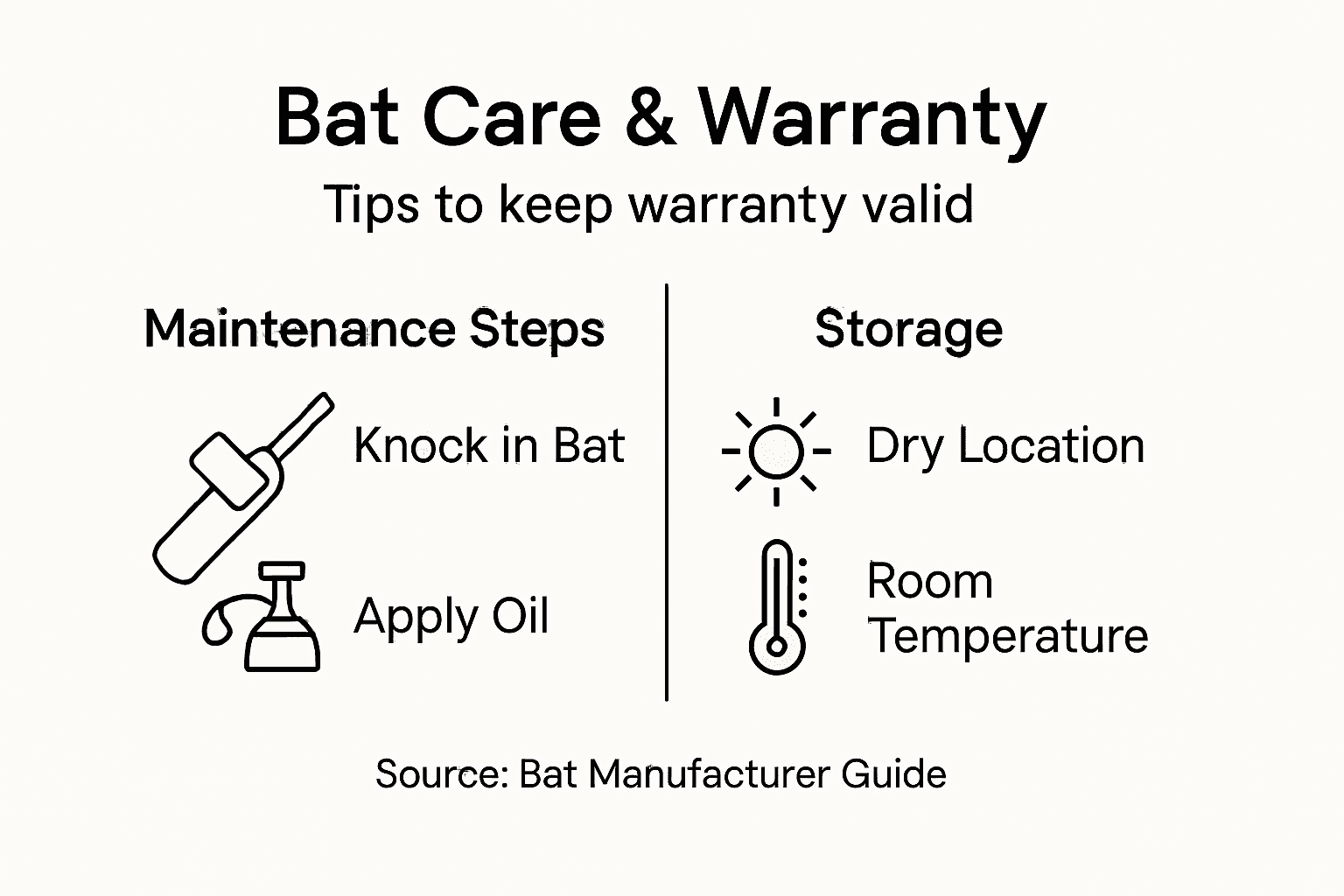
The foundation of bat care centres on three critical areas: storage, moisture management, and proper use. Storing the bat in a dry place and avoiding exposure to harsh weather helps prevent damage that might void the warranty. Your bat should live in a cool, dry location away from direct sunlight, extreme temperature fluctuations, and humidity. Many Australian players make the mistake of leaving bats in cars, garden sheds, or outdoor storage areas where temperature swings and moisture exposure wreak havoc on the willow. Store your bat indoors in a climate-controlled environment. Moisture is the enemy because it causes the wood to swell and contract, creating internal stresses that lead to cracking and separation. Equally important is preparing your bat properly through knocking-in, a process of gently preparing the bat’s surface to reduce fibre damage. This isn’t optional luxury for professional players. Knocking-in involves gently striking the bat’s surface with a mallet, gradually conditioning the willow before playing with it. Skip this step and you risk causing damage that the manufacturer won’t cover because you didn’t follow their instructions. Additionally, periodic oiling with raw linseed oil maintains moisture balance and strength within the wood. Most manufacturers recommend oiling every few months, particularly before the playing season begins. These aren’t suggestions. They’re requirements embedded in your warranty.
Storage And Maintenance Essentials
- Store bats indoors in temperature controlled environments, away from direct sunlight
- Keep bats away from sources of extreme heat, cold, or humidity
- Knock in new bats gradually before playing full matches
- Apply raw linseed oil every 2-3 months to maintain wood condition
- Clean the bat regularly with a soft, dry cloth
- Never use the bat for purposes other than playing cricket
- Inspect your bat monthly for signs of damage or deterioration
- Keep grip maintenance up to date, replacing worn grips promptly
Using your bat as intended matters more than many players realise. Failure to use the bat as intended can void the warranty and lead to denial of claims. This means playing cricket, full stop. Not using it for casual backyard play against hard objects, not using it as a walking stick, not experimenting with unconventional playing techniques that place stress on different areas of the bat. The warranty assumes normal cricket use with standard technique. Aggressive playing styles that generate extreme impact forces may technically fall outside normal use depending on your warranty terms. Additionally, maintaining the grip is essential. A worn grip isn’t just uncomfortable, it can affect how you hold the bat, potentially leading to misuse. Replace your grip when it becomes slippery or damaged. This maintenance step demonstrates you’re following proper care protocols.
The documentation of your care routine can actually protect your warranty claim. Keep records of maintenance activities: when you oiled the bat, when you replaced the grip, any repairs you made through authorised channels. If you ever need to make a warranty claim, you can demonstrate you followed care instructions meticulously. This strengthens your case considerably. Conversely, if you make a claim and the manufacturer questions whether you maintained the bat properly, you’ll lack documentation to support your position. Many Australian club players maintain simple maintenance logs, either digital or written, noting care dates and activities. This takes minimal effort but provides powerful protection for your warranty rights.
Pro tip: Create a simple maintenance checklist and perform it seasonally before and after the cricket season, documenting each completed task with dates, then store these records with your warranty documents and proof of purchase.
Protect Your Cricket Bat Investment with Confidence
Understanding the true meaning of a cricket bat warranty is essential to safeguard your investment and enjoy consistent performance on the field. The challenge many players face is navigating warranty coverage for manufacturing defects versus excluded damage from misuse or wear. This article highlights how full and limited warranties differ and why proper maintenance and documentation can be the difference between a successful claim and disappointment.
At Cricket Bats Com, we share your commitment to quality and protection. Explore our handpicked range of premium cricket bats, including trusted names like New Balance Cricket Bats – Cricket Bats Com. Every bat comes with clearly defined warranty terms so you can buy with confidence.

Don’t leave your cricket bat’s longevity to chance. Shop now at Cricket Bats Com for cricket gear backed by reliable warranties and expert support. Protect your playing partner by choosing cricket bats that combine performance excellence with peace of mind.
Frequently Asked Questions
What is a cricket bat warranty?
A cricket bat warranty is a manufacturer’s promise that the bat will perform as intended and that any defects will be repaired or replaced within a specified period.
What is the difference between a full warranty and a limited warranty for cricket bats?
A full warranty covers all defects and manufacturing failures with minimal restrictions, while a limited warranty covers only specific defects, typically excluding damage from misuse or normal wear and tear.
What maintenance is required to keep a cricket bat warranty valid?
Proper maintenance includes storing the bat in a dry location, knocking in the bat before use, applying raw linseed oil every few months, and regularly inspecting it for signs of damage or wear.
What types of damage are usually not covered by cricket bat warranties?
Cricket bat warranties typically exclude damage caused by misuse, accidents, normal wear and tear, environmental conditions, and unauthorised repairs.
Recommended
Finding the right cricket bat is a big decision, especially when you are investing serious money for weekend matches across Australia’s club scene. The promise of a cricket bat warranty is more than peace of mind—it’s a commitment from the manufacturer that protects you from costly surprises. Understanding the difference between a full warranty and a limited warranty ensures that your gear—and your investment—remain secure when it matters most.
Table of Contents
- What Cricket Bat Warranty Really Means
- Types Of Warranties Available For Bats
- What Is And Isn’t Covered
- How To Make A Successful Claim
- Essential Bat Care For Warranty Validity
Key Takeaways
| Point | Details |
|---|---|
| Understanding Warranties | Familiarise yourself with the difference between full and limited warranties to know what is covered during the warranty period. |
| Maintenance Importance | Proper maintenance of your cricket bat is crucial, as neglecting care can void your warranty and lead to denied claims. |
| Claim Process Awareness | Always keep your purchase receipt and warranty documentation, and report defects promptly to ensure a smoother warranty claim process. |
| Read Warranty Terms | Carefully review the warranty document for exclusions and coverage details before purchasing to avoid surprises later. |
What Cricket Bat Warranty Really Means
A cricket bat warranty is fundamentally a promise. When you buy a quality bat from a retailer, you’re not just purchasing a piece of willow and wood. You’re securing a manufacturer’s commitment that the bat will perform as intended and that if something goes wrong due to a defect, the company will fix it or replace it. At its core, a warranty affirms that a product will work as promised or the manufacturer will rectify defects. This distinction matters more than you might think, particularly when you’re spending £200 to £800 on a premium bat that you’re relying on for club matches and weekend competitions.
Understanding what your warranty actually covers requires knowing the difference between two main types. A full warranty means the manufacturer stands behind the product completely within the warranty period. If your bat breaks, cracks, or develops a manufacturing fault, they’ll replace it or repair it at no cost, no questions asked (within reason). A limited warranty, by contrast, covers specific issues but not everything. Most cricket bats sold through reputable retailers come with limited warranties that protect against manufacturing defects like delamination, edge cracking from material faults, or adhesive failures. However, they typically won’t cover damage from misuse, accidental impact, or normal wear and tear. This is where many Australian club players get caught out. You might assume that dropping your bat or hitting a hard ground ball is covered, but it rarely is. The warranty protects against manufacturing failures, not the consequences of how you use the bat.
The warranty also establishes a legal relationship between you and the manufacturer. A warranty protects the buyer’s investment by providing assurance that the bat will function as intended or be repaired or replaced if it fails due to covered issues. When you receive documentation stating coverage for 24 months or 12 months, those terms are binding. They define exactly how long the company will honour repairs or replacements, what conditions void the warranty, and whether you need to provide proof of purchase. Most Australian retailers require you to keep your receipt or proof of purchase to make a warranty claim. Without it, even a legitimate manufacturing defect may not be covered. The warranty also typically requires that you maintain the bat properly. Proper maintenance isn’t just about preserving performance, it’s about protecting your warranty rights. Leaving your bat in a hot car, storing it in damp conditions, or allowing it to crack from neglect could void coverage depending on the specific terms. Understanding the connection between maintenance and warranty coverage is crucial because both protect your investment long term. Proper cricket bat maintenance directly supports the bat’s ability to function within its warranty period.
Pro tip: Read the full warranty document before purchasing, not after. Pay particular attention to exclusions, what qualifies as normal wear versus defects, and what documentation you need to keep for a valid claim.
Types Of Warranties Available For Bats
When you’re shopping for a cricket bat, you’ll encounter different warranty types, and knowing what separates them is essential to protecting your investment. The warranty landscape splits into two primary categories: express warranties and implied warranties. Express warranties are clearly stated promises, either in writing or verbally, that explain exactly what the manufacturer will cover and for how long. These are the formal documents you receive with your bat, detailing coverage periods, exclusions, and claim procedures. Implied warranties, by contrast, are automatic legal protections that come from consumer law itself. They guarantee that your bat will work as expected for its intended purpose, even if the manufacturer hasn’t written anything down. In Australia, consumer law gives you implied warranty protections whether the manufacturer acknowledges them or not. This means you have baseline legal rights that exist alongside whatever express warranty the company offers.
Beyond the express and implied distinction, cricket bat warranties also divide into full warranties and limited warranties, and this difference significantly impacts what you can claim. A full warranty covers all defects and manufacturing failures for the specified period with virtually no restrictions. If your bat develops an issue during the warranty period and it’s not from misuse or abuse, the manufacturer replaces it or repairs it at no cost. Limited warranties are far more common in the cricket equipment industry. These cover only specific types of defects or problems, such as delamination from adhesive failure, edge damage from manufacturing flaws, or stress cracks originating from poor quality control during production. Limited warranties explicitly exclude damage from impact, accidental drops, normal wear and tear, and modifications you’ve made to the bat. Most retailers and manufacturers also offer repair and replacement guarantees within their warranty terms. Some warranties promise repair first, meaning the company will attempt to fix the bat before considering replacement. Others guarantee replacement if the bat cannot be practically repaired. A few premium manufacturers offer satisfaction guarantees, which are less common but increasingly popular. These allow you to return or exchange a bat within a certain period if you’re genuinely unhappy with its performance or quality, regardless of whether a defect exists. This type of warranty reflects manufacturer confidence and appeals to players trying a new brand or style.
The scope and duration of each warranty type vary considerably between manufacturers and retailers. Standard cricket bat warranties typically run for 12 to 24 months from the date of purchase, though some premium brands extend to 3 years. The coverage scope matters just as much as duration. Some warranties only cover the blade or hitting area, leaving handles and grips exposed. Others cover the entire bat but exclude cosmetic damage or surface cracks that don’t affect performance. Understanding which parts are protected and for how long prevents disappointment when a claim gets rejected. Additionally, implied warranties guarantee products unless explicitly disclaimed, meaning manufacturers cannot entirely remove your legal protections even if they try. However, they can limit these implied warranties to the duration of their express warranty. When comparing bats at different price points, don’t just look at the bat itself. Compare warranty offerings too. A £300 bat with a robust 24-month full warranty may provide better value than a £280 bat with a limited 12-month warranty covering only manufacturing defects.
To help you differentiate warranty types for cricket bats, here is a structured comparison:
| Warranty Type | Coverage Scope | Typical Duration | Who Provides It |
|---|---|---|---|
| Express Warranty | Clearly specified defects/issues | 12-36 months | Manufacturer/Retailer |
| Implied Warranty | Basic legal consumer guarantees | Varies by law | Always (by statute) |
| Full Warranty | All defects, minimal exclusions | 12-36 months | Premium brands |
| Limited Warranty | Restricted to manufacturing faults | 12-24 months | Most retailers/manufacturers |
Pro tip: Compare warranty terms across multiple retailers before purchasing, as the same bat model might carry different warranty coverage depending on where you buy it. Some retailers add extended protection or better terms to attract customers.
What Is And Isn’t Covered
The difference between what your warranty covers and what it doesn’t can mean the difference between a successful claim and an expensive lesson. Understanding these boundaries is crucial because warranty language can be deceptively specific. Generally, warranty coverage includes defects in materials and workmanship but excludes damage from misuse, abuse, or normal wear and tear. For your cricket bat, this translates to concrete examples. A crack originating from poor adhesive bonding during manufacturing is covered. A stress fracture resulting from the wood grain separating due to a production fault is covered. Delamination between the blade and handle from defective glue application is covered. Edge damage caused by a manufacturing defect in the willow pressing process is covered. These are the scenarios where the manufacturer takes responsibility and either repairs or replaces your bat. The key word here is “manufacturing”—the fault originated in the factory, not in how you used the bat.
What isn’t covered reveals the flip side of that coin. Warranties typically exclude issues caused by improper use, accidents, or unauthorised repairs. For a cricket bat, improper use includes obvious scenarios like using the bat for purposes other than cricket, such as baseball or casual batting against concrete. It includes hitting the ball in ways the bat wasn’t designed for, like bowling with it or using it as a walking stick. Accidents aren’t covered either. Dropping your bat, stepping on it, leaving it in a hot car, or hitting a hard ground ball that causes a crack—these fall outside warranty protection. Natural deterioration from regular play isn’t covered. The grip wearing smooth from moisture and use, the willow slightly discolouring from sun exposure, minor dents appearing on the edges after hundreds of deliveries—these represent normal wear and tear, not manufacturing defects. Unauthorised repairs also void your warranty. If you take your bat to someone other than an authorised repair centre or attempt to fix a crack yourself, the manufacturer will decline future claims. Some warranties also exclude damage from environmental conditions like extreme temperature changes, high humidity, or storage in damp areas, since these fall under improper care rather than manufacturing failure.
Reading the specific exclusions section of your warranty document is where many players discover unpleasant surprises. Some warranties exclude cosmetic damage entirely, meaning a dent or surface crack that doesn’t affect performance won’t be replaced. Others exclude the handle and grip separately from the blade, so if your handle develops a problem, you’re out of luck. Age-related exclusions appear in some warranties, stating coverage only applies within a certain timeframe. Damage from abuse carries a broad definition that varies by manufacturer. What one company considers normal play might be classified as abuse by another. The only way to know exactly where your coverage ends is to locate the exclusions list and read it carefully before purchasing. When you’re evaluating bats at different price points, factor in warranty quality alongside the bat itself. A bat with limited exclusions and broader coverage protects your investment more effectively than one with extensive exclusions, even if the bat itself performs identically.
Below are common examples of what cricket bat warranties typically cover and exclude:
| Coverage Type | Examples of Included Issues | Examples of Excluded Issues |
|---|---|---|
| Manufacturing Faults | Poor adhesive bonding, grain separation | Damage from dropping, misuse |
| Material Defects | Delamination, willow pressing errors | Normal wear, environmental exposure |
| Repair & Replacement | Repairs for factory defects | Unauthorised repairs or modifications |
Pro tip: Keep a photograph of your bat’s condition on the day you purchase it, along with your receipt and warranty documentation in one location. If you need to make a claim later, documentation proving the bat’s condition and your ownership will strengthen your case significantly.
How To Make A Successful Claim
Making a warranty claim sounds straightforward in theory, but the details matter enormously. The process begins long before you actually submit a claim, with the steps you take immediately after purchasing your bat. Keep the purchase receipt and warranty documents as proof of purchase and coverage. This isn’t optional. Without your receipt, many manufacturers will refuse to honour claims, even if you can prove you bought the bat from an authorised retailer. Store these documents somewhere safe and accessible, not tucked away in a forgotten drawer. Photograph your receipt using your phone and email it to yourself as backup. Do the same with your warranty documents. When you receive your bat, inspect it thoroughly within the first few days whilst it’s still pristine. Check for any obvious manufacturing defects like cracks, adhesive gaps, or uneven pressing. Document the bat’s condition with photos from multiple angles. If you discover a defect immediately, contact the retailer or manufacturer straight away rather than waiting. Early reporting demonstrates you discovered the issue quickly and hadn’t caused damage through use.
When a genuine problem develops during the warranty period, timing becomes critical. Report the defect as soon as you notice it. Don’t wait weeks hoping it might improve or become more obvious. Contact the seller or manufacturer within the warranty period and follow instructions for reporting defects. Most manufacturers require you to initiate contact before sending anything. Find their warranty claim contact information, typically on their website or in your warranty documentation. Contact them by email or phone and describe the defect precisely. Avoid vague descriptions like “the bat feels weird” or “something’s wrong with the edge.” Instead, explain exactly what you observe: “The blade has separated from the handle along the glue line at the toe end, approximately 3 centimetres long.” Describe when you first noticed it, what you were doing when it happened, and whether the bat was stored or used improperly. This level of detail helps the manufacturer assess whether the claim falls within warranty coverage. Keep copies of all communications with the manufacturer, including emails, chat transcripts, and any reference numbers they provide.
The manufacturer will then instruct you on the next steps, which typically involves sending the bat for inspection. Packaging matters here. Use protective padding to ensure the bat doesn’t sustain additional damage during transit. Take photos of the bat before packing it, showing the defect clearly. Many manufacturers require you to pay for shipping initially, though successful claims often result in reimbursement. Track your package and keep the tracking number. Some manufacturers request additional information like photos of the defect before they’ll accept the bat. Supply these promptly. Once received, the manufacturer inspects the bat and determines whether the defect falls within warranty coverage. Successful claims require adherence to the warranty’s terms and reporting defects within the coverage period. If approved, they’ll repair the bat and return it, or replace it entirely depending on the damage severity. If denied, they’ll provide written explanation of why the defect isn’t covered. You’ll have the opportunity to dispute their decision if you believe they’ve misinterpreted the warranty terms, though most denials are final. The entire process typically takes 4 to 8 weeks from initial contact to resolution.
Key Steps For A Smooth Claim
- Report the defect within the warranty period, ideally within days of discovering it
- Provide detailed, specific descriptions of the problem with supporting photographs
- Keep all receipts, warranty documents, and communications organised
- Follow the manufacturer’s instructions precisely regarding inspection and shipping
- Preserve evidence of how the bat was stored and used
- Request written confirmation of claim approval or denial
Pro tip: When contacting the manufacturer, always get a claim reference number and ask for their response in writing via email rather than relying on phone conversations, which create no documentation if disputes arise later.
Essential Bat Care For Warranty Validity
Your warranty is only as strong as your commitment to maintaining the bat properly. Manufacturers include maintenance requirements in their warranty terms specifically because how you care for your bat directly determines whether defects are covered or claims are denied. Warranty validity often depends on the user following care instructions, and this isn’t just fine print to ignore. It’s a contractual obligation. When you purchase a bat, you’re agreeing to follow those care guidelines in exchange for warranty protection. Neglect the maintenance, and the manufacturer can legitimately refuse your claim even if a genuine defect exists. Think of it this way: if you store your bat in a damp garage for six months and it develops delamination, the manufacturer will argue that moisture caused the problem, not a manufacturing fault. They’ll deny your claim, and they’ll be within their rights to do so. This is why understanding and following care instructions is absolutely crucial to protecting your investment.
The foundation of bat care centres on three critical areas: storage, moisture management, and proper use. Storing the bat in a dry place and avoiding exposure to harsh weather helps prevent damage that might void the warranty. Your bat should live in a cool, dry location away from direct sunlight, extreme temperature fluctuations, and humidity. Many Australian players make the mistake of leaving bats in cars, garden sheds, or outdoor storage areas where temperature swings and moisture exposure wreak havoc on the willow. Store your bat indoors in a climate-controlled environment. Moisture is the enemy because it causes the wood to swell and contract, creating internal stresses that lead to cracking and separation. Equally important is preparing your bat properly through knocking-in, a process of gently preparing the bat’s surface to reduce fibre damage. This isn’t optional luxury for professional players. Knocking-in involves gently striking the bat’s surface with a mallet, gradually conditioning the willow before playing with it. Skip this step and you risk causing damage that the manufacturer won’t cover because you didn’t follow their instructions. Additionally, periodic oiling with raw linseed oil maintains moisture balance and strength within the wood. Most manufacturers recommend oiling every few months, particularly before the playing season begins. These aren’t suggestions. They’re requirements embedded in your warranty.
Storage And Maintenance Essentials
- Store bats indoors in temperature controlled environments, away from direct sunlight
- Keep bats away from sources of extreme heat, cold, or humidity
- Knock in new bats gradually before playing full matches
- Apply raw linseed oil every 2-3 months to maintain wood condition
- Clean the bat regularly with a soft, dry cloth
- Never use the bat for purposes other than playing cricket
- Inspect your bat monthly for signs of damage or deterioration
- Keep grip maintenance up to date, replacing worn grips promptly
Using your bat as intended matters more than many players realise. Failure to use the bat as intended can void the warranty and lead to denial of claims. This means playing cricket, full stop. Not using it for casual backyard play against hard objects, not using it as a walking stick, not experimenting with unconventional playing techniques that place stress on different areas of the bat. The warranty assumes normal cricket use with standard technique. Aggressive playing styles that generate extreme impact forces may technically fall outside normal use depending on your warranty terms. Additionally, maintaining the grip is essential. A worn grip isn’t just uncomfortable, it can affect how you hold the bat, potentially leading to misuse. Replace your grip when it becomes slippery or damaged. This maintenance step demonstrates you’re following proper care protocols.
The documentation of your care routine can actually protect your warranty claim. Keep records of maintenance activities: when you oiled the bat, when you replaced the grip, any repairs you made through authorised channels. If you ever need to make a warranty claim, you can demonstrate you followed care instructions meticulously. This strengthens your case considerably. Conversely, if you make a claim and the manufacturer questions whether you maintained the bat properly, you’ll lack documentation to support your position. Many Australian club players maintain simple maintenance logs, either digital or written, noting care dates and activities. This takes minimal effort but provides powerful protection for your warranty rights.
Pro tip: Create a simple maintenance checklist and perform it seasonally before and after the cricket season, documenting each completed task with dates, then store these records with your warranty documents and proof of purchase.
Protect Your Cricket Bat Investment with Confidence
Understanding the true meaning of a cricket bat warranty is essential to safeguard your investment and enjoy consistent performance on the field. The challenge many players face is navigating warranty coverage for manufacturing defects versus excluded damage from misuse or wear. This article highlights how full and limited warranties differ and why proper maintenance and documentation can be the difference between a successful claim and disappointment.
At Cricket Bats Com, we share your commitment to quality and protection. Explore our handpicked range of premium cricket bats, including trusted names like New Balance Cricket Bats – Cricket Bats Com. Every bat comes with clearly defined warranty terms so you can buy with confidence.
Don’t leave your cricket bat’s longevity to chance. Shop now at Cricket Bats Com for cricket gear backed by reliable warranties and expert support. Protect your playing partner by choosing cricket bats that combine performance excellence with peace of mind.
Frequently Asked Questions
What is a cricket bat warranty?
A cricket bat warranty is a manufacturer’s promise that the bat will perform as intended and that any defects will be repaired or replaced within a specified period.
What is the difference between a full warranty and a limited warranty for cricket bats?
A full warranty covers all defects and manufacturing failures with minimal restrictions, while a limited warranty covers only specific defects, typically excluding damage from misuse or normal wear and tear.
What maintenance is required to keep a cricket bat warranty valid?
Proper maintenance includes storing the bat in a dry location, knocking in the bat before use, applying raw linseed oil every few months, and regularly inspecting it for signs of damage or wear.
What types of damage are usually not covered by cricket bat warranties?
Cricket bat warranties typically exclude damage caused by misuse, accidents, normal wear and tear, environmental conditions, and unauthorised repairs.