
News News
Cricket Bat Manufacturing Process: What Buyers Should Know Cricket Bat Manufacturing Process: What Buyers Should Know
Most cricket coaches and amateur players know that the difference between a good bat and a great one often comes down to the manufacturing process. With the long-standing legacy of british craftsmanship shaping cricket bat production, understanding how raw willow transforms into an elite cricket bat gives players a smarter edge in selecting high-performing gear. Discover what truly sets well-made cricket bats apart, and why over 80 percent of professional cricketers opt for bats made with strict attention to detail and quality control.
Table of Contents
- Defining the Cricket Bat Manufacturing Process
- Types of Willow Used in Cricket Bats
- Step-by-Step Bat Making Methods
- How Craftsmanship Affects Performance
- Common Issues and Quality Pitfalls
Key Takeaways
| Point | Details |
|---|---|
| Cricket Bat Manufacturing | The process combines traditional skills and modern engineering, starting with premium willow selection and air drying for optimal performance. |
| Willow Varieties | English willow is preferred for professional players due to its lightweight and performance features, while Kashmir willow offers a durable, budget-friendly option for amateurs. |
| Craftsmanship Impact | Quality craftsmanship influences key performance attributes such as weight distribution, vibration absorption, and energy transfer, which are critical for optimised gameplay. |
| Quality Indicators | Buyers should assess grain alignment, weight balance, and handle connections to ensure they select a high-quality cricket bat that meets operational standards. |
Defining the Cricket Bat Manufacturing Process
The cricket bat manufacturing process represents a sophisticated blend of traditional craftsmanship and precision engineering, transforming raw willow timber into a high-performance sporting instrument. Cricket bat manufacturing involves several intricate stages that require exceptional skill and meticulous attention to detail.
The process commences with selecting premium willow timber, traditionally sourced from specific varieties like English or Kashmir willow. These timber clefts undergo careful air drying to reduce moisture content, which is critical for achieving optimal bat performance and durability. Skilled artisans then employ specialised cutting tools to shape the initial bat form, ensuring precise dimensions and weight distribution that meet International Cricket Council standards.
Subsequent manufacturing stages include multiple pressing operations designed to compress wood fibres, enhancing the bat’s structural integrity and performance characteristics. A critical step involves splicing and attaching the cane handle using specialised adhesives, creating a seamless connection that provides players with superior grip and shock absorption. Hand-finishing techniques like drawknife shaping, spokeshave refinement, and careful sanding transform the raw cleft into a precision-crafted cricket bat.
Pro tip: When evaluating a cricket bat’s quality, examine the wood grain alignment and pressing consistency as indicators of superior manufacturing craftsmanship.
Types of Willow Used in Cricket Bats
Cricket bat manufacturing relies critically on two primary willow varieties: English willow and Kashmir willow. Willow types significantly impact bat performance, durability, and player experience, making timber selection a fundamental aspect of cricket equipment production.
English willow (Salix alba var. caerulea) represents the pinnacle of cricket bat timber, renowned for its exceptional characteristics. This premium wood offers remarkable lightweight properties, soft grain structure, and superior elasticity that enables professional players to achieve optimal stroke play. Its unique cellular composition provides enhanced shock absorption and a larger sweet spot, making it the preferred choice for high-performance cricket bats used at professional levels.
In contrast, Kashmir willow presents a more robust and economical alternative. Denser and heavier than its English counterpart, this variety offers increased durability and cost-effectiveness. Typically favoured by amateur players, beginners, and those participating in casual cricket, Kashmir willow bats provide a practical solution for players seeking reliable performance without the premium price tag of English willow.
Pro tip: When selecting a cricket bat, consider your playing level and budget, understanding that English willow offers superior performance while Kashmir willow provides excellent value for recreational players.
The following table highlights the key differences between English willow and Kashmir willow bats, aiding in suitable selection for various players:
| Aspect | English Willow | Kashmir Willow |
|---|---|---|
| Weight | Generally lighter | Typically heavier |
| Grain Quality | Fine and straight | Coarse and wider |
| Performance Level | Professional and competitive | Amateur and recreational |
| Durability | Softer but high performance | More durable, less responsive |
| Price Range | Expensive | Affordable |
Step-by-Step Bat Making Methods
Crafting a cricket bat involves a meticulous sequence of precision techniques that transform raw timber into a high-performance sporting instrument. Bat manufacturing requires intricate steps that blend traditional craftsmanship with modern engineering principles.
The initial stage focuses on precise timber selection and preparation. Skilled craftsmen carefully examine willow clefts, cutting them into rough bat shapes using specialised saws. This process involves marking the critical sweet spot, which determines the bat’s potential striking power and performance characteristics. Craftsmen then meticulously carve the blade, shaping its edges and contours to optimise grip, durability, and weight distribution. A crucial technique involves carefully hollowing the blade’s interior to create a strategic spine, which simultaneously enhances structural strength while minimising unnecessary weight.
Handle attachment represents another critical manufacturing phase. Typically constructed from robust cane with strategic rubber or cork inserts, the handle is precisely angled and secured using high-strength adhesives. This connection point is fundamental to transferring a player’s power and control during stroke play. The final stages involve extensive finishing work, including comprehensive sanding, expert polishing, and careful handle wrapping with grip tape to ensure optimal player comfort and control.
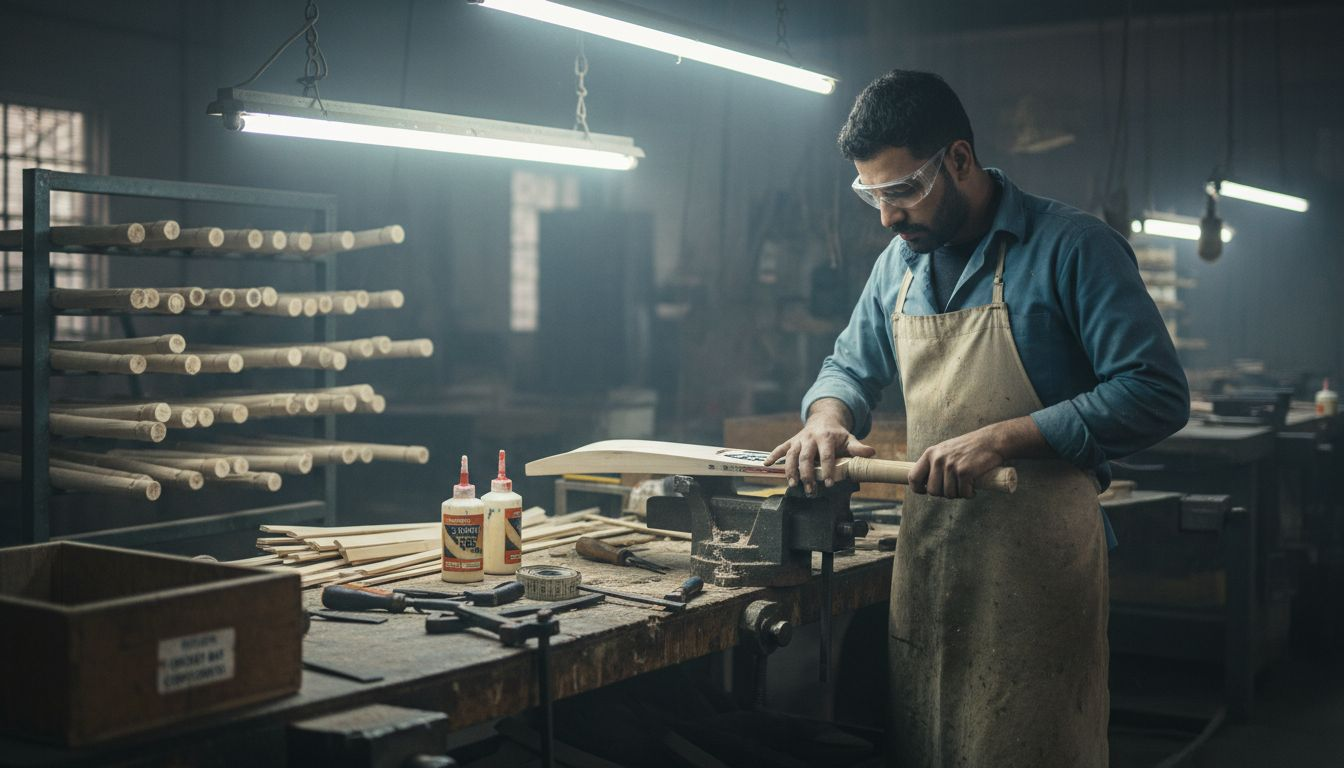
Pro tip: Examine a cricket bat’s handle attachment and blade spine carefully, as these subtle manufacturing details directly impact the bat’s overall performance and durability.
How Craftsmanship Affects Performance
Craftsmanship in cricket bat production represents a delicate balance between traditional skill and scientific precision that directly influences a bat’s performance characteristics. Cricket bat performance research reveals that manufacturing techniques play a crucial role beyond mere aesthetic considerations.
The manufacturing process involves sophisticated techniques that impact a bat’s fundamental performance attributes. Skilled craftsmen meticulously control fiber compression, ensuring optimal wood density and structural integrity. Precise handle alignment, strategic weight distribution, and careful spine creation contribute significantly to the bat’s responsiveness. These subtle manufacturing nuances determine critical performance factors like vibration absorption, energy transfer during ball impact, and overall stroke power, which cannot be assessed through traditional player tapping methods.
Contrary to popular belief, subjective player assessments provide limited insights into a bat’s true performance potential. Objective measurements of material properties, manufacturing precision, and pressing techniques offer more reliable indicators of bat quality. The most exceptional cricket bats emerge from a harmonious blend of advanced engineering principles and time-honoured crafting techniques, where each manufacturing stage is carefully calibrated to enhance the player’s potential.
Pro tip: When evaluating a cricket bat, look beyond surface aesthetics and focus on the subtleties of its craftsmanship, such as handle alignment, wood compression, and overall structural balance.
Common Issues and Quality Pitfalls
Navigating the complex landscape of cricket bat quality requires a discerning eye and understanding of potential manufacturing shortcomings. Cricket bat quality challenges reveal numerous critical issues that can significantly compromise a bat’s performance and longevity.
Manufacturing defects manifest through multiple critical indicators, including uneven weight distribution, inconsistent grain patterns, and structural weaknesses. Poor craftsmanship often results in rough blade edges, inadequate handle reinforcement, and substandard grip materials that diminish player control and comfort. Buyers must scrutinise potential purchases for telltale signs such as visible wood imperfections, uneven pressing, and suspect adhesive applications that can lead to premature cracking or reduced responsiveness during play.
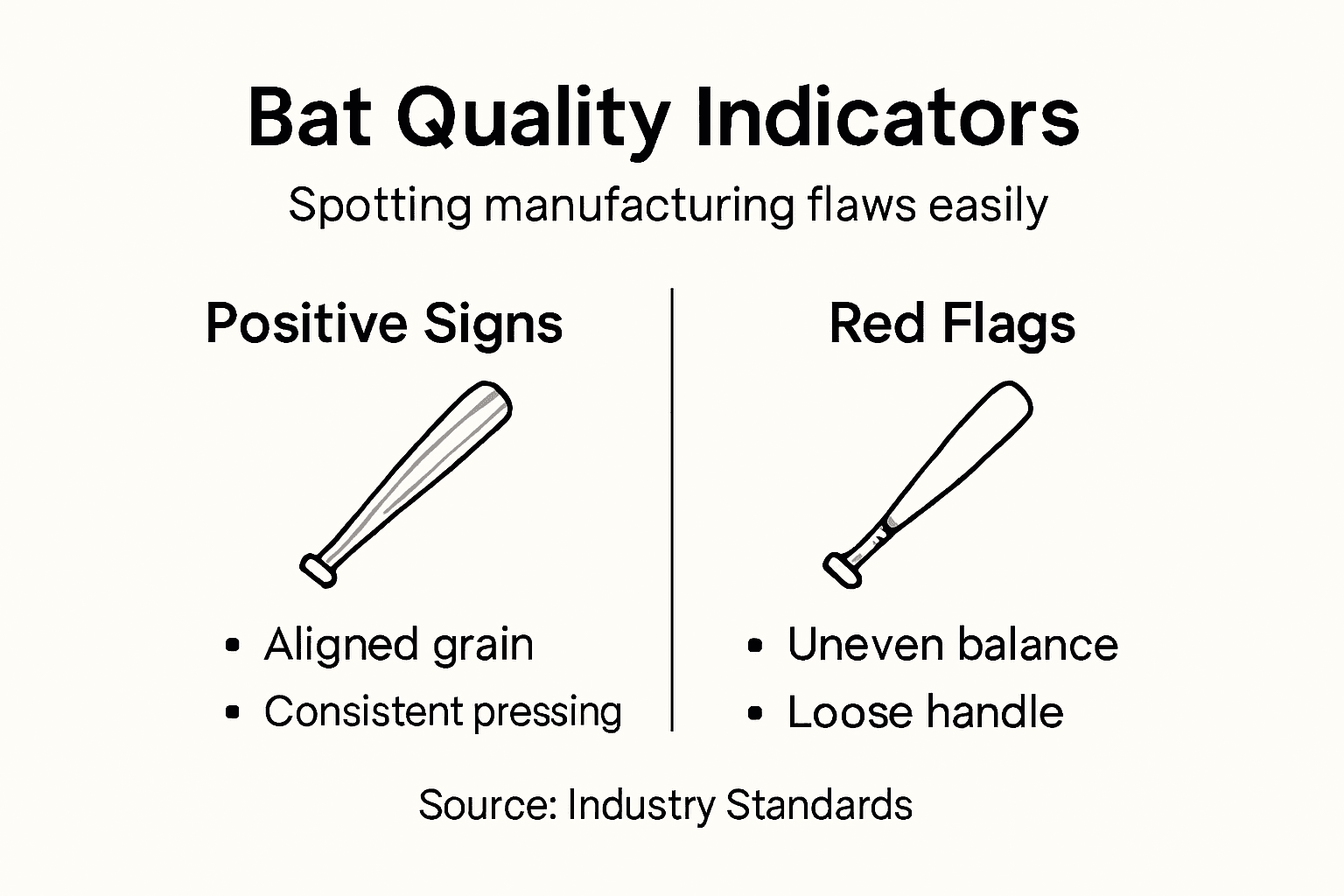
Here is a summary of crucial cricket bat quality indicators versus common manufacturing issues:
| Quality Indicator | Positive Sign | Red Flag |
|---|---|---|
| Grain Alignment | Straight and even grains | Irregular, wavy grains |
| Weight Distribution | Balanced feel in hand | Noticeable imbalance |
| Handle Fixing | Seamless joint, firm grip | Visible glue, loose handle |
| Pressing Consistency | Even, no soft spots | Spotty, weak areas |
| Blade Finish | Smooth, well-sanded | Rough, splinters present |
Beyond individual bat limitations, broader industry challenges impact overall product quality. Inconsistent willow sourcing, particularly in regions like Kashmir, creates substantial variability in bat performance. Unsustainable harvesting practices and limited access to modern processing technologies further compound these quality concerns, potentially undermining the fundamental characteristics that define a superior cricket bat. These systemic issues underscore the importance of purchasing from reputable manufacturers who prioritise rigorous quality control and sustainable production methods.
Pro tip: Always inspect a cricket bat’s grain alignment, weight balance, and handle connection before purchasing, as these subtle details reveal the true quality of its craftsmanship.
Discover the Craft Behind Your Perfect Cricket Bat
Choosing a cricket bat is more than just picking a piece of equipment. The article reveals critical insights into the cricket bat manufacturing process such as wood grain alignment, pressing consistency and handle attachment methods that directly affect performance and durability. If you are tired of bats that feel unbalanced or lack responsiveness then understanding these manufacturing details can save you from costly mistakes and frustration.
Get access to expertly crafted cricket bats made from premium Willow varieties designed to enhance your playing experience. Explore our curated selection at Home page 6 Cricket Bats Com where quality craftsmanship meets trusted brands. Whether you are seeking lightweight English Willow for professional play or economical Kashmir Willow for recreational cricket, our range delivers the best fit for your needs.

Don’t settle for less when your game deserves the best. Visit cricketbats.com today to browse comprehensive options including the latest from New Balance Cricket Bats 6 Cricket Bats Com. Take control of your cricket journey with equipment that stands up to scrutiny and enhances every stroke. Shop now for reliable quality with free shipping and expert customer support.
Frequently Asked Questions
What types of willow are used in cricket bats, and how do they differ?
English willow and Kashmir willow are the two primary types used in cricket bats. English willow is lighter, offers superior performance, and is preferred by professionals. Kashmir willow is denser, more durable, and a cost-effective option suitable for amateur and recreational players.
What are the critical stages in the cricket bat manufacturing process?
The manufacturing process includes selecting premium willow, air drying, shaping, pressing the wood, attaching the handle, and hand-finishing. Each stage requires precision craftsmanship to ensure optimal performance and durability.
How does craftsmanship affect the performance of a cricket bat?
Craftsmanship greatly influences essential performance features of a cricket bat, such as weight distribution, handle alignment, and material compression. These factors impact vibration absorption, energy transfer upon ball impact, and overall stroke power, enhancing player performance.
What are common quality indicators to look for when selecting a cricket bat?
Key quality indicators include straight and even grain alignment, balanced weight distribution, a firm handle connection, consistent pressing, and a smooth blade finish. Inspecting these aspects can help identify high-quality bats and avoid manufacturing defects.
Recommended
Most cricket coaches and amateur players know that the difference between a good bat and a great one often comes down to the manufacturing process. With the long-standing legacy of british craftsmanship shaping cricket bat production, understanding how raw willow transforms into an elite cricket bat gives players a smarter edge in selecting high-performing gear. Discover what truly sets well-made cricket bats apart, and why over 80 percent of professional cricketers opt for bats made with strict attention to detail and quality control.
Table of Contents
- Defining the Cricket Bat Manufacturing Process
- Types of Willow Used in Cricket Bats
- Step-by-Step Bat Making Methods
- How Craftsmanship Affects Performance
- Common Issues and Quality Pitfalls
Key Takeaways
| Point | Details |
|---|---|
| Cricket Bat Manufacturing | The process combines traditional skills and modern engineering, starting with premium willow selection and air drying for optimal performance. |
| Willow Varieties | English willow is preferred for professional players due to its lightweight and performance features, while Kashmir willow offers a durable, budget-friendly option for amateurs. |
| Craftsmanship Impact | Quality craftsmanship influences key performance attributes such as weight distribution, vibration absorption, and energy transfer, which are critical for optimised gameplay. |
| Quality Indicators | Buyers should assess grain alignment, weight balance, and handle connections to ensure they select a high-quality cricket bat that meets operational standards. |
Defining the Cricket Bat Manufacturing Process
The cricket bat manufacturing process represents a sophisticated blend of traditional craftsmanship and precision engineering, transforming raw willow timber into a high-performance sporting instrument. Cricket bat manufacturing involves several intricate stages that require exceptional skill and meticulous attention to detail.
The process commences with selecting premium willow timber, traditionally sourced from specific varieties like English or Kashmir willow. These timber clefts undergo careful air drying to reduce moisture content, which is critical for achieving optimal bat performance and durability. Skilled artisans then employ specialised cutting tools to shape the initial bat form, ensuring precise dimensions and weight distribution that meet International Cricket Council standards.
Subsequent manufacturing stages include multiple pressing operations designed to compress wood fibres, enhancing the bat’s structural integrity and performance characteristics. A critical step involves splicing and attaching the cane handle using specialised adhesives, creating a seamless connection that provides players with superior grip and shock absorption. Hand-finishing techniques like drawknife shaping, spokeshave refinement, and careful sanding transform the raw cleft into a precision-crafted cricket bat.
Pro tip: When evaluating a cricket bat’s quality, examine the wood grain alignment and pressing consistency as indicators of superior manufacturing craftsmanship.
Types of Willow Used in Cricket Bats
Cricket bat manufacturing relies critically on two primary willow varieties: English willow and Kashmir willow. Willow types significantly impact bat performance, durability, and player experience, making timber selection a fundamental aspect of cricket equipment production.
English willow (Salix alba var. caerulea) represents the pinnacle of cricket bat timber, renowned for its exceptional characteristics. This premium wood offers remarkable lightweight properties, soft grain structure, and superior elasticity that enables professional players to achieve optimal stroke play. Its unique cellular composition provides enhanced shock absorption and a larger sweet spot, making it the preferred choice for high-performance cricket bats used at professional levels.
In contrast, Kashmir willow presents a more robust and economical alternative. Denser and heavier than its English counterpart, this variety offers increased durability and cost-effectiveness. Typically favoured by amateur players, beginners, and those participating in casual cricket, Kashmir willow bats provide a practical solution for players seeking reliable performance without the premium price tag of English willow.
Pro tip: When selecting a cricket bat, consider your playing level and budget, understanding that English willow offers superior performance while Kashmir willow provides excellent value for recreational players.
The following table highlights the key differences between English willow and Kashmir willow bats, aiding in suitable selection for various players:
| Aspect | English Willow | Kashmir Willow |
|---|---|---|
| Weight | Generally lighter | Typically heavier |
| Grain Quality | Fine and straight | Coarse and wider |
| Performance Level | Professional and competitive | Amateur and recreational |
| Durability | Softer but high performance | More durable, less responsive |
| Price Range | Expensive | Affordable |
Step-by-Step Bat Making Methods
Crafting a cricket bat involves a meticulous sequence of precision techniques that transform raw timber into a high-performance sporting instrument. Bat manufacturing requires intricate steps that blend traditional craftsmanship with modern engineering principles.
The initial stage focuses on precise timber selection and preparation. Skilled craftsmen carefully examine willow clefts, cutting them into rough bat shapes using specialised saws. This process involves marking the critical sweet spot, which determines the bat’s potential striking power and performance characteristics. Craftsmen then meticulously carve the blade, shaping its edges and contours to optimise grip, durability, and weight distribution. A crucial technique involves carefully hollowing the blade’s interior to create a strategic spine, which simultaneously enhances structural strength while minimising unnecessary weight.
Handle attachment represents another critical manufacturing phase. Typically constructed from robust cane with strategic rubber or cork inserts, the handle is precisely angled and secured using high-strength adhesives. This connection point is fundamental to transferring a player’s power and control during stroke play. The final stages involve extensive finishing work, including comprehensive sanding, expert polishing, and careful handle wrapping with grip tape to ensure optimal player comfort and control.
Pro tip: Examine a cricket bat’s handle attachment and blade spine carefully, as these subtle manufacturing details directly impact the bat’s overall performance and durability.
How Craftsmanship Affects Performance
Craftsmanship in cricket bat production represents a delicate balance between traditional skill and scientific precision that directly influences a bat’s performance characteristics. Cricket bat performance research reveals that manufacturing techniques play a crucial role beyond mere aesthetic considerations.
The manufacturing process involves sophisticated techniques that impact a bat’s fundamental performance attributes. Skilled craftsmen meticulously control fiber compression, ensuring optimal wood density and structural integrity. Precise handle alignment, strategic weight distribution, and careful spine creation contribute significantly to the bat’s responsiveness. These subtle manufacturing nuances determine critical performance factors like vibration absorption, energy transfer during ball impact, and overall stroke power, which cannot be assessed through traditional player tapping methods.
Contrary to popular belief, subjective player assessments provide limited insights into a bat’s true performance potential. Objective measurements of material properties, manufacturing precision, and pressing techniques offer more reliable indicators of bat quality. The most exceptional cricket bats emerge from a harmonious blend of advanced engineering principles and time-honoured crafting techniques, where each manufacturing stage is carefully calibrated to enhance the player’s potential.
Pro tip: When evaluating a cricket bat, look beyond surface aesthetics and focus on the subtleties of its craftsmanship, such as handle alignment, wood compression, and overall structural balance.
Common Issues and Quality Pitfalls
Navigating the complex landscape of cricket bat quality requires a discerning eye and understanding of potential manufacturing shortcomings. Cricket bat quality challenges reveal numerous critical issues that can significantly compromise a bat’s performance and longevity.
Manufacturing defects manifest through multiple critical indicators, including uneven weight distribution, inconsistent grain patterns, and structural weaknesses. Poor craftsmanship often results in rough blade edges, inadequate handle reinforcement, and substandard grip materials that diminish player control and comfort. Buyers must scrutinise potential purchases for telltale signs such as visible wood imperfections, uneven pressing, and suspect adhesive applications that can lead to premature cracking or reduced responsiveness during play.
Here is a summary of crucial cricket bat quality indicators versus common manufacturing issues:
| Quality Indicator | Positive Sign | Red Flag |
|---|---|---|
| Grain Alignment | Straight and even grains | Irregular, wavy grains |
| Weight Distribution | Balanced feel in hand | Noticeable imbalance |
| Handle Fixing | Seamless joint, firm grip | Visible glue, loose handle |
| Pressing Consistency | Even, no soft spots | Spotty, weak areas |
| Blade Finish | Smooth, well-sanded | Rough, splinters present |
Beyond individual bat limitations, broader industry challenges impact overall product quality. Inconsistent willow sourcing, particularly in regions like Kashmir, creates substantial variability in bat performance. Unsustainable harvesting practices and limited access to modern processing technologies further compound these quality concerns, potentially undermining the fundamental characteristics that define a superior cricket bat. These systemic issues underscore the importance of purchasing from reputable manufacturers who prioritise rigorous quality control and sustainable production methods.
Pro tip: Always inspect a cricket bat’s grain alignment, weight balance, and handle connection before purchasing, as these subtle details reveal the true quality of its craftsmanship.
Discover the Craft Behind Your Perfect Cricket Bat
Choosing a cricket bat is more than just picking a piece of equipment. The article reveals critical insights into the cricket bat manufacturing process such as wood grain alignment, pressing consistency and handle attachment methods that directly affect performance and durability. If you are tired of bats that feel unbalanced or lack responsiveness then understanding these manufacturing details can save you from costly mistakes and frustration.
Get access to expertly crafted cricket bats made from premium Willow varieties designed to enhance your playing experience. Explore our curated selection at Home page 6 Cricket Bats Com where quality craftsmanship meets trusted brands. Whether you are seeking lightweight English Willow for professional play or economical Kashmir Willow for recreational cricket, our range delivers the best fit for your needs.
Don’t settle for less when your game deserves the best. Visit cricketbats.com today to browse comprehensive options including the latest from New Balance Cricket Bats 6 Cricket Bats Com. Take control of your cricket journey with equipment that stands up to scrutiny and enhances every stroke. Shop now for reliable quality with free shipping and expert customer support.
Frequently Asked Questions
What types of willow are used in cricket bats, and how do they differ?
English willow and Kashmir willow are the two primary types used in cricket bats. English willow is lighter, offers superior performance, and is preferred by professionals. Kashmir willow is denser, more durable, and a cost-effective option suitable for amateur and recreational players.
What are the critical stages in the cricket bat manufacturing process?
The manufacturing process includes selecting premium willow, air drying, shaping, pressing the wood, attaching the handle, and hand-finishing. Each stage requires precision craftsmanship to ensure optimal performance and durability.
How does craftsmanship affect the performance of a cricket bat?
Craftsmanship greatly influences essential performance features of a cricket bat, such as weight distribution, handle alignment, and material compression. These factors impact vibration absorption, energy transfer upon ball impact, and overall stroke power, enhancing player performance.
What are common quality indicators to look for when selecting a cricket bat?
Key quality indicators include straight and even grain alignment, balanced weight distribution, a firm handle connection, consistent pressing, and a smooth blade finish. Inspecting these aspects can help identify high-quality bats and avoid manufacturing defects.