
News News
Cricket Bat Maintenance Tips: Boosting Bat Longevity Cricket Bat Maintenance Tips: Boosting Bat Longevity
Most British cricket clubs report that bats can lose up to 30 percent of their performance in just one season without proper care. The way you maintain your cricket bat has a direct effect on its lifespan, handling, and response during play. For any British cricketer, understanding these core maintenance principles and techniques is the key to protecting your investment, ensuring consistent results, and keeping your equipment game ready year after year.
Table of Contents
- Core Principles Of Cricket Bat Maintenance
- Types Of Cricket Bats And Their Care Needs
- Essential Cleaning And Oiling Techniques
- Proper Knocking-In And Bat Preparation Steps
- Safe Storage Methods To Prevent Damage
- Common Bat Maintenance Mistakes To Avoid
Key Takeaways
| Point | Details |
|---|---|
| Moisture Control | Proper storage in a cool, dry environment is crucial to prevent moisture-related damage to the bat. |
| Surface Protection | Regularly applying linseed oil helps maintain the bat’s surface and prevent drying or cracking. |
| Regular Inspection | Regularly check for cracks and weaknesses to ensure the bat remains structurally sound. |
| Proper Knocking-In | Engage in the knocking-in process to prepare the bat for optimal performance and durability. |
Core Principles Of Cricket Bat Maintenance
Caring for your cricket bat involves far more than occasional cleaning. Cricket bat maintenance represents a systematic approach to preserving your equipment’s performance and extending its functional lifespan. Understanding the core principles requires insight into the delicate construction and materials used in professional cricket bats.
Professional cricketers recognise that proper bat maintenance begins with understanding its fundamental components. Wood is a living material that responds dramatically to environmental conditions, moisture, and handling. When maintaining your cricket bat, you’ll need to focus on three critical areas: moisture control, surface protection, and structural integrity. Understanding how professional bats are crafted provides crucial context for effective maintenance strategies.
The key maintenance principles involve several strategic practices:
- Surface Protection: Apply linseed oil sparingly to prevent wood drying and cracking
- Moisture Management: Store bats in cool, dry environments away from direct sunlight
- Regular Inspection: Check for microscopic cracks, splinters, or structural weaknesses
- Careful Handling: Avoid unnecessary impacts when not actively playing
- Professional Conditioning: Consider professional bat preparation services for optimal performance
Successful cricket bat maintenance requires consistent, methodical care. By implementing these core principles, players can significantly extend their bat’s performance window, ensuring reliable play and minimising unnecessary equipment replacement costs.
Types Of Cricket Bats And Their Care Needs
Cricket bats represent sophisticated sporting equipment with distinct characteristics that significantly impact maintenance requirements. Understanding the nuanced differences between bat types is crucial for implementing appropriate care strategies. Professional players recognise that each bat variety demands specialised treatment to maintain optimal performance.
Two primary cricket bat materials dominate the market: English willow and Kashmir willow. English willow bats, prized for their lightweight construction and superior performance, require meticulous maintenance. These premium bats are more delicate and respond dramatically to environmental conditions. Kashmir willow bats, in contrast, offer greater durability and affordability, presenting a more robust option for amateur players.

Key differences between bat types necessitate tailored maintenance approaches:
English Willow Bats:
- Require frequent oiling to prevent wood drying
- Need careful knocking-in process
- More susceptible to moisture damage
- Demand gentle handling and regular inspection
Kashmir Willow Bats:
- More resistant to structural damage
- Less frequent maintenance requirements
- Heavier and more robust construction
- Suitable for more aggressive playing conditions
Successful cricket bat maintenance transcends simple cleaning. Players must understand their specific bat’s material characteristics, storage requirements, and performance limitations. By developing a nuanced approach to equipment care, cricketers can significantly extend their bat’s functional lifespan and maintain consistent playing performance.
Essential Cleaning And Oiling Techniques
Cricket bat maintenance demands precision and understanding of intricate wood care techniques. Professional cricketers recognise that proper cleaning and oiling are not merely cosmetic procedures but critical practices that directly impact bat performance and longevity. Exploring professional bat preparation methods reveals the nuanced approach required for effective equipment preservation.
The process of cleaning and oiling a cricket bat involves several strategic steps. Begin by removing surface dirt using a soft, dry cloth, carefully wiping away dust and debris without applying excessive pressure. Linseed oil represents the primary conditioning agent for cricket bats, but application requires exceptional care. Apply a thin, even layer of raw linseed oil using a soft cloth, working in gentle, circular motions to ensure complete absorption without oversaturating the wood.
Critical considerations for cleaning and oiling include:
-
Frequency of Oiling:
- English willow bats: Oil every 3-4 weeks
- Kashmir willow bats: Less frequent oiling required
-
Oil Application Techniques:
- Use pure, raw linseed oil
- Apply minimal quantities
- Allow complete absorption between layers
-
Cleaning Precautions:
- Avoid water-based cleaning methods
- Use only dry, soft cloths
- Remove surface dirt gently
Proper cricket bat maintenance transcends simple cleaning. The art of preserving your bat involves understanding its unique characteristics, responding to environmental conditions, and implementing a consistent, methodical care routine. By mastering these essential cleaning and oiling techniques, players can significantly extend their bat’s performance life and maintain its structural integrity.
Proper Knocking-In And Bat Preparation Steps
Knocking-in represents a critical process in cricket bat preparation that transforms a new bat from raw timber to a match-ready instrument. Professional cricketers understand this technique as an essential ritual that significantly impacts bat performance and durability. Exploring professional bat preparation methods reveals the intricate care required to prepare a cricket bat for competitive play.
The knocking-in process involves gradually compressing the wood fibres to create a dense, resilient surface capable of withstanding high-impact cricket shots. Begin with a specialised wooden mallet, applying gentle, controlled strikes across the bat’s face and edges. Start with minimal force, progressively increasing pressure over several hours of careful preparation. This methodical approach helps prevent potential cracking and ensures the bat develops a robust, responsive playing surface.
Key steps in the knocking-in process include:
-
Initial Preparation:
- Apply protective facing tape to bat edges
- Use soft-faced mallet for initial compressions
- Maintain consistent, light striking technique
-
Gradual Compression:
- Increase mallet strike intensity progressively
- Focus on bat face and critical impact areas
- Distribute strikes evenly across surface
-
Final Conditioning:
- Use lighter strikes after initial compression
- Test bat responsiveness periodically
- Allow minimum 2-3 weeks for complete preparation
Successful bat preparation requires patience and precision. Players must invest time in carefully preparing their equipment, understanding that rushed techniques can compromise bat integrity. By mastering the art of knocking-in, cricketers create a resilient, high-performing bat that will withstand the rigours of competitive play.
Safe Storage Methods To Prevent Damage
Cricket bat preservation demands meticulous attention to storage conditions that protect the equipment from environmental degradation and structural damage. Professional cricketers understand that improper storage can rapidly compromise a bat’s performance and longevity. Understanding professional equipment management techniques reveals the critical importance of creating an optimal storage environment.
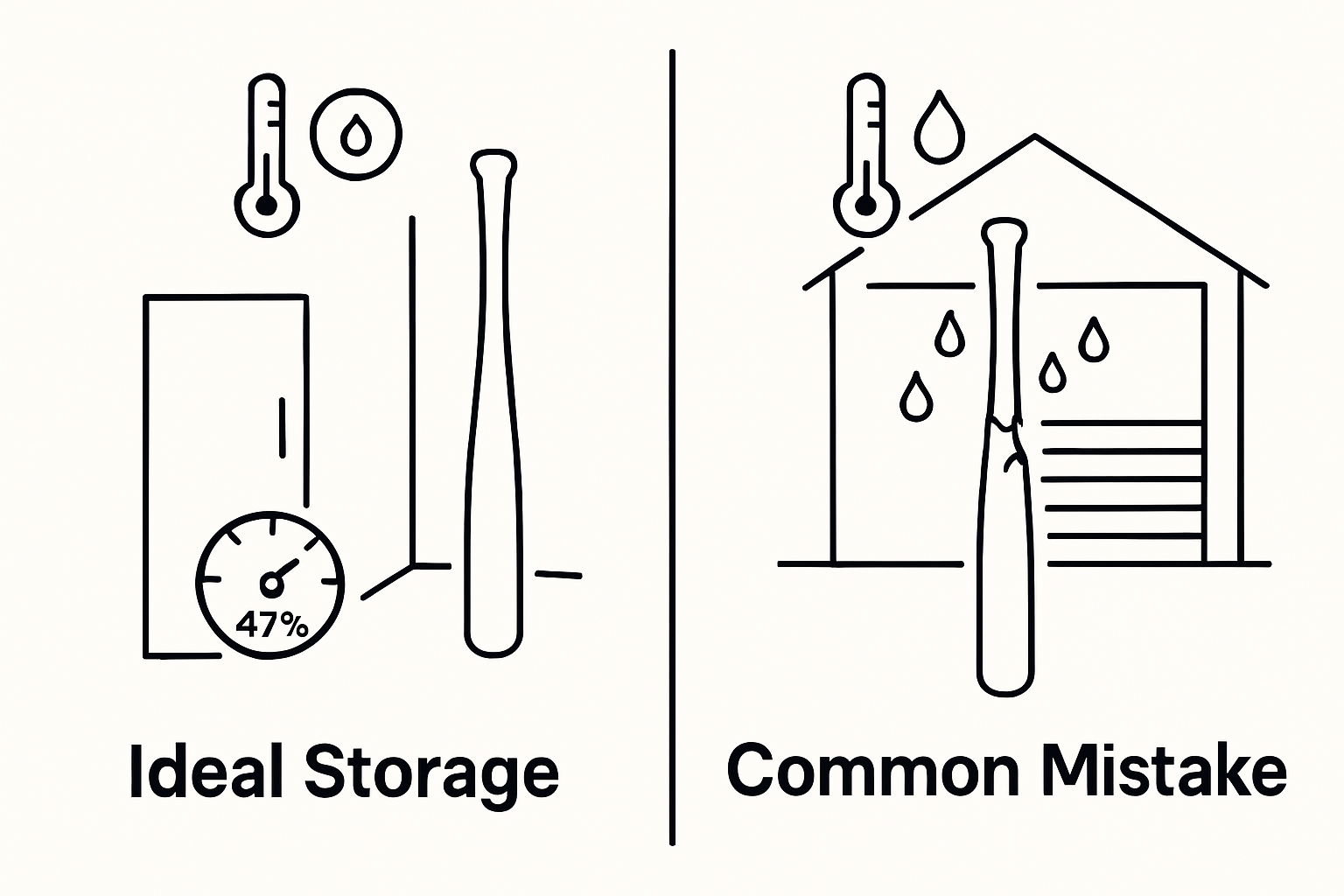
The ideal storage environment for cricket bats involves maintaining consistent temperature and humidity levels. Extreme fluctuations can cause wood fibres to expand and contract, leading to potential cracking or warping. Store your bat in a cool, dry location away from direct sunlight, heat sources, and areas with significant moisture variations. A dedicated cricket bat bag or vertical storage rack provides additional protection, preventing unnecessary pressure on the bat’s delicate structure.
Key storage considerations include:
-
Temperature Control:
- Maintain consistent room temperature (15-22°C)
- Avoid storing near radiators or air conditioning units
- Keep away from direct sunlight and heat sources
-
Humidity Management:
- Store in environments with 45-55% relative humidity
- Use silica gel packets to control moisture
- Avoid damp or excessively dry storage locations
-
Physical Protection:
- Use padded bat covers
- Store vertically or horizontally with even support
- Prevent contact with other equipment
Successful bat storage is an art of prevention. Players must treat their cricket bats as precision instruments, understanding that environmental factors can silently compromise equipment integrity. By implementing these strategic storage methods, cricketers can significantly extend their bat’s operational life and maintain peak performance across multiple seasons.
Common Bat Maintenance Mistakes To Avoid
Cricket bat maintenance involves nuanced practices that can dramatically impact equipment performance and longevity. Amateur players frequently underestimate the subtle complexities of proper bat care, often making critical errors that compromise their valuable sporting equipment. Understanding professional equipment management techniques reveals how seemingly minor mistakes can cause significant long-term damage.
One of the most prevalent maintenance mistakes involves improper moisture management. Players often expose their bats to extreme environmental conditions or apply incorrect oiling techniques, which can lead to wood fibre degradation. Excessive moisture can cause warping, while insufficient conditioning can result in brittle, fragile wood structures. Professional cricketers understand that bat maintenance requires a delicate balance of protective treatments and careful environmental control.
Key maintenance mistakes to avoid include:
-
Moisture-Related Errors:
- Storing bat in damp environments
- Using water-based cleaning methods
- Neglecting humidity control
-
Improper Oiling Techniques:
- Over-saturating the bat with linseed oil
- Using low-quality or inappropriate oil
- Applying oil inconsistently
-
Handling and Storage Mistakes:
- Dropping or mishandling the bat
- Storing horizontally with uneven support
- Exposing bat to direct sunlight or heat
Successful cricket bat maintenance requires a proactive, informed approach. Players must treat their equipment as precision instruments, understanding that prevention is far more effective than attempting to repair damage after it occurs. By recognising and avoiding these common mistakes, cricketers can significantly extend their bat’s operational life and maintain peak performance across multiple seasons.
Extend Your Cricket Bat’s Life with Expert Care and Quality Gear
Maintaining your cricket bat to boost longevity requires attention to moisture control, proper oiling, and safe storage as highlighted in “Cricket Bat Maintenance Tips: Boosting Bat Longevity”. The challenge many players face is balancing careful bat care with the demands of regular play without compromising performance. Understanding these core maintenance principles can protect your investment from cracking, warping, and premature wear.
Step up your bat care routine with premium cricket bats and accessories designed to complement expert maintenance techniques. Explore the New Balance Cricket Bats – Cricket Bats Com collection for well-crafted bats that respond well to careful oiling and knocking-in. Whether you use English willow or Kashmir willow, choosing high-quality gear means your bat’s structure and performance are easier to preserve.

Don’t wait until damage occurs to take action. Visit https://cricketbats.com now and browse our full range of cricket essentials including precision-engineered bats and protective equipment made for players who value durability and peak performance. Combine expert maintenance with the right equipment and enjoy your cricket journey with confidence.
Frequently Asked Questions
How often should I oil my cricket bat?
You should oil your English willow bat every 3-4 weeks. Kashmir willow bats require less frequent oiling due to their more robust construction.
What is the knocking-in process and why is it important?
The knocking-in process involves gradually compressing the wood fibres of a new cricket bat to create a dense surface. It is crucial for enhancing a bat’s performance and durability, preventing issues like cracking during play.
What are the ideal storage conditions for a cricket bat?
Store your cricket bat in a cool, dry place with consistent temperature (15-22°C) and relative humidity of 45-55%. Avoid direct sunlight, heat sources, and damp environments to prevent damage.
What cleaning methods should I use for my cricket bat?
Use only a soft, dry cloth to remove surface dirt. Avoid water-based cleaning methods. Regularly apply a thin layer of raw linseed oil to condition the wood without oversaturating it.
Recommended
Most British cricket clubs report that bats can lose up to 30 percent of their performance in just one season without proper care. The way you maintain your cricket bat has a direct effect on its lifespan, handling, and response during play. For any British cricketer, understanding these core maintenance principles and techniques is the key to protecting your investment, ensuring consistent results, and keeping your equipment game ready year after year.
Table of Contents
- Core Principles Of Cricket Bat Maintenance
- Types Of Cricket Bats And Their Care Needs
- Essential Cleaning And Oiling Techniques
- Proper Knocking-In And Bat Preparation Steps
- Safe Storage Methods To Prevent Damage
- Common Bat Maintenance Mistakes To Avoid
Key Takeaways
| Point | Details |
|---|---|
| Moisture Control | Proper storage in a cool, dry environment is crucial to prevent moisture-related damage to the bat. |
| Surface Protection | Regularly applying linseed oil helps maintain the bat’s surface and prevent drying or cracking. |
| Regular Inspection | Regularly check for cracks and weaknesses to ensure the bat remains structurally sound. |
| Proper Knocking-In | Engage in the knocking-in process to prepare the bat for optimal performance and durability. |
Core Principles Of Cricket Bat Maintenance
Caring for your cricket bat involves far more than occasional cleaning. Cricket bat maintenance represents a systematic approach to preserving your equipment’s performance and extending its functional lifespan. Understanding the core principles requires insight into the delicate construction and materials used in professional cricket bats.
Professional cricketers recognise that proper bat maintenance begins with understanding its fundamental components. Wood is a living material that responds dramatically to environmental conditions, moisture, and handling. When maintaining your cricket bat, you’ll need to focus on three critical areas: moisture control, surface protection, and structural integrity. Understanding how professional bats are crafted provides crucial context for effective maintenance strategies.
The key maintenance principles involve several strategic practices:
- Surface Protection: Apply linseed oil sparingly to prevent wood drying and cracking
- Moisture Management: Store bats in cool, dry environments away from direct sunlight
- Regular Inspection: Check for microscopic cracks, splinters, or structural weaknesses
- Careful Handling: Avoid unnecessary impacts when not actively playing
- Professional Conditioning: Consider professional bat preparation services for optimal performance
Successful cricket bat maintenance requires consistent, methodical care. By implementing these core principles, players can significantly extend their bat’s performance window, ensuring reliable play and minimising unnecessary equipment replacement costs.
Types Of Cricket Bats And Their Care Needs
Cricket bats represent sophisticated sporting equipment with distinct characteristics that significantly impact maintenance requirements. Understanding the nuanced differences between bat types is crucial for implementing appropriate care strategies. Professional players recognise that each bat variety demands specialised treatment to maintain optimal performance.
Two primary cricket bat materials dominate the market: English willow and Kashmir willow. English willow bats, prized for their lightweight construction and superior performance, require meticulous maintenance. These premium bats are more delicate and respond dramatically to environmental conditions. Kashmir willow bats, in contrast, offer greater durability and affordability, presenting a more robust option for amateur players.
Key differences between bat types necessitate tailored maintenance approaches:
English Willow Bats:
- Require frequent oiling to prevent wood drying
- Need careful knocking-in process
- More susceptible to moisture damage
- Demand gentle handling and regular inspection
Kashmir Willow Bats:
- More resistant to structural damage
- Less frequent maintenance requirements
- Heavier and more robust construction
- Suitable for more aggressive playing conditions
Successful cricket bat maintenance transcends simple cleaning. Players must understand their specific bat’s material characteristics, storage requirements, and performance limitations. By developing a nuanced approach to equipment care, cricketers can significantly extend their bat’s functional lifespan and maintain consistent playing performance.
Essential Cleaning And Oiling Techniques
Cricket bat maintenance demands precision and understanding of intricate wood care techniques. Professional cricketers recognise that proper cleaning and oiling are not merely cosmetic procedures but critical practices that directly impact bat performance and longevity. Exploring professional bat preparation methods reveals the nuanced approach required for effective equipment preservation.
The process of cleaning and oiling a cricket bat involves several strategic steps. Begin by removing surface dirt using a soft, dry cloth, carefully wiping away dust and debris without applying excessive pressure. Linseed oil represents the primary conditioning agent for cricket bats, but application requires exceptional care. Apply a thin, even layer of raw linseed oil using a soft cloth, working in gentle, circular motions to ensure complete absorption without oversaturating the wood.
Critical considerations for cleaning and oiling include:
-
Frequency of Oiling:
- English willow bats: Oil every 3-4 weeks
- Kashmir willow bats: Less frequent oiling required
-
Oil Application Techniques:
- Use pure, raw linseed oil
- Apply minimal quantities
- Allow complete absorption between layers
-
Cleaning Precautions:
- Avoid water-based cleaning methods
- Use only dry, soft cloths
- Remove surface dirt gently
Proper cricket bat maintenance transcends simple cleaning. The art of preserving your bat involves understanding its unique characteristics, responding to environmental conditions, and implementing a consistent, methodical care routine. By mastering these essential cleaning and oiling techniques, players can significantly extend their bat’s performance life and maintain its structural integrity.
Proper Knocking-In And Bat Preparation Steps
Knocking-in represents a critical process in cricket bat preparation that transforms a new bat from raw timber to a match-ready instrument. Professional cricketers understand this technique as an essential ritual that significantly impacts bat performance and durability. Exploring professional bat preparation methods reveals the intricate care required to prepare a cricket bat for competitive play.
The knocking-in process involves gradually compressing the wood fibres to create a dense, resilient surface capable of withstanding high-impact cricket shots. Begin with a specialised wooden mallet, applying gentle, controlled strikes across the bat’s face and edges. Start with minimal force, progressively increasing pressure over several hours of careful preparation. This methodical approach helps prevent potential cracking and ensures the bat develops a robust, responsive playing surface.
Key steps in the knocking-in process include:
-
Initial Preparation:
- Apply protective facing tape to bat edges
- Use soft-faced mallet for initial compressions
- Maintain consistent, light striking technique
-
Gradual Compression:
- Increase mallet strike intensity progressively
- Focus on bat face and critical impact areas
- Distribute strikes evenly across surface
-
Final Conditioning:
- Use lighter strikes after initial compression
- Test bat responsiveness periodically
- Allow minimum 2-3 weeks for complete preparation
Successful bat preparation requires patience and precision. Players must invest time in carefully preparing their equipment, understanding that rushed techniques can compromise bat integrity. By mastering the art of knocking-in, cricketers create a resilient, high-performing bat that will withstand the rigours of competitive play.
Safe Storage Methods To Prevent Damage
Cricket bat preservation demands meticulous attention to storage conditions that protect the equipment from environmental degradation and structural damage. Professional cricketers understand that improper storage can rapidly compromise a bat’s performance and longevity. Understanding professional equipment management techniques reveals the critical importance of creating an optimal storage environment.
The ideal storage environment for cricket bats involves maintaining consistent temperature and humidity levels. Extreme fluctuations can cause wood fibres to expand and contract, leading to potential cracking or warping. Store your bat in a cool, dry location away from direct sunlight, heat sources, and areas with significant moisture variations. A dedicated cricket bat bag or vertical storage rack provides additional protection, preventing unnecessary pressure on the bat’s delicate structure.
Key storage considerations include:
-
Temperature Control:
- Maintain consistent room temperature (15-22°C)
- Avoid storing near radiators or air conditioning units
- Keep away from direct sunlight and heat sources
-
Humidity Management:
- Store in environments with 45-55% relative humidity
- Use silica gel packets to control moisture
- Avoid damp or excessively dry storage locations
-
Physical Protection:
- Use padded bat covers
- Store vertically or horizontally with even support
- Prevent contact with other equipment
Successful bat storage is an art of prevention. Players must treat their cricket bats as precision instruments, understanding that environmental factors can silently compromise equipment integrity. By implementing these strategic storage methods, cricketers can significantly extend their bat’s operational life and maintain peak performance across multiple seasons.
Common Bat Maintenance Mistakes To Avoid
Cricket bat maintenance involves nuanced practices that can dramatically impact equipment performance and longevity. Amateur players frequently underestimate the subtle complexities of proper bat care, often making critical errors that compromise their valuable sporting equipment. Understanding professional equipment management techniques reveals how seemingly minor mistakes can cause significant long-term damage.
One of the most prevalent maintenance mistakes involves improper moisture management. Players often expose their bats to extreme environmental conditions or apply incorrect oiling techniques, which can lead to wood fibre degradation. Excessive moisture can cause warping, while insufficient conditioning can result in brittle, fragile wood structures. Professional cricketers understand that bat maintenance requires a delicate balance of protective treatments and careful environmental control.
Key maintenance mistakes to avoid include:
-
Moisture-Related Errors:
- Storing bat in damp environments
- Using water-based cleaning methods
- Neglecting humidity control
-
Improper Oiling Techniques:
- Over-saturating the bat with linseed oil
- Using low-quality or inappropriate oil
- Applying oil inconsistently
-
Handling and Storage Mistakes:
- Dropping or mishandling the bat
- Storing horizontally with uneven support
- Exposing bat to direct sunlight or heat
Successful cricket bat maintenance requires a proactive, informed approach. Players must treat their equipment as precision instruments, understanding that prevention is far more effective than attempting to repair damage after it occurs. By recognising and avoiding these common mistakes, cricketers can significantly extend their bat’s operational life and maintain peak performance across multiple seasons.
Extend Your Cricket Bat’s Life with Expert Care and Quality Gear
Maintaining your cricket bat to boost longevity requires attention to moisture control, proper oiling, and safe storage as highlighted in “Cricket Bat Maintenance Tips: Boosting Bat Longevity”. The challenge many players face is balancing careful bat care with the demands of regular play without compromising performance. Understanding these core maintenance principles can protect your investment from cracking, warping, and premature wear.
Step up your bat care routine with premium cricket bats and accessories designed to complement expert maintenance techniques. Explore the New Balance Cricket Bats – Cricket Bats Com collection for well-crafted bats that respond well to careful oiling and knocking-in. Whether you use English willow or Kashmir willow, choosing high-quality gear means your bat’s structure and performance are easier to preserve.
Don’t wait until damage occurs to take action. Visit https://cricketbats.com now and browse our full range of cricket essentials including precision-engineered bats and protective equipment made for players who value durability and peak performance. Combine expert maintenance with the right equipment and enjoy your cricket journey with confidence.
Frequently Asked Questions
How often should I oil my cricket bat?
You should oil your English willow bat every 3-4 weeks. Kashmir willow bats require less frequent oiling due to their more robust construction.
What is the knocking-in process and why is it important?
The knocking-in process involves gradually compressing the wood fibres of a new cricket bat to create a dense surface. It is crucial for enhancing a bat’s performance and durability, preventing issues like cracking during play.
What are the ideal storage conditions for a cricket bat?
Store your cricket bat in a cool, dry place with consistent temperature (15-22°C) and relative humidity of 45-55%. Avoid direct sunlight, heat sources, and damp environments to prevent damage.
What cleaning methods should I use for my cricket bat?
Use only a soft, dry cloth to remove surface dirt. Avoid water-based cleaning methods. Regularly apply a thin layer of raw linseed oil to condition the wood without oversaturating it.